Families packing holiday lunches
If orange juice is going into lunch, consider any juice or smoothie served later in the day too. The NHS’s 150ml daily guidance covers the two drinks combined, not 150ml of each.


If you want 100% orange juice with lunch, measure the serving: the NHS advises children and adults to have no more than 150ml of fruit juice and smoothies combined each day, at mealtimes. “No added sugar” does not make juice sugar-free. If you would rather have an orange-flavoured drink, compare a high juice or squash using its prepared-serving nutrition label and check for sweeteners; water is another option when juice has already been served that day.
If orange juice is going into lunch, consider any juice or smoothie served later in the day too. The NHS’s 150ml daily guidance covers the two drinks combined, not 150ml of each.
If you want orange flavour but not necessarily 100% juice, look beyond the front-of-pack claim. A no-added-sugar high juice, squash or soft drink can differ from pure juice in fruit content, preparation and ingredients.
Decide whether lunch calls for a measured serving of fruit juice or an orange-flavoured alternative, then compare the drink as it will actually be served.
Choose when: You want fruit juice with the meal and can measure it within the day’s combined juice-and-smoothie amount.
Bear in mind: The NHS counts sugars in unsweetened fruit juice as free sugars, even when none has been added.
Choose when: An orange-flavoured drink matters more to you than having 100% juice, and its prepared-serving label suits your needs.
Bear in mind: It is a different product type; check the dilution directions, fruit content and sweeteners.
Choose when: Juice or a smoothie has already been served that day, or you do not want another juice drink with lunch.
Bear in mind: It will not provide the orange flavour that may be the reason for choosing the other drinks.
| Priority | What to check | Your needs |
|---|---|---|
| Juice portion | Measure the juice serving and count other fruit juice or smoothies that day. The NHS advises no more than 150ml combined per day for children and adults, kept to mealtimes. | I want orange juice with lunch without treating a full bottle or carton as the serving size. |
| Sugar wording | Read the sugars figure for the serving alongside “no added sugar”. The NHS says sugars in unsweetened fruit juice count as free sugars; Tropicana lists 13g sugars per 150ml of its Smooth Orange. | A no-added-sugar claim alone does not tell me that the drink is sugar-free. |
| Drink type | Check whether the product is 100% juice, high juice, squash or a soft drink. M&S describes its Mediterranean Orange High Juice as 50% fruit juice, rather than 100% juice. | I may prefer an orange-flavoured drink, but I do not want to mistake it for pure juice. |
| Preparation and ingredients | For a drink that needs diluting, follow its bottle directions and compare nutrition for the prepared amount. Check sweeteners and allergens; M&S lists sucralose in its Mediterranean Orange High Juice. | If I am making drinks for lunch, I need to know how to prepare them and what is in the finished serving. |
| Pack format | Check the container volume against the amount you intend to serve, and read any age or packaging warnings on the product. | Individual cans, pouches or bottles may be convenient to pack, but their full contents are not automatically a 150ml juice serving. |
Unsweetened orange juice still contains sugars. The NHS classifies sugars in unsweetened fruit juice as free sugars, while Tropicana lists 13g sugars per 150ml of its no-added-sugar Smooth Orange.
Check the nutrition panel as well as the claim, and measure juice served with lunch.
Fruit content and preparation can differ. M&S states that its Mediterranean Orange High Juice contains 50% fruit juice and lists sucralose among its ingredients.
Choose the drink type first. For a diluted product, follow its directions and compare the nutrition for the prepared serving.
The NHS’s 150ml daily guidance is for fruit juice and smoothies combined, not a separate amount for each drink.
Count a lunchtime juice alongside any smoothie or juice planned for the rest of the day.
These examples show why the product name and label matter more than assuming every orange drink from a brand is the same type.
Tropicana describes Smooth Orange as 100% pure pressed juice, not from concentrate.
Tesco Groceries lists Innocent orange juice in smooth and with-bits versions.
Tesco Groceries lists a No Added Sugar High Juice Orange product separately from its fresh orange juices.
M&S lists orange juices as well as Mediterranean Orange High Juice.
These are orange-flavoured squash and ready-to-drink alternatives for lunch, not a selection of 100% orange juices. Check each pack’s serving information and warnings before choosing one for a child.
 No image available
Choose this if you want to prepare an orange squash for lunch rather than serve pure juice. Dilute it according to the bottle directions and check the prepared-serving nutrition and ingredients, including sweeteners and sulphites. The product information says it is not suitable for children under 36 months.
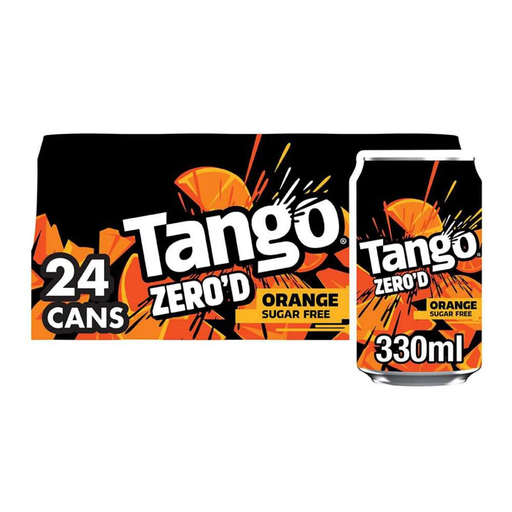 No image available
The 330ml cans are a ready-to-drink, sparkling orange soft-drink option, not 100% juice. If the sugar content is decisive for your lunch choice, check the current can’s nutrition panel rather than relying on “Zero'd” in the name.
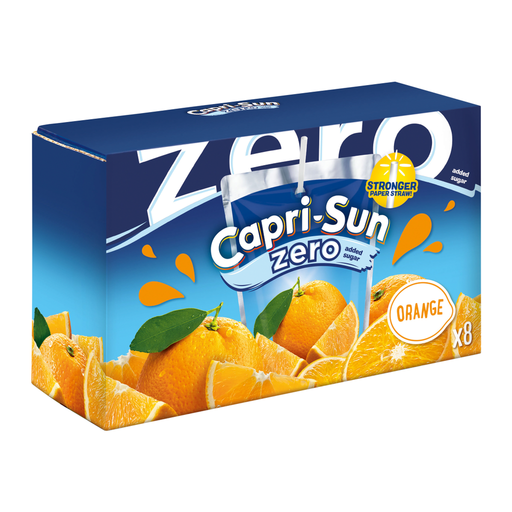 No image available
The individual 200ml pouches provide a packable orange-flavoured drink, not a measured 150ml serving of pure juice. Check the current pouch’s sugars figure rather than treating “Zero” as a substitute for the nutrition panel. The product information warns that the straw presents a choking hazard and says the drink is not suitable for children under 3.
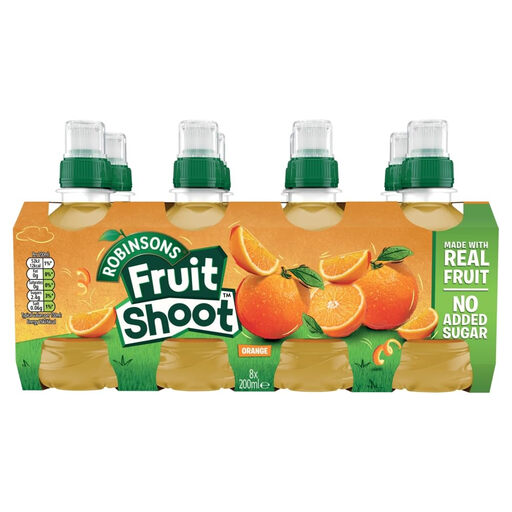 No image available
The individual 200ml bottles suit a lunch that calls for a ready-to-drink orange drink rather than 100% juice. Check the nutrition and sweeteners on the bottle. The product information warns that the caps contain small parts, says it is unsuitable for children under 36 months and advises against refilling the bottles.
No. The NHS says sugars in unsweetened fruit juice count as free sugars. Tropicana labels its Smooth Orange as having no added sugar but lists 13g sugars per 150ml serving.
The NHS advises children and adults to have no more than 150ml of fruit juice and smoothies combined per day, at mealtimes. If juice is served at lunch, count any other juice or smoothie that day within the same amount.
Yes, if you are serving juice: NHS guidance says to keep fruit juice and smoothies to mealtimes. The guidance also applies its 150ml daily amount to both drinks combined.
High juice is not necessarily pure juice. M&S states that its Mediterranean Orange High Juice contains 50% fruit juice and lists sucralose; check the particular bottle for its fruit content, ingredients, allergens and dilution directions.