People who want orange juice with dinner
If the fruit-juice format matters to you, compare 100% juices and plan the amount you pour. NHS guidance sets a combined daily limit of 150ml for juice and smoothies.


Choose 100% orange juice if you want juice with dinner and are content with a measured 150ml serving; it still contains naturally occurring sugars. If reducing drink sugars matters more than having pure juice, compare a prepared no-added-sugar squash or orange juice drink instead, checking its ingredients and serving figures. If you do not want orange flavour, water avoids adding sugars from a drink.
If the fruit-juice format matters to you, compare 100% juices and plan the amount you pour. NHS guidance sets a combined daily limit of 150ml for juice and smoothies.
A diluted squash or juice drink may suit this preference, but it is a different product from 100% juice. Check the prepared drink’s sugars, fruit content and sweeteners.
Compare whether each product is juice, concentrate or a ready-to-drink juice drink. Use the ingredients, sugars per serving and preparation instructions rather than the orange flavour alone.
Start with the kind of drink you want beside dinner, then compare nutrition figures for the amount you will actually serve.
| Priority | What to check | Your needs |
|---|---|---|
| Sugars | Read sugars per 100ml and per serving, using prepared-drink figures for squash. For context, Tropicana lists 13g per 150ml of Smooth Orange; Sainsbury’s lists 2.4g per prepared 250ml serving of its no-added-sugar orange squash. | I want to know how much sugar is in the glass I will drink, not assume that ‘no added sugar’ means sugar-free. |
| Drink type | Check whether the label says 100% juice, juice from concentrate, squash or juice drink. Read the fruit percentage and ingredients where the product is not 100% juice. | Pure orange juice matters to me, or I am happy to choose an orange-flavoured drink with a different fruit content. |
| Portion | For fruit juice, measure 150ml. NHS guidance says juice and smoothies count as one 5 A Day portion and should be limited to a combined 150ml a day; it advises having them at mealtimes. | If I pour juice with dinner, I want a portion that fits NHS guidance rather than assuming a larger glass counts as more fruit portions. |
| Preparation | Check whether the drink needs diluting and compare its prepared serving with ready-to-drink products. Sainsbury’s instructs shoppers to dilute its orange high-juice squash one part squash to four parts water. | I would rather open a ready-to-drink bottle, or I do not mind mixing squash for dinner. |
A drink can contain fruit sugars even when no sugar has been added. Tropicana lists 13g sugars per 150ml of its Smooth Orange juice.
Read the sugars line for the portion you intend to drink, alongside the ingredients and front-label wording.
Squash is prepared with water, so the amount in the finished glass differs from the concentrate. Sainsbury’s specifies one part squash to four parts water for its orange high juice.
Follow the dilution instructions and use the prepared-serving nutrition figures when comparing drinks.
NHS guidance says juice and smoothies count only once towards 5 A Day, even if you drink more than 150ml.
Measure a 150ml juice serving with dinner; choose water if you want more to drink without another serving of juice.
Tropicana Smooth Orange is a 100% pressed juice, not from concentrate.
Innocent Smooth Orange is a 100% orange juice option.
Tesco’s Whole Orange Juice Drink No Added Sugar is a juice drink rather than 100% orange juice.
The cited Sainsbury’s products illustrate two distinct choices: Pure Orange Juice and no-added-sugar orange high-juice squash.
Asda Smooth Orange Juice is an orange juice from concentrate.
The cited M&S range includes Smooth Orange Juice and a separate Mediterranean Orange High Juice.
These options are orange-flavoured juice drinks and squash for shoppers considering a drink other than 100% orange juice with dinner. Compare their prepared or ready-to-drink labels before choosing.
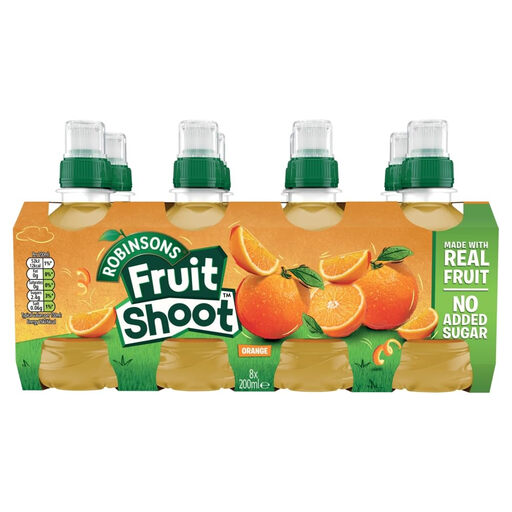 No image available
Eight ready-to-drink 200ml bottles offer individual orange-drink portions for dinner. Compare the sugars and ingredients on the label with 100% juice; the product information warns that its small caps are unsuitable for children under 36 months.
 No image available
This squash suits a dinner drink you are willing to dilute rather than drink straight from the bottle. Follow its preparation instructions and check the prepared serving’s sugars if you need a precise comparison with juice.
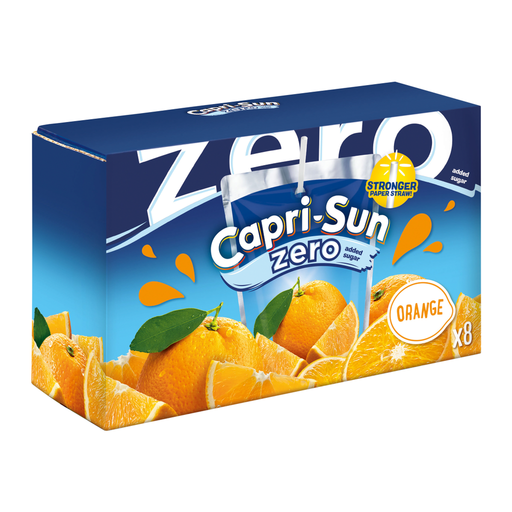 No image available
Eight ready-to-drink 200ml pouches provide individual orange-drink portions. Do not take ‘Zero’ in the name as confirmation of zero sugars: check the on-pack nutrition declaration. The product information warns that the straw is a choking hazard for children under three.
No. It does not mean the drink contains no sugars. Tropicana Smooth Orange says it has no added sugar but lists 13g naturally occurring sugars per 150ml; check the nutrition declaration for the drink you choose.
NHS guidance limits fruit juice and smoothies to a combined 150ml a day. A 150ml serving of juice counts as one 5 A Day portion; drinking more does not make it count twice.
If you choose juice, NHS guidance advises having it at mealtimes rather than between meals. Juicing releases sugars, which can increase the risk of tooth decay.
No. Sainsbury’s Pure Orange Juice is labelled 100% fruit juice, while its no-added-sugar orange high-juice squash is a concentrate containing sweeteners. Sainsbury’s instructs shoppers to mix one part squash with four parts water; its stated 50% fruit-juice content applies before dilution.
Check the product type and ingredients, then compare sugars for the amount you will drink, using prepared-serving figures for squash. UK government guidance says front-of-pack traffic-light labelling can help compare calories, fat, sugars and salt across pre-packed products.