Choose 100% orange juice if you want a small serving of pure juice; its naturally occurring sugars still count as free sugars, and the NHS advises limiting fruit juice and smoothies to a combined 150ml a day. If the sugar content of an orange-flavoured drink matters more than choosing pure juice, compare ready-to-drink juice drinks and squash using their prepared-drink labels, then check sweeteners, ingredients and dilution directions. For a weekly shop, make sure an opened chilled pack can be used within its stated storage period.
Who is each option for?
Households choosing pure juice for breakfast
Choose 100% orange juice when a small serving of fruit juice is what you want, rather than an orange-flavoured soft drink. The NHS counts sugars naturally present in unsweetened juice as free sugars and advises a combined limit of 150ml a day for fruit juice and smoothies.
Shoppers comparing sugars in everyday drinks
A juice drink or squash may have a lower listed sugar figure than the pure-juice examples, but it is a different product. Compare the drink as served, and check its juice content, sweeteners and dilution directions.
Families planning a weekly drinks shop
Pack size matters alongside how quickly each drink will be used. Check the opened-life instructions on chilled juice and the stated dilution basis on squash before deciding how much to buy.
What should you check before buying?
100% orange juice
Choose when: You want pure orange juice in a small serving rather than a lower-sugar flavoured drink.
Bear in mind: No added sugar does not remove the naturally occurring sugars that the NHS counts as free sugars.
Orange juice drink
Choose when: You want a ready-to-drink alternative and its listed sugar figure suits your comparison.
Bear in mind: A juice drink is not pure juice; Tesco lists its Grower's Harvest example as 50% orange juice from concentrate, with water and sucralose.
Orange squash
Choose when: You want a drink prepared by diluting concentrate with water.
Bear in mind: Compare nutrition for the diluted drink and check the instructions and ingredients; Ocado lists sweetener and sulphites in the M&S high-juice example.
Once you have chosen the type of drink, compare labels on the same prepared-drink basis and pick a pack your household can use as directed.
| Priority | What to check | Your needs |
|---|
| Sugars and serving |
Read sugars per 100ml and per intended serving. Tropicana lists 8.6g per 100ml and 13g per 150ml for Smooth Orange; the NHS counts sugars in unsweetened juice as free sugars. |
I want pure juice, but I also want to plan a small serving rather than assume “no added sugar” means sugar-free. |
| Drink type |
Check the product name, percentage of juice and ingredients. Tesco lists its Grower's Harvest juice drink as 50% orange juice from concentrate; pure-juice and squash products have different formulations. |
If orange flavour matters more to me than a pure-juice serving, I can compare juice drinks and squash without treating them as 100% juice. |
| Prepared drink |
Compare sugars and energy per 100ml on the same basis. Ocado gives 1.1g sugars and 6kcal per 100ml for M&S High Juice when diluted one part squash to four parts water. |
For drinks I dilute at home, I need the figures for the prepared glass, not just the concentrate. |
| Ingredients |
Read the current ingredients and allergen declaration. Tesco lists sucralose in its Grower's Harvest juice drink; Ocado lists sucralose and sulphites in the M&S squash. |
Someone in my household may need to avoid a particular ingredient, so the sugar claim alone is not enough. |
| Pack use |
Check pack size, refrigeration instructions and time allowed after opening. Tesco says to use innocent Smooth Orange Juice within four days of opening; Ocado gives the same opened-life for M&S Smooth Orange Juice. |
A larger chilled pack only suits my weekly shop if we are likely to finish it within its stated opened-life. |
Common buying mistakes
-
Reading “no added sugar” as “low sugar”
Pure juice can contain no added sugar while still providing free sugars. Tropicana lists 13g sugars per 150ml for Smooth Orange, and the NHS counts naturally occurring sugars in unsweetened juice as free sugars.
Check sugars per 100ml and per glass, then decide whether you want a small pure-juice serving or a different orange-flavoured drink.
-
Comparing squash and juice on different bases
Ocado states the M&S High Juice nutrition figures for squash diluted one part to four parts water. Those figures describe the prepared drink, not undiluted concentrate.
Follow the pack directions and compare nutrition for the drinks as you intend to serve them.
-
Buying more chilled juice than you will use
Tesco and Ocado instruct shoppers to use their respective innocent and M&S Smooth Orange Juice examples within four days of opening.
Estimate how many servings your household will pour during that period before choosing a large pack.
An unfinished opened bottle may mean food waste.
-
Overlooking ingredients in lower-sugar alternatives
Tesco lists sucralose in its Grower's Harvest juice drink. Ocado lists sucralose and declared sulphites in the M&S High Juice squash.
Check the ingredients and allergen declaration on the exact pack if either matters to your household.
Brand and product references
These examples illustrate differences between specific orange drinks; a brand name alone does not establish a product's juice content or nutrition.
Tropicana
Tropicana describes its Smooth Orange 1.8L pack as orange juice made only from oranges and not from concentrate.
- A 100% juice example for shoppers who specifically want pure orange juice.
- Tropicana lists 13g naturally occurring sugars per 150ml; no added sugar does not mean no sugar.
innocent
Tesco describes innocent Smooth Orange Juice 900ml as 100% orange juice with no added sugar.
- The 900ml pack offers a different size from the Tropicana example.
- Tesco lists 7.8g sugars per 100ml and says to refrigerate it and drink it within four days of opening.
Tesco / Grower's Harvest
Tesco lists Grower's Harvest No Added Sugar Orange Juice Drink 1L as a juice drink, not 100% orange juice.
- Its listed 4.1g sugars and 23kcal per 100ml provide figures to compare with pure-juice examples on the same volume basis.
- Tesco lists 50% orange juice from concentrate alongside water and sucralose.
M&S
Ocado lists both M&S Smooth Orange Juice and M&S No Added Sugar Mediterranean Orange High Juice squash. They are different types of drink.
- The smooth juice is listed as not from concentrate; the squash lists 1.1g sugars per 100ml when diluted as directed.
- The squash contains sweetener and declared sulphites and requires dilution. Ocado says to refrigerate the smooth juice after opening and use it within four days.
Orange-flavoured options on Joybuy
These products are orange-flavoured squash and ready-to-drink orange drinks for households considering alternatives to pure juice. Check each product's ingredients and preparation directions before choosing it for a weekly shop.
 No image available
Robinsons No Added Sugar Orange Squash 1L
Consider this 1L squash if you want an orange-flavoured drink that you prepare with water rather than 100% juice. It contains sweeteners and declared sulphites; follow the dilution directions on the pack and check its current ingredients if these matter to your household. Refrigerate after opening and use within the stated period.
View on Joybuy
 No image available
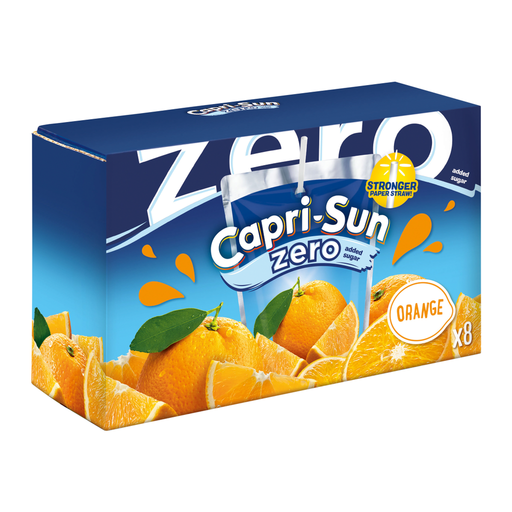
Capri-Sun Zero Orange 8 × 200ml
The individual pouches offer a ready-to-drink orange option for a weekly shop, not a serving of pure orange juice. The drink contains sucralose. Its straw poses a choking risk and the product is not suitable for children under three.
View on Joybuy
 No image available
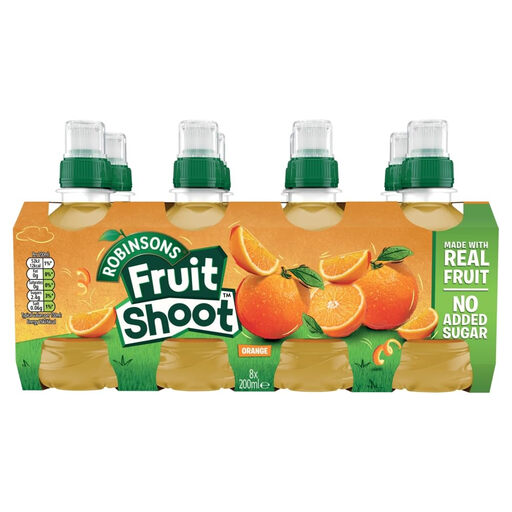
Fruitshoot Orange Low Sugar 8 × 200ml
Eight individual bottles offer another ready-to-drink orange option rather than 100% orange juice. This drink contains sucralose and acesulfame K; refrigerate after opening and drink within three days. The caps pose a choking risk for children under 36 months.
View on Joybuy
Questions about orange drinks
Does “no added sugar” mean orange juice has little sugar?
No. The NHS counts sugars naturally present in unsweetened fruit juice as free sugars. Tropicana lists 8.6g sugars per 100ml for its 100% Smooth Orange juice despite adding no sugar.
How much pure juice should I plan for?
The NHS advises limiting fruit juice and smoothies to a combined maximum of 150ml a day and having them with a meal. Use the number of likely 150ml servings and the pack's opened-life instructions to judge a suitable quantity for your household.
Is no-added-sugar orange squash the same as orange juice?
No. Ocado describes M&S No Added Sugar Mediterranean Orange High Juice as concentrated squash with sweetener, to be diluted one part squash to four parts water. Its nutrition figures apply to the diluted drink, not to 100% orange juice.
What if someone avoids sweeteners or sulphites?
Check the current ingredients and allergen declaration on the exact pack. Tesco lists sucralose in its Grower's Harvest orange juice drink; Ocado lists sucralose and declared sulphites in the M&S High Juice squash.


