Lunch shoppers comparing sugar and energy
Look at the prepared serving rather than relying on an orange flavour or a no-added-sugar label. A juice drink and a squash may have different mixing requirements and fruit content.


Choose 100% orange juice if you want juice and can keep your total fruit juice and smoothies within the NHS guidance of 150ml a day, taken with a meal. If lower sugar or energy matters more for your packed lunch, compare ready-to-drink orange juice drinks with prepared orange squash using the nutrition for the amount you will actually drink; neither is equivalent to 100% juice.
The useful distinction is whether you want pure juice, a drink you can pack without preparation, or a squash you can dilute at work.
Look at the prepared serving rather than relying on an orange flavour or a no-added-sugar label. A juice drink and a squash may have different mixing requirements and fruit content.
Pure juice may be your preference, but its naturally occurring sugars and the amount you pour still matter. Check whether a bottle contains more than the 150ml daily fruit-juice-and-smoothie amount in NHS guidance.
A single-serve pack needs no measuring at lunchtime. A larger carton or concentrated squash calls for a plan for portions, preparation or storage.
Decide whether pure juice is important to you, then compare labels on the same ready-to-drink or prepared-serving basis.
Choose when: You specifically want pure juice and can pour a portion to have with lunch.
Trade-off: No added sugar does not remove the sugars naturally present in orange juice.
Choose when: You want an orange-flavoured drink you can put straight into your lunch bag.
Trade-off: Check its fruit percentage and ingredients rather than treating it as pure juice.
Choose when: You can take water and prepare a drink at work.
Trade-off: It is a concentrate, so the nutrition comparison depends on the prepared drink.
| Priority | What to check | Your needs |
|---|---|---|
| Sugars and energy | Compare sugars and energy per 100ml and for the amount you will drink. For squash, use values for the drink made according to its dilution instructions. | I want to compare lunch drinks on the same basis, not mistake a small serving or an undiluted concentrate for a lower-sugar choice. |
| Drink type | Read the fruit percentage, ingredients and sweetener declaration. Check the sugars line even when the front says ‘no added sugar’ or a product name says ‘Zero’. | Pure orange juice matters to me, or I would rather consider an orange-flavoured drink with a different fruit content. |
| Juice portion | Check the bottle volume and your poured serving. The NHS advises limiting fruit juice and smoothies together to 150ml a day and having them with a meal. | If I pack pure juice, I want the amount I drink at lunch to fit alongside any other juice or smoothie that day. |
| Packing and storage | Check whether the drink needs water, whether a larger pack needs refrigeration after opening, and the use-by instructions on that pack. Marks & Spencer says to refrigerate its Smooth Orange Juice after opening and drink it within 24 hours. | Sometimes I need a drink I can open at lunch; on other days, I can bring a bottle and mix squash at work. |
Orange juice can contain sugars from the fruit without added sugar. Tropicana Smooth Orange lists 13g sugars per 150ml, and Ocado lists 12g per 150ml for Innocent Pure Orange Juice Smooth.
Check sugars per 100ml and for the portion you plan to drink instead of relying on front-of-pack wording.
Ocado lists Tropicana Pure Smooth Orange in 250ml bottles. Finishing one exceeds the NHS guidance of 150ml of fruit juice and smoothies combined per day.
If you choose pure juice, check the pack volume and pour the amount you intend to have with your meal.
Tesco gives nutrition for its No Added Sugar High Juice Orange as a prepared 250ml glass and instructs shoppers to use one part squash to four parts water.
Compare the prepared drink with ready-to-drink options. If mixing at work is impractical, consider a drink that needs no dilution.
Tesco lists 50% orange juice in its Growers Harvest Orange Juice Drink No Added Sugar, while Sainsbury’s lists 8% fruit juice in its No Added Sugar Fruit Slurps orange drink. Neither is 100% orange juice.
Choose the drink type first, then compare the exact product’s fruit percentage, ingredients and nutrition panel.
These examples illustrate different juice and drink formulations; check the exact product rather than assuming every item from a brand has the same ingredients.
Tropicana Smooth Orange is a pure-juice example, with a 4 × 250ml bottle format listed by Ocado.
Ocado lists Innocent Pure Orange Juice Smooth as a pure-orange-juice option.
Tesco lists both a ready-to-drink orange juice drink and an orange squash that must be diluted.
Sainsbury’s lists a 100% orange juice and a separate no-added-sugar orange juice drink.
Marks & Spencer’s Smooth Orange Juice is a larger-carton juice option.
These options cover ready-to-drink orange juice drinks and a squash to dilute at work. They are not a selection of 100% orange juices.
 No image available
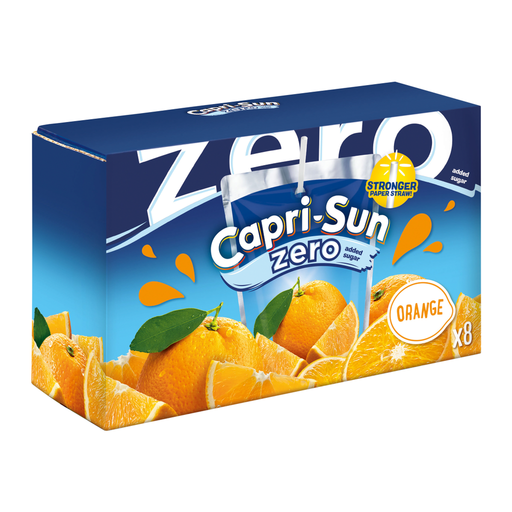
The 200ml pouch format can be packed for a lunch that leaves no time to mix a drink. Compare the nutrition and ingredients for the pouch you intend to drink; ‘Zero’ in the name alone does not establish that a product is sugar-free.
 No image available
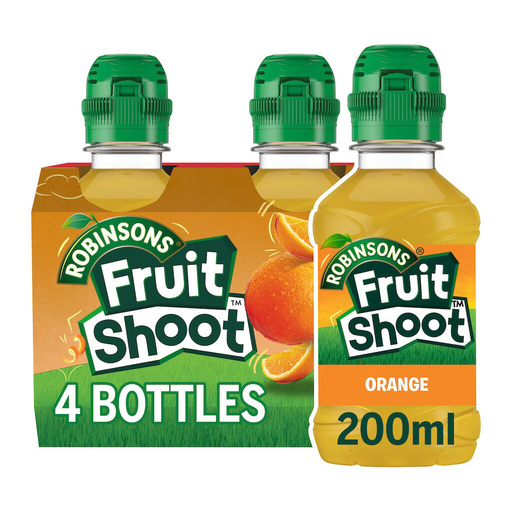
The four 200ml bottles offer a ready-to-pack orange juice drink when workplace mixing is inconvenient. Check the fruit content, ingredients and nutrition panel if you are comparing it with 100% juice.
 No image available
This concentrated squash suits a lunch where you can bring water and mix a drink. Joybuy’s product page lists 3 calories per 250ml diluted glass; follow the pack’s dilution instructions when comparing it with ready-to-drink options.
No. Sugars from fruit can remain: Sainsbury’s lists 1.8g sugars per 250ml bottle for its No Added Sugar Fruit Slurps orange drink, while Ocado lists 12g per 150ml for Innocent Pure Orange Juice Smooth. Check the sugars figure for the serving you will drink.
A whole 250ml bottle exceeds the NHS guidance to limit fruit juice and smoothies together to 150ml a day and have them with a meal. Check the bottle size and the amount you pour for lunch.
Choose a ready-to-drink juice drink if you need to open it without preparation; consider squash if you can bring water and dilute it as directed. Tesco lists 6.1g sugars per 150ml for its Growers Harvest orange juice drink and 2.2g per prepared 250ml glass for its No Added Sugar High Juice Orange, so compare the amount you would actually drink rather than those different serving sizes alone.
Check the opening and storage instructions on the particular carton before planning several lunches. Marks & Spencer instructs shoppers to refrigerate its Smooth Orange Juice after opening and drink it within 24 hours.