Travellers who want orange juice
If you want 100% orange juice with a train meal, plan a measured serving rather than treating a large bottle as one portion. The NHS advises limiting fruit juice and smoothies to a combined 150ml a day.


Choose 100% orange juice if you want juice with your train meal and can measure a 150ml serving, in line with NHS guidance for fruit juice and smoothies. If lower listed sugar matters more than having pure juice, a no-added-sugar orange squash is another option, provided you can dilute it as directed; neither “no added sugar” nor a product name containing “Zero” establishes that a drink contains no sugar.
The useful distinction is whether you want pure juice, a drink you can dilute, or a product whose sugar content meets a stricter requirement.
If you want 100% orange juice with a train meal, plan a measured serving rather than treating a large bottle as one portion. The NHS advises limiting fruit juice and smoothies to a combined 150ml a day.
A no-added-sugar squash is a different choice from pure juice. It suits a journey where you can bring or obtain water, follow the dilution instructions and check the ingredients.
Check the nutrition information for the drink itself. “No added sugar” describes what has been added, while an orange drink can still list sugars.
Start with the type of drink you want, then check the serving, preparation and storage instructions for the journey.
Choose it when: You want actual orange juice with a meal and can measure a 150ml serving.
Bear in mind: Juice contains naturally occurring sugars, and a larger bottle is more than the NHS advised daily juice serving.
Choose it when: You are willing to dilute a squash and prefer its listed sugar content to that of the pure-juice examples.
Bear in mind: It is not 100% juice, and “no added sugar” does not mean sugar-free.
Choose it when: A strict sugar requirement matters more than drinking orange juice.
Bear in mind: Check the sugars figure on the exact product rather than relying on “Zero” or “no added sugar” in its name.
| Priority | What to check | Your needs |
|---|---|---|
| Juice serving | Check the pack volume and measure a serving. The NHS advises a combined limit of 150ml a day for fruit juice and smoothies; Tropicana describes its 500ml pack as containing 3–4 servings of 150ml. | I want orange juice with my train meal without mistaking the whole bottle for one serving. |
| Sugars | Read sugars per 100ml and check whether the figure describes the drink as sold or after dilution. ASDA lists 8.6g per 100ml for Tropicana Smooth Orange and 1.0g per 100ml for its own high-juice squash when diluted as directed. | If sugar content is decisive for me, I need the figure for the drink I will actually consume—not just a claim on the front of the pack. |
| Drink format | Check the juice percentage, ingredients and preparation instructions. ASDA’s 50% Fruit No Added Sugar High Juice Orange contains sweeteners and needs diluting; it is not 100% orange juice. | I may prefer pure juice, or I may be happy to prepare squash if I can take water on the train. |
| Storage | Check whether the exact pack needs chilling before travel and what its label says to do after opening. Marks & Spencer says its Smooth Orange Juice can be stored cool and dry unopened, then refrigerated and consumed within four days after opening. | For a longer journey, I want a pack whose storage instructions I can follow before and after opening it. |
A drink can have no added sugar and still list sugars in its nutrition information. The supplied ASDA high-juice squash label, for example, lists 1.0g sugars per 100ml when diluted as directed.
If sugar-free status is essential, check the sugars figure and the claim on the exact drink rather than relying on “no added sugar”.
Tropicana describes its 500ml Smooth Orange pack as containing 3–4 servings of 150ml. The NHS advises limiting fruit juice and smoothies to a combined 150ml a day.
Measure a serving for the journey meal, and follow the pack’s storage instructions for any remainder.
A squash’s nutrition information may be stated for the drink after dilution. The ASDA high-juice example is also 50% orange juice, rather than a pure-juice product.
Compare the labelled figures on their stated preparation bases, and make sure you can dilute the squash during the journey.
A chilled bottle and an unopened long-life carton have different storage instructions. Marks & Spencer’s Smooth Orange Juice can be stored cool and dry unopened but must be refrigerated after opening.
Read the instructions on the pack you are taking, particularly if you expect to keep some for later.
These examples illustrate differences between juice and squash formats; they do not describe every drink made by each brand.
Tropicana Smooth Orange is a ready-to-drink, 100% orange juice option in the referenced 500ml pack.
ASDA 50% Fruit No Added Sugar High Juice Orange is a squash to dilute, not a ready-to-drink 100% juice.
The referenced M&S range includes a long-life Smooth Orange Juice and a separate 50% fruit-juice squash.
These options cover an orange squash that needs diluting and a ready-to-drink orange drink. Neither product name establishes that it is 100% orange juice or sugar-free.
 No image available
This squash suits a journey where you can bring or obtain water and dilute it before drinking. “No Added Sugar” does not by itself establish that the prepared drink is sugar-free; check its nutrition panel if that distinction matters to you.
 No image available
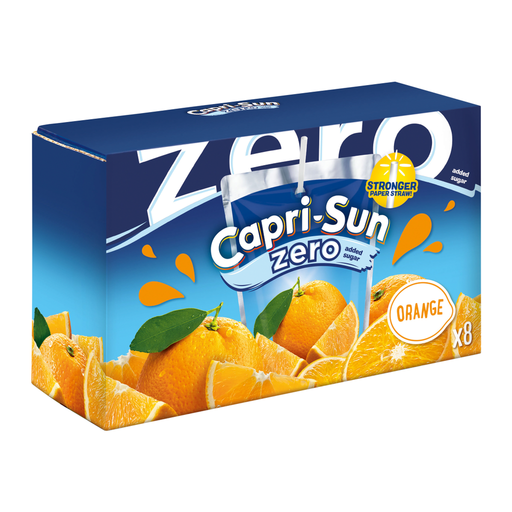
The individual pouches are a ready-to-drink option for a journey. Despite “Zero” in the name, the supplied product information lists sugars, so check the nutrition panel rather than treating it as a sugar-free drink.
No. “No added sugar” does not mean that a drink contains no sugars. Check the sugars figure on the exact juice or prepared squash if sugar content determines your choice.
If you are following NHS fruit-juice guidance, measure no more than 150ml for the day: its advised limit is 150ml of fruit juice and smoothies combined. A larger bottle can contain several servings.
Not if you specifically want pure juice. ASDA’s referenced high-juice squash contains 50% orange juice and sweeteners, and its listed nutrition figures apply when diluted as directed. Choose it as a squash you can prepare, not as the same drink in another pack.
A 500ml bottle is more than the NHS advised daily 150ml limit for fruit juice and smoothies combined. Tropicana describes its referenced 500ml pack as containing 3–4 servings of 150ml, so measure a portion and follow the label’s instructions for the remainder.
Check the storage instructions for the exact pack. Marks & Spencer says its Smooth Orange Juice can be kept cool and dry unopened, but must be refrigerated and consumed within four days after opening; do not assume the same instructions apply to a chilled juice bottle.