Who is choosing the drinks?
The useful choice depends on whether the buffet needs pure juice, a diluted alternative, or clearly identified options for guests with different ingredient preferences.
Hosts serving guests with different preferences
Offer a clearly identified 100% juice alongside a separately labelled orange squash if you want guests to choose between pure juice and a diluted drink. Neither “100% juice” nor “no added sugar” means sugar-free.
Hosts comparing sugars in the glass
Check the amount declared for each drink as served, including the dilution instructions for squash. For example, Tesco Groceries lists 2.2g sugars per 250ml prepared glass for its orange high-juice squash, while its innocent 100% orange juice listing gives 12g per 150ml serving; those are different serving sizes.
Caterers arranging self-service
Keep drink identities and current ingredient information accessible, particularly when a squash contains sulphites. Where a juice requires chilling, plan how it will be stored and replenished during service.
What should you check?
Choose the drink types first, then compare the labels on the same basis as the portions you intend to serve. If offering both juice and squash, give them separate, unmistakable labels.
| Priority |
What to check |
Your needs |
| Sugars as served |
Read “of which sugars” and the stated serving size. For squash, use the figure for the prepared drink and follow its dilution instructions. “No added sugar” does not mean sugar-free. |
I want to compare what guests will actually drink, not a juice serving with an undiluted concentrate or a differently sized glass. |
| Ingredients and allergens |
Check the current ingredient and allergen information for each exact product. Tesco Groceries lists sweeteners and sodium metabisulphite in its no-added-sugar orange high juice; Ocado lists sucralose and E223 in the cited M&S version. |
Guests should be able to tell which dispenser contains pure juice and which contains squash with sweeteners, and find ingredient information before serving themselves. |
| Juice portions |
Check the glass size if serving 100% juice. NHS guidance recommends a combined daily limit of 150ml for fruit juice and smoothies and advises having them at mealtimes. |
I would like a small juice serving at the buffet, with water available for anyone who wants another drink. |
| Service format |
Decide whether staff will dilute squash correctly, whether individual bottles or cans suit the table, and how each option will be labelled. |
A self-service table needs drink names that remain clear after bottles have been transferred to jugs or dispensers. |
| Chilled storage |
Follow each product’s storage and after-opening instructions. For food businesses in England, Wales and Northern Ireland, GOV.UK states that chilled food requiring temperature control must be kept at 8°C or below. |
Opened chilled juice may need to stay in refrigeration until it is put out, rather than sitting on the buffet throughout the event. |
Product-line examples
These named products illustrate differences between 100% juice and diluted high-juice squash; check the current pack before choosing drinks for an event.
Tropicana
Sainsbury's lists Tropicana Smooth Orange Juice in a 1.8L pack as 100% juice with no added sugar.
- The listing describes 12 servings of 150ml, which gives a stated portion basis for planning glasses.
- It lists 13g sugars per 150ml; no added sugar does not mean no sugars.
innocent
Tesco Groceries lists innocent Smooth Orange Juice in a 900ml pack as 100% orange juice.
- The listing gives a 150ml serving and identifies the juice as containing no added sugar.
- It lists 12g naturally occurring sugars per 150ml and instructs refrigeration at 0–8°C, with use within four days of opening.
Tesco
Tesco Groceries lists its No Added Sugar High Juice Orange as a concentrated orange drink with sweeteners, rather than 100% juice.
- The listing declares 2.2g sugars per 250ml prepared glass.
- Its ingredient list includes sodium metabisulphite, sucralose and acesulfame K; check the current pack when serving guests.
M&S
Ocado lists M&S No Added Sugar Mediterranean Orange High Juice as a squash diluted with one part concentrate to four parts water.
- The listing declares 2.8g sugars per 250ml diluted serving.
- It lists sucralose and E223; keep the current ingredient information available when serving it.
Orange drinks on Joybuy
These options cover a diluted orange squash and individually packaged orange-flavoured drinks for a buffet. The cans and bottles are not substitutes for 100% orange juice; compare their current labels if guests need to distinguish sugars, sweeteners or allergens.
 No image available
Robinsons No Added Sugar Orange Squash 1L
A squash option for a separately labelled, diluted drink at the buffet. Follow the current pack’s preparation instructions and compare sugars for the drink as served. Check its ingredient and allergen information for sweeteners and sulphites before offering it to guests.
Joybuy
 No image available
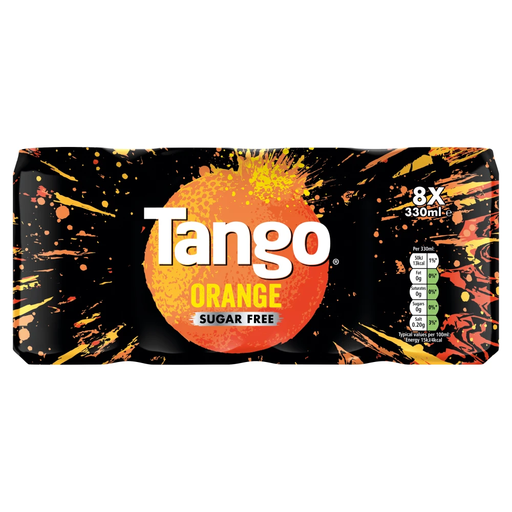
Tango Orange Sugar Free Carbonated Soft Drink 8 x 330ml
Eight individually packaged 330ml carbonated orange drinks offer a ready-to-serve format. This is a soft drink, not 100% orange juice or a squash to dilute; check the current ingredient and allergen information before service.
Joybuy
 No image available
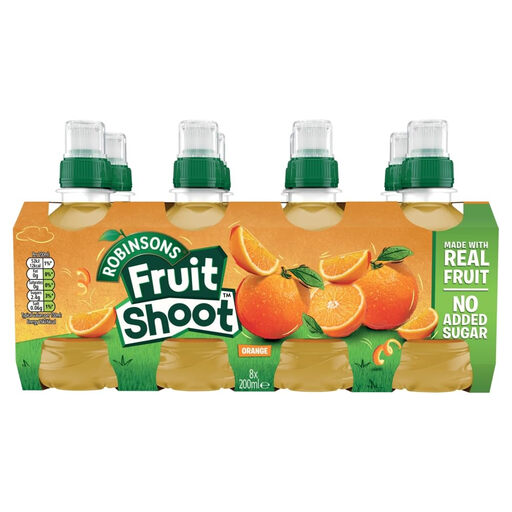
Fruitshoot Orange Low Sugar 8 x 200ml
Eight individual 200ml bottles provide another ready-to-serve orange drink, rather than 100% juice. Check the current pack for sweeteners and sulphites. Its small-part caps are unsuitable for children under 36 months.
Joybuy
Questions about serving orange drinks
Does “no added sugar” mean an orange drink is sugar-free?
No. Tesco Groceries lists 2.2g sugars per 250ml prepared glass for its cited no-added-sugar orange high juice, and Ocado lists 2.8g per 250ml diluted serving for the cited M&S version. Both listings also identify sweeteners. Check the current pack for the drink you will serve.
Is 100% orange juice suitable for guests avoiding sugars?
Do not assume so: 100% juice contains naturally occurring sugars. Tesco Groceries lists 12g per 150ml for the cited innocent juice, while Sainsbury's lists 13g per 150ml for the cited Tropicana juice. NHS guidance recommends limiting juice and smoothies to a combined 150ml a day and having them at mealtimes.
How should juice and squash be identified at a self-service buffet?
Label each drink by its actual type, such as “100% orange juice” or “no-added-sugar orange squash with sweeteners”, and keep current ingredient information accessible. GOV.UK guidance for food businesses in England, Wales and Northern Ireland requires allergen information for prepacked and non-prepacked food and drink.
Should caterers check orange squash for sulphites?
Yes. Tesco Groceries lists sodium metabisulphite in its cited orange high juice, and Ocado lists E223 in the cited M&S product. Check the exact drink’s current label or supplier information and include applicable allergen details in the caterer’s information for guests; do not assume every orange drink has the same ingredients.
How should chilled juice be managed during a catered buffet?
Keep juice that requires refrigeration chilled and follow its own after-opening instructions. For food businesses in England, Wales and Northern Ireland, GOV.UK states that chilled food requiring temperature control must be kept at 8°C or below and advises setting the fridge to 5°C or below. Putting out smaller batches makes it easier to replenish the buffet from refrigeration.


