Who needs to make this choice?
The useful distinction is whether a drink is contributing to a planned carbohydrate intake or simply providing something flavoured to drink.
Runners planning longer training sessions
As runs become longer or harder, decide how much carbohydrate you intend to take in and when. The British Dietetic Association says carbohydrate needs depend on the training programme and that intake during exercise can enhance performance when exercising hard for more than an hour. Orange juice can be one part of that plan, not a substitute for planning the whole session.
Shoppers comparing juice with orange-flavoured drinks
A no-added-sugar claim on 100% juice does not mean zero sugar. Someone choosing a drink for carbohydrate needs to check a different label figure from someone choosing a flavoured drink when fuelling is not the goal.
Runners fitting juice into their everyday diet
A serving used around training still contributes sugars to the day. NHS guidance counts the sugars in unsweetened fruit juice as free sugars, so serving size matters beyond the run itself.
What should you check before choosing?
100% orange juice
Choose it when: You want a measured amount of carbohydrate with food or around a training session.
Bear in mind: No added sugar is not zero sugar, and a small serving does not cover a long session’s fuel and fluid needs.
Orange-flavoured drinks with little or no sugar
Choose one when: You want a flavoured drink and are not relying on it for carbohydrate.
Bear in mind: Low sugar, zero sugar and no added sugar describe different things; check the actual carbohydrate and sugars figures.
A separate long-run fuel and fluid plan
Use this approach when: A long, hard or high-sweat session calls for planned carbohydrate alongside suitable fluid intake.
Bear in mind: Needs vary with the session and the runner; practise the combination of drinks and fuel in training.
Start with the session you are planning, then read the label for the amount you will actually drink.
| Priority |
What to check |
Your needs |
| Carbohydrate for the session |
Check carbohydrate per serving and the volume you plan to drink. For 1–2.5 hours of high-intensity exercise, a 2015 review published in Nederlands Tijdschrift voor Geneeskunde describes 30–60g carbohydrate per hour; that is a session-specific reference, not a claim about every run. |
For a long or hard run, I need to know what each drink contributes to my planned fuel intake. Tropicana Smooth Orange lists 14g carbohydrate per 150ml, so that serving alone would not reach the review’s hourly range. |
| Sugar and product type |
Read both sugars and carbohydrate on the nutrition panel. Check whether the pack describes 100% juice, no added sugar, low sugar or zero sugar rather than treating those descriptions as interchangeable. |
If I want carbohydrate, the amount matters more than a front-of-pack phrase. If I only want an orange-flavoured drink, I can choose by its label without assuming it will fuel a run. |
| Fluid and sodium |
Consider duration, conditions and how much you sweat. GetPRO Professional hydration guidance says sodium should be included when sweat losses are high, especially when exercise lasts more than about two hours, and cautions against both under-drinking and over-drinking. |
On a long or very sweaty run, I need a fluid plan as well as a fuel choice. Orange juice alone does not tell me how to manage my fluid and sodium needs. |
| Everyday serving |
Measure the portion you drink rather than treating the bottle as one serving. NHS guidance counts sugars in unsweetened fruit juice as free sugars and advises adults to have no more than 30g of free sugars a day. |
If I drink juice around training and at other times, I want to account for both servings in my usual diet. |
Brand and range references
These examples show why the exact product and its nutrition panel matter more than the brand name alone.
Tropicana
Tropicana describes its Smooth Orange as 100% pure pressed orange juice, not from concentrate, with no added sugar.
- The published panel lists 14g carbohydrate and 13g sugars per 150ml, allowing a serving-based calculation.
- No added sugar does not mean zero sugar; that serving is also below the hourly carbohydrate range cited for 1–2.5 hours of high-intensity exercise.
innocent
Tesco Groceries lists innocent Smooth Orange Juice and Orange Juice With Bits in its orange-juice range.
- Smooth and bits-containing versions provide a choice of texture.
- Use the nutrition panel of the particular bottle when calculating carbohydrate; texture does not establish its carbohydrate content.
Tesco
Tesco Groceries lists own-label drinks including Finest Freshly Squeezed Orange Juice Smooth, 100% Pure Squeezed Clementine Juice and 100% Pure Breakfast Juice.
- The named products give shoppers distinct drink descriptions to compare with branded orange juice.
- Clementine juice, breakfast juice and orange juice are not identical product descriptions; check each pack’s ingredients, serving size and carbohydrate figure.
Orange-flavoured drinks for non-fuelling occasions
These Joybuy options are orange-flavoured drinks to consider when planned carbohydrate fuelling is not the aim. Neither should be treated as a 100% orange juice option for a long-run fuel plan.
 No image available
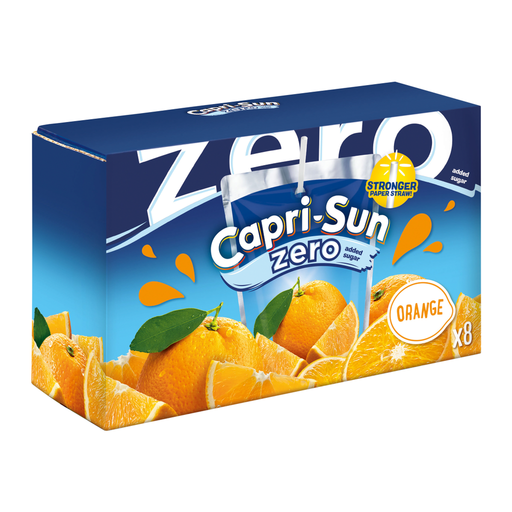
Capri-Sun Zero Orange 8 × 200ml
An orange-flavoured drink for occasions when planned carbohydrate fuelling is not the goal. The pack contains eight 200ml pouches. The Zero name conflicts with a stated sugar figure, so check the pack’s nutrition panel before relying on a zero-sugar claim.
View on Joybuy
 No image available
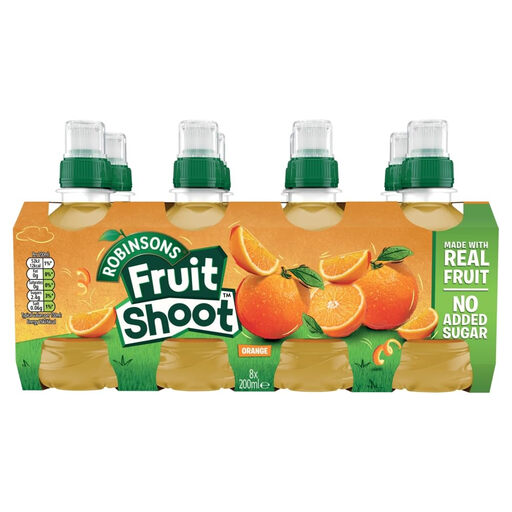
Fruitshoot Orange Low Sugar 8 × 200ml
An orange-flavoured option to compare when a drink is not intended as long-run fuel. The pack contains eight 200ml bottles. Low sugar does not mean zero sugar; check the label for the amount you plan to drink. The caps present a choking risk to children under 36 months.
View on Joybuy
Questions about juice and long runs
Can orange juice fuel a marathon long run by itself?
A small serving is unlikely to cover the carbohydrate needed for a long, high-intensity session by itself. Tropicana Smooth Orange lists 14g carbohydrate per 150ml, while a 2015 review published in Nederlands Tijdschrift voor Geneeskunde describes 30–60g per hour for 1–2.5 hours of high-intensity exercise. Calculate what your chosen serving contributes and practise the rest of your fuel plan in training.
Is no-added-sugar orange juice a zero-sugar drink?
No. No added sugar does not rule out naturally occurring sugars: Tropicana Smooth Orange lists 13g sugars per 150ml despite its no-added-sugar description. Read both sugars and carbohydrate on the nutrition panel.
Should I take a zero-sugar orange drink on a long run?
You can choose one for flavour, but do not count it as carbohydrate fuel without checking its nutrition panel. The British Dietetic Association says carbohydrate intake during exercise can enhance performance when exercising hard for more than an hour; plan and practise a suitable carbohydrate source separately if the session calls for one.
Do everyday sugar guidelines still apply when I am training?
Yes, juice still contributes to everyday sugar intake. NHS guidance counts sugars in unsweetened fruit juice as free sugars and advises adults to have no more than 30g of free sugars a day. Account for the portion you drink alongside the rest of your diet.
Does orange juice replace the fluid and sodium lost on a sweaty run?
Do not assume it does. GetPRO Professional hydration guidance says sodium should be included when sweat losses are high, especially if exercise lasts more than about two hours, and cautions against both under-drinking and over-drinking. Practise a fluid plan that fits the conditions and your experience in training.


