Daily orange-juice makers
If you regularly press oranges at breakfast, focus on how the juicer starts, where the juice collects and which parts need washing. A dedicated citrus appliance still requires you to halve each orange.


For oranges alone, start with a dedicated citrus juicer that presses halved fruit. A compact reamer suits smaller batches and buyers who want pulp control; if you press citrus frequently or also use grapefruit, look at the cone, handle and cleaning arrangements of an electric press. Consider a general juicer if harder fruits or vegetables are also part of your plans, but allow for its separate pulp-collection workflow, as described by Braun Household GB.
If you regularly press oranges at breakfast, focus on how the juicer starts, where the juice collects and which parts need washing. A dedicated citrus appliance still requires you to halve each orange.
If texture and storage matter, compare pulp settings, bowl size and where the cord goes. Braun Household GB lists five pulp settings, cable storage and a 0.69kg product weight for its CJ3000WH.
If you make several servings or also press grapefruit, check which fruit sizes the cone accepts and whether the working parts suit your cleaning routine. Sage specifies a cone for citrus from limes to grapefruit and dishwasher-safe working parts on its Citrus Press.
Consider it: If you mainly press oranges in small batches and want a model with pulp settings.
Allow for: Halving the fruit and pressing it onto the cone; check bowl capacity if you prepare several servings.
Consider it: If you press citrus frequently and want to assess features such as a universal cone or pressure handle.
Allow for: Citrus-only use; confirm the exact model's footprint and cleaning instructions.
Consider it: If your plans extend beyond citrus to harder fruits or vegetables.
Allow for: A separate pulp-collection step with centrifugal juicers, as described by Braun Household GB.
| Concern | What to check | Who this matters to |
|---|---|---|
| Everyday use and cleaning | Check how juicing starts, where juice collects and which specific parts are removable or dishwasher-safe. | If I make orange juice most mornings, I want the pressing and washing to fit into that routine without leaving drips behind. Around 45% of consumers would put everyday convenience and cleaning first. |
| Pulp and storage | Compare pulp settings, bowl capacity and storage dimensions for the exact model. | When I have limited cupboard space, I want an appliance I can put away while still choosing how much pulp reaches my glass. Roughly 33% of consumers would make pulp control and compactness their main concern. |
| Repeated pressing and fruit size | Check the cone's stated citrus-size range, any pressure-handle mechanism and support for replacement parts. | If I press several oranges or add grapefruit, I need a setup that accommodates those fruits and repeated servings. For around 22% of consumers, that would be the primary consideration. |
For halved oranges, a centrifugal machine introduces a separate pulp-collection workflow. Braun Household GB describes that workflow in its guidance on citrus presses and centrifugal juicers.
Choose a dedicated citrus reamer or press if oranges are your only intended fruit; assess a general juicer if harder fruits or vegetables are also on your list.
Cleaning instructions apply to particular components, not automatically to the whole appliance. Sage, for example, identifies the dishwasher-safe working parts of its Citrus Press individually.
Check the exact model's instructions for the cone, filter, collector and any other parts you expect to wash after each use.
A small bowl can mean stopping to empty it between glasses. A Braun CJ3000WH listing specifies a 350ml bowl, which is worth comparing with the amount you normally prepare.
Check the stated capacity and whether juice collects in a bowl or dispenses into your own glass or jug.
The NHS includes sugars in unsweetened fruit juice among free sugars. Pressing oranges yourself does not change that classification.
Consider your usual servings alongside the appliance features you want.
Braun's CJ3000WH illustrates a compact electric citrus reamer with adjustable pulp control.
Smeg's CJF11 is a design-led electric citrus juicer with a universal reamer.
Sage's Citrus Press offers a pressure-handle format for pressing different sizes of citrus fruit.
These options cover citrus-specific electric juicers and manual tools for pressing halved fruit. Choose by the amount you make, the effort you are comfortable with and the features stated for each model.
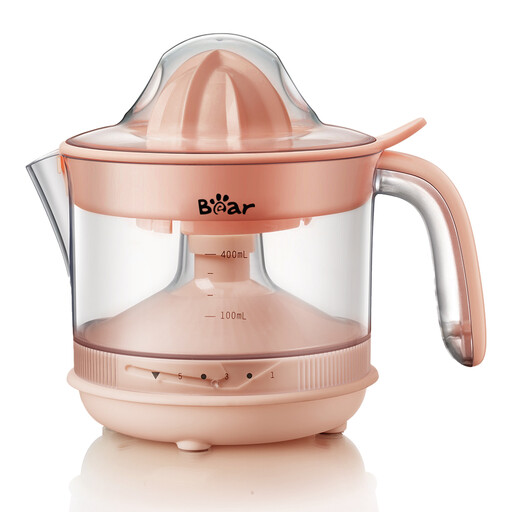 No image available
Consider this compact citrus reamer if choosing the pulp level matters when you make orange juice.
The product title lists five adjustable pulp levels. Check how its stated 110mm feed chute relates to pressing halved fruit onto the cone, and confirm the bowl capacity and cleaning instructions for your routine.
 No image available
Choose a manual option if you are happy to press halved citrus by hand rather than use an electric juicer.
The product title specifies a straining filter, storage cups and a non-slip base. Check the reservoir capacity against the number of servings you prepare.
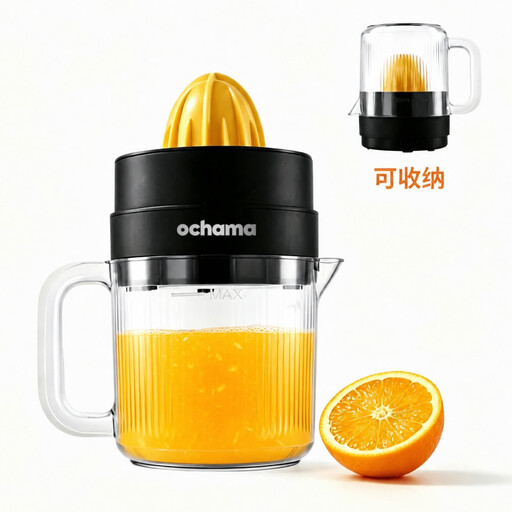 No image available
Consider this electric citrus press if you want to prepare orange juice without relying solely on manual squeezing.
The product title states 30W power, pulp separation and a 1.4L capacity. Confirm how much juice the container can hold in use, along with the appliance's dimensions and cleaning instructions.
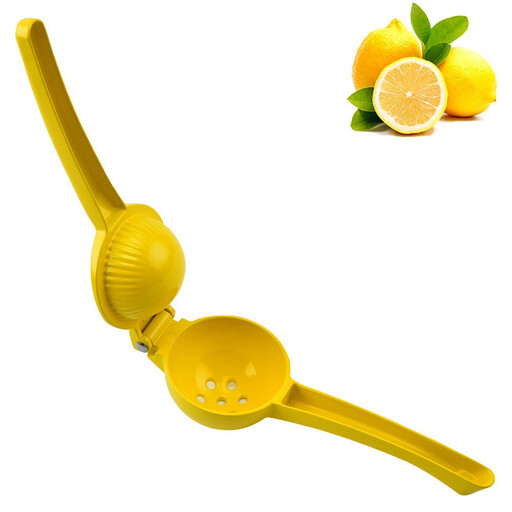 No image available
This handheld option is intended for manually squeezing halved citrus, including small oranges.
Its stated fit for small oranges makes fruit size worth checking before purchase, particularly if you normally use larger oranges.
Choose a dedicated citrus juicer if oranges are your main focus and you are content to halve them before pressing. Braun Household GB describes centrifugal juicers as processing harder whole fruits through a fine mesh and collecting pulp separately, so that route is more relevant if you also plan to juice other produce.
Check the instructions for each food-contact part rather than assuming the whole appliance is dishwasher-safe. Sage specifies the cone, juice collector, filter basket and fruit dome of its Citrus Press as dishwasher-safe; confirm the equivalent instructions for any other model you consider.
Yes. The NHS includes sugars in unsweetened fruit juice among free sugars, so consider your usual serving pattern as well as how you plan to prepare the juice.
That depends on the brand, model and part. Braun Household says parts for its citrus squeezers can be ordered through its service centres or customer support; confirm that the particular replacement you need is available before relying on that route.