
24/7 全天候客户支持

免费退货

当日/次日达

品质保障

开启新人专享福利: 全场免邮 | 低至 2 折 | 免费试用 30 天 JoyPlus 会员
下载 Joybuy
When your work demands uncompromising hygiene and safety, the right pair of disposable gloves is not just a tool—it's a necessity. Orange nitrile gloves have become a staple in UK industries from healthcare to food service for their high visibility and robust performance. However, the market is filled with options that look similar but offer vastly different levels of protection. Choosing incorrectly can lead to safety risks, contamination and wasted money.
As a Joybuy Product Recommendation Officer, my role is to help you navigate these choices. This guide cuts through the marketing clutter, focussing on the critical factors that define a quality glove and highlighting the common purchasing traps to avoid.
Many buyers fall into the same traps, often swayed by vague claims or low prices. Here are the three most common issues to watch out for:
To ensure you get the protection you pay for, focus on these three core specifications.
The choice of material is your first line of defence. While latex gloves are available, nitrile has become the preferred material for many professionals.
AQL is a statistical quality control standard used to determine the maximum number of acceptable defects (like pinholes) in a batch of gloves. In simple terms, the lower the AQL number, the higher the quality and the more reliable the barrier protection. For medical grade gloves, an AQL of 1.5 or lower is the standard. For general industrial or food use, an AQL of 2.5 to 4.0 might be acceptable, but for high-risk tasks, always aim for a lower AQL.
Functional design features can significantly impact usability and safety.
Based on these critical parameters, we've matched some options to specific user needs. These selections prioritise certified safety, material quality and functional design.
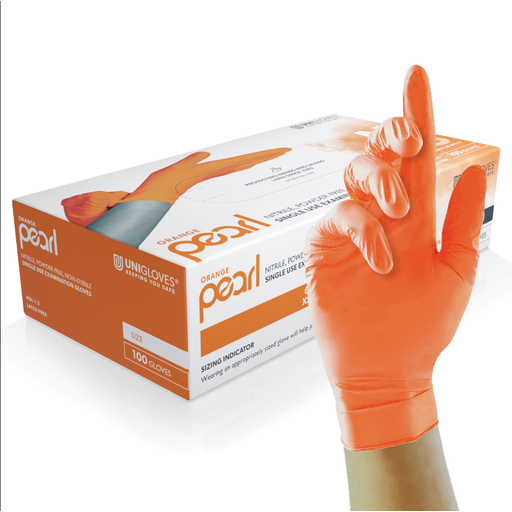
Why This Fits Their Persona: For dentists, tattoo artists and clinicians, barrier integrity and dexterity are paramount. These gloves are designed for medical environments, offering a reliable shield against contaminants while allowing for precise movements.
These gloves meet medical grade standards (AQL 1.5) and are completely powder-free, directly addressing the pitfalls of uncertified products and potential contamination.
The nitrile formulation conforms to the hand for comfort during long procedures and the textured fingertips provide excellent grip. They are also fully latex free.
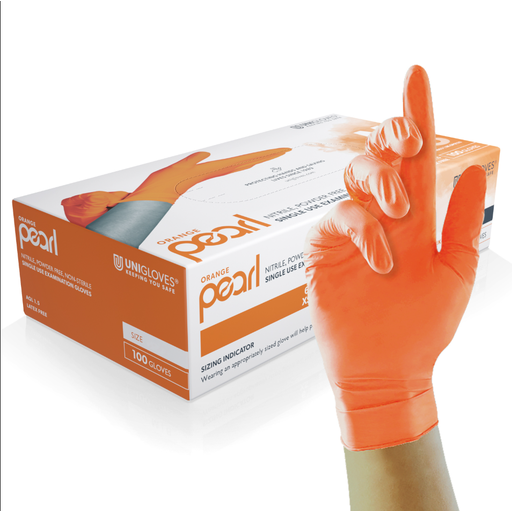
Why This Fits Their Persona: Chefs and kitchen staff need gloves that prevent cross-contamination and are safe for food contact. The bright orange colour is ideal for colour-coding systems and ensures high visibility in a busy kitchen.
These are explicitly certified as food safe for all food types and are powder-free, eliminating the risk of contaminating ingredients. The beaded cuff helps prevent liquids from entering the glove.
The high-visibility colour enhances safety and the textured grip is effective when handling oily or wet foods and utensils. Touchscreen compatibility is a plus for using kitchen order systems.
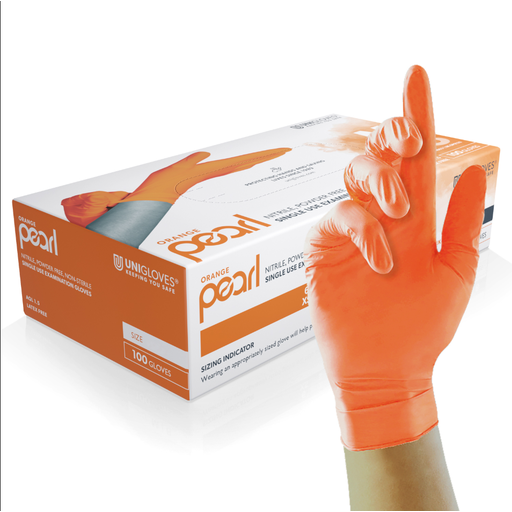
Why This Fits Their Persona: For tasks like car maintenance, painting or deep cleaning with chemicals, standard household gloves often fail. This option provides professional-level chemical resistance in a convenient box of 100.
Unlike flimsy alternatives, these gloves are robust and chemical resistant, preventing tears and protecting skin from common solvents, oils and detergents. The nitrile material is durable and reliable.
Provides a far superior barrier against chemicals than typical cleaning gloves. Touchscreen compatibility means you can check a tutorial on your phone without removing them.
While single-use disposable gloves are essential for hygiene and safety in many professional and domestic settings, some tasks might benefit from a more durable, long-lasting solution. If your work doesn't involve strict cross-contamination protocols or contact with harsh chemicals, exploring reusable options could be a cost-effective and sustainable choice for general cleaning or gardening.
For tasks like washing up or general household cleaning, a different type of glove may be more suitable. We have compiled a complete range of products that meet strict selection criteria.
1. Are orange nitrile gloves better than blue or black ones? The colour of a nitrile glove is primarily for identification and organisational purposes. For example, different colours can be used in a food processing plant to designate different areas (e.g., raw meat vs. cooked food) to prevent cross-contamination. Orange offers high visibility, which is useful for spotting tears or ensuring hands are visible. The quality of the glove, however, is determined by its material thickness, AQL rating and certifications, not its colour.
2. How long can I wear a single pair of nitrile gloves? Nitrile gloves are designed for single use. To maintain hygiene and safety, they should be discarded after each distinct task (e.g., after handling raw chicken, before moving on to vegetables). They must be replaced immediately if you notice any tear or puncture. For prolonged, continuous tasks, it is good practice to change them periodically to minimise the risk of micro-tears and maintain barrier integrity.
3. Can I use medical grade gloves for handling food? Yes, provided they are also certified as food safe. Many high-quality gloves carry dual certification. A glove that meets medical grade standards like EN 455 offers excellent barrier protection and if it also has the food contact symbol, it confirms that no harmful materials will transfer to food. Always check the product specifications for both certifications to ensure maximum safety.