TV-night snackers watching sugar
If you are choosing juice to go with food, the serving you pour matters as much as the wording on the carton. A ‘no added sugar’ claim does not mean a 100% orange juice has zero sugars.


Choose a measured 150ml serving of 100% orange juice if you specifically want juice and will have it with a meal; the NHS advises limiting fruit juice and smoothies together to 150ml a day. If you want a zero-sugar drink to sip throughout TV night, choose water, sparkling water or a drink whose label confirms zero sugars instead. ‘No added sugar’ orange juice can still contain sugars from fruit.
If you are choosing juice to go with food, the serving you pour matters as much as the wording on the carton. A ‘no added sugar’ claim does not mean a 100% orange juice has zero sugars.
If the aim is a zero-sugar drink that lasts through a film, compare drinks labelled sugar-free rather than assuming orange juice meets that requirement. Check the nutrition panel on the exact drink you choose.
A larger carton provides several servings. Compare its nutrition per serving, then check how it must be stored and how soon it should be used after opening.
Choose it when: You specifically want 100% orange juice and can have a measured 150ml glass with a meal.
Bear in mind: The NHS advises a combined daily limit of 150ml for fruit juice and smoothies because they are high in sugar.
Choose it when: Zero sugar or a drink to sip throughout the programme matters more than having 100% orange juice.
Bear in mind: An orange-flavoured squash or juice drink is not the same product as 100% orange juice; check its sugars after preparation or per ready-to-drink serving.
Once you have chosen the type of drink, compare the nutrition figures on the same quantity and check how you will serve and store it.
| Priority | What to check | Your needs |
|---|---|---|
| Zero sugars | Read ‘of which sugars’ on the nutrition panel. ‘No added sugar’ and ‘100% juice’ do not mean zero sugars: Tropicana UK lists 13g sugars per 150ml for Smooth Orange. | If zero sugar is essential, I need a drink whose nutrition panel confirms it, not simply a juice labelled ‘no added sugar’. |
| Serving size | Measure the glass rather than judging by carton size. The NHS advises no more than 150ml of fruit juice and smoothies combined per day, with a meal. | For juice alongside food, a small glass works better for me than repeatedly topping it up during a film. |
| Juice comparison | Compare sugars and calories per 150ml for the exact products. Sainsbury’s lists 11.4g sugars and 55 kcal for its Pure Squeezed Smooth juice; ASDA Groceries lists 14g sugars and 70 kcal for its Orange Juice with Bits, both per 150ml. | If I am choosing between 100% juices, I want comparable figures rather than relying on ‘not from concentrate’ or ‘with bits’ wording. |
| Flavour and ingredients | Check whether the drink is 100% juice, a squash to dilute or a ready-to-drink juice drink. For a sugar-free soft drink, check its flavour and ingredients as well as its sugars. | I may want orange flavour without a juice serving, or I may prefer a different flavour if zero sugar is the deciding factor. |
| Storage | Read the unopened and opened-pack instructions on the product you buy. Marks & Spencer says its Freshly Squeezed Smooth Orange Juice needs refrigeration at 0°C to 5°C and should be consumed within 24 hours of opening. | If I only serve juice occasionally, I need a pack size and storage period that suit how quickly we will use it. |
Those claims answer different questions. Tropicana UK lists 13g sugars per 150ml for Smooth Orange and says fruit sugars occur naturally, despite its no-added-sugar wording.
Check the ‘of which sugars’ figure. If you require zero sugars, look at another drink category and verify its nutrition panel.
Repeated top-ups can take you beyond the NHS’s advised daily maximum of 150ml for fruit juice and smoothies combined.
Pour a measured glass to have with a meal; choose another drink if you want something to sip throughout the programme.
‘Not from concentrate’ describes how a juice is made, not its sugar figure. Sainsbury’s lists 11.4g sugars per 150ml for its reviewed not-from-concentrate juice and 12g for its reviewed juice from concentrate.
Compare the nutrition panels of the particular cartons you are considering on the same serving basis.
Opened-pack instructions can affect whether a household will finish a carton in time. Marks & Spencer instructs shoppers to consume its reviewed freshly squeezed juice within 24 hours of opening.
Match the pack to the servings you expect to pour and follow its own refrigeration and use-after-opening instructions.
A pack that cannot be finished within its stated period may result in waste.
These product-line examples help with label comparison; they are not a list of the drinks in the Joybuy selection below.
Tropicana’s Smooth Orange is a 100% orange juice example for comparing a no-added-sugar claim with total sugars.
Innocent Smooth Orange is another 100% orange juice option with published serving figures.
The reviewed own-label smooth juices include a not-from-concentrate option and one made from concentrate.
The reviewed ASDA Orange Juice with Bits is a 100% squeezed option for shoppers who prefer pulp.
The reviewed Freshly Squeezed Smooth Orange Juice is a chilled option with a short stated period after opening.
These options are soft drinks, squash and juice drinks for a TV night when you are considering an alternative to a serving of 100% orange juice. Their flavours and listed sugars differ, so check each product rather than treating the selection as all orange-flavoured or all zero-sugar drinks.
 No image available
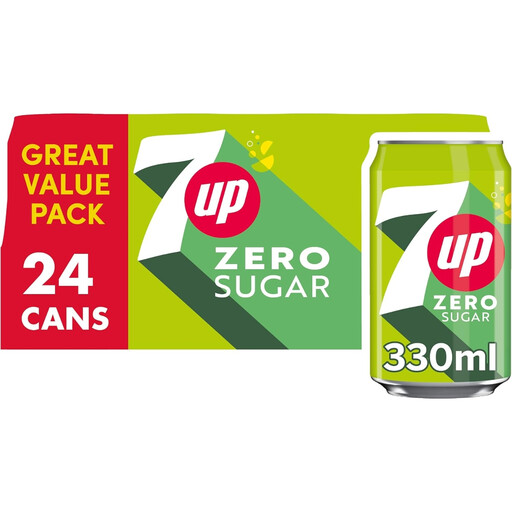
For a TV-night drink when zero sugar matters more than orange flavour, this lemon-and-lime soft drink comes in 330ml cans. Its listed nutrition shows 0g sugars per 100ml; it is not orange juice or an orange-flavoured drink. Check the label if its stated phenylalanine content matters to you.
 No image available
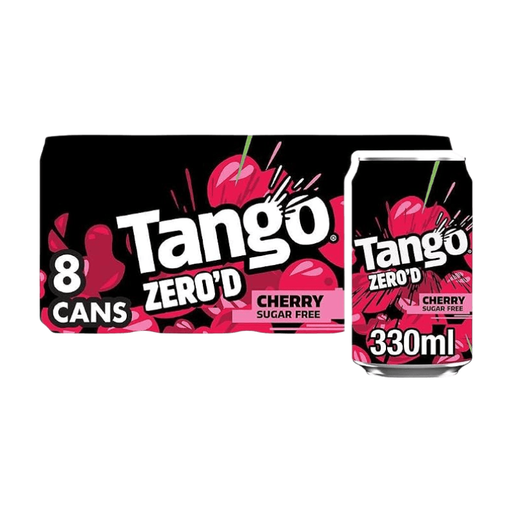
This ready-to-drink cherry option suits a choice based on its listed 0g sugars per 100ml, rather than orange flavour. The pack contains eight 330ml cans; it is a soft drink, not orange juice, and contains sweeteners.
 No image available
If orange flavour matters more than having 100% juice, this squash is an option to dilute for a drink. Do not drink the concentrate undiluted. Its no-added-sugar name does not establish zero sugars: the product information identifies naturally occurring fruit sugars, sweeteners and sulphites.
 No image available
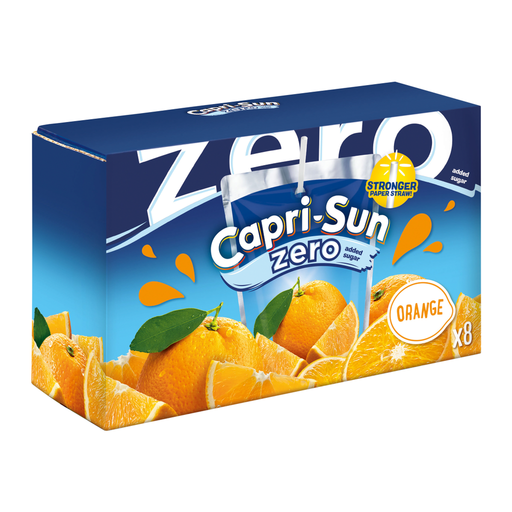
These individual pouches provide an orange-flavoured juice drink, not 100% orange juice. The listed nutrition shows 0.6g sugars per 100ml, so do not read ‘Zero’ as a confirmed zero-sugar figure. The product description warns that the straw presents a choking hazard and that the drink is unsuitable for children under 3.
 No image available
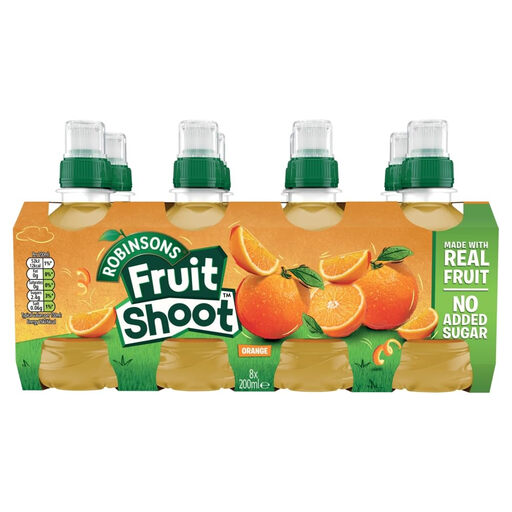
This orange-flavoured juice drink comes in individual 200ml bottles rather than a shared juice carton. Its listed 0.6g sugars per 100ml is not zero, and it is not 100% orange juice. The product description warns that the caps contain small parts and are unsuitable for children under 3.
No. Fruit sugars can remain even when no sugar is added: Tropicana UK lists 13g sugars per 150ml for Smooth Orange, and Tesco Groceries lists 12g per 150ml for Innocent Smooth Orange. If zero sugars are essential, check the nutrition panel of a different drink rather than relying on a juice claim.
Measure a 150ml glass if you choose juice. The NHS advises limiting fruit juice and smoothies combined to a maximum of 150ml a day and drinking them with a meal, rather than repeatedly topping up a glass through the evening.
No conclusion about sugar follows from that wording alone. Sainsbury’s lists 11.4g sugars per 150ml for its reviewed not-from-concentrate smooth juice and 12g per 150ml for its reviewed juice from concentrate; compare the figures on the exact products you are choosing.
Compare ‘of which sugars’ and calories using the same quantity, then check the ingredients, serving size and storage instructions. If one pack gives figures per 100g and another per 150ml, do not treat those numbers as a direct serving comparison.
Check both how the unopened pack is stored and how soon it must be used after opening. For example, Marks & Spencer specifies refrigeration at 0°C to 5°C and consumption within 24 hours of opening for its reviewed Freshly Squeezed Smooth Orange Juice; choose a pack size you are likely to finish within its own instructions.