Organic-first coffee commuters
Adults looking for a portable accompaniment to morning coffee who want to confirm the bar’s organic status before comparing its flavour, portion and nutrition.


For a cereal bar to have with coffee on your commute, check the exact product’s organic claim first; words such as “oat”, “natural” and “vegan” do not establish organic status. Then compare portion size, nutrition per bar and allergens. Lifefood’s Organic LIFEBAR Hazelnut Crunch is an adult-oriented 40 g example, while the organic Organix oat bars here are small products marketed for children aged 12 months and over, not like-for-like adult breakfast options.
Adults looking for a portable accompaniment to morning coffee who want to confirm the bar’s organic status before comparing its flavour, portion and nutrition.
Shoppers who need to check the ingredients and precautionary allergen statements for the exact flavour. An organic claim does not establish whether a bar suits an individual’s allergy or intolerance.
Parents considering a small organic oat bar for a child. Organix positions its Banana Soft Oaty Bar for children aged 12 months and over, with eating guidance that differs from an adult’s coffee-stop snack.
Start with the organic claim if it is essential to your choice, then compare the exact flavour’s portion, nutrition and allergen information.
| Priority | What to check | Your needs |
|---|---|---|
| Organic status | Look for an explicit organic claim and labelling information for the exact bar. UK Department for Environment, Food & Rural Affairs guidance says a food described as organic must meet organic production rules and contain at least 95% organic agricultural ingredients. | I want an organic bar, rather than one described only as natural, wholegrain or vegan. |
| Nutrition per bar | Read sugars, saturated fat, salt and energy for the stated serving. Check whether any fibre or protein figure is given per bar or per 100 g before comparing products. | For a coffee accompaniment, I want to know what the bar I will actually eat contains, not just what a front-of-pack phrase suggests. |
| Allergens | Check the exact flavour’s ingredients and precautionary statements, including any mentions of oats or gluten-containing cereals, nuts, peanuts, milk, soya and sesame. | If I need to avoid an ingredient or possible cross-contact, the current pack must fit my requirements as well as my organic preference. |
| Portion and intended user | Compare the weight of one bar, not just the pack weight or bar count. Note whether it is marketed as a toddler snack or an adult-oriented bar. | A small bite alongside coffee and a more substantial snack are different purchases; a child-oriented bar should not be treated as an adult breakfast substitute on portion size alone. |
Organic labelling concerns production and ingredients, not a particular nutrition profile. In its November 2025 review of 458 snack bars from 10 major UK retailers, Action on Salt & Sugar classified 37% of the sampled bars as high in sugars under UK front-of-pack thresholds; that figure is not specific to organic bars.
Confirm the organic claim, then read the nutrition declaration for the exact bar and serving size.
Organic bars can still contain allergens or carry precautionary statements. Lifefood’s Hazelnut Crunch contains hazelnut and may contain other nuts and sesame; Organix’s Banana Soft Oaty Bar carries its own ingredient and precautionary information.
If you have an allergy or intolerance, check the current pack for the exact flavour and follow your established allergy-management advice.
A 23 g toddler bar and a 40 g adult-oriented bar are different-sized servings. Figures quoted per 100 g also describe a different quantity from the contents of one bar.
Decide whether you want a small coffee accompaniment or a larger snack, then compare the declared nutrition per bar on the same basis.
Protein, fibre, wholegrain and vegan descriptions answer different questions from an organic claim. A brand may also sell several ranges with different ingredients and labelling.
When organic status matters, check the exact product’s organic information before using its other attributes to narrow your choice.
These examples show why the exact product matters: a brand’s other bar ranges do not establish the organic status of every flavour.
Its Organic LIFEBAR Oat Snack Protein Hazelnut Crunch is an adult-oriented organic oat-bar example in a 40 g pack.
Its organic Banana Soft Oaty Bar is a small oat bar marketed for children aged 12 months and over.
Its UK range includes crunchy, nut and protein-bar formats for shoppers considering alternatives to an organic-only choice.
Graze offers Oat Boost flapjacks among its snack-bar options.
Its UK range includes fruit-and-nut and other cereal-bar formats. Eat Natural lists train stations among places where its products are sold.
Its Nutri-Grain Apple bar is a breakfast-bar comparison option made with wholewheat, oats and barley.
These Organix soft oat bars are small, child-oriented options that could serve as a light coffee accompaniment. Their 12-month-plus positioning and portions should be considered before choosing one for an adult commute.
 No image available
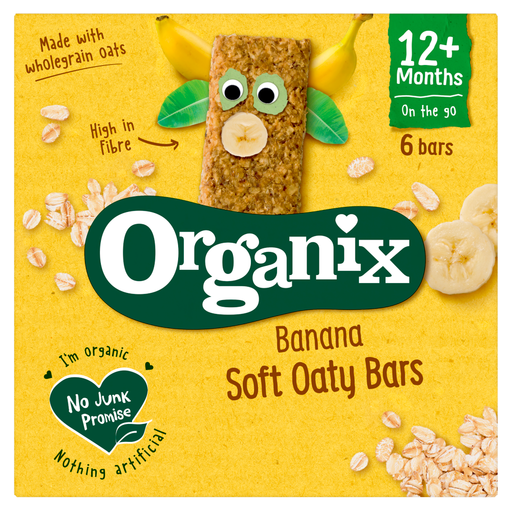
A small organic oat bar to consider for a light accompaniment, rather than assuming it will replace an adult breakfast. Organix markets the Banana bar for children aged 12 months and over. It contains oats and carries precautionary information for tree nuts, soya and milk; check the current pack if these affect you.
 No image available
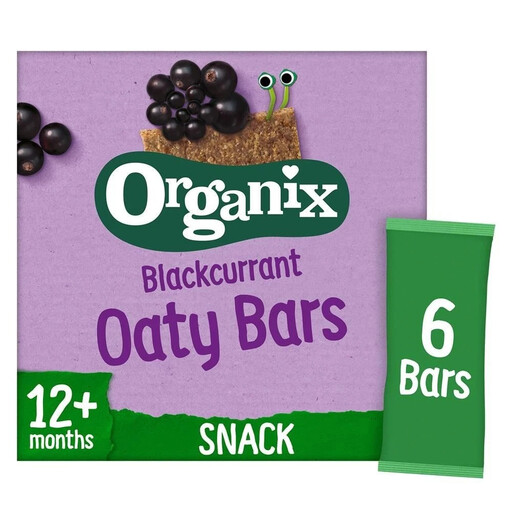
The blackcurrant variant offers a 23 g portion when you want a small oat snack alongside coffee. It is positioned for children aged 12 months and over, so check whether that portion fits your adult snacking plans. Its product information identifies oats and precautionary statements for tree nuts, soya and milk; read the current pack.
 No image available
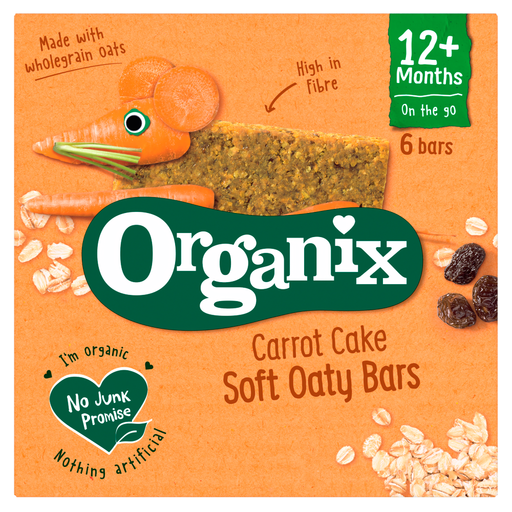
This child-oriented soft oat bar is another option if you want a small accompaniment rather than an adult breakfast substitute. The listed pack weighs 138 g; check the pack for its individual serving declaration. Its product information identifies oats and precautionary statements for tree nuts, soya and milk.
 No image available
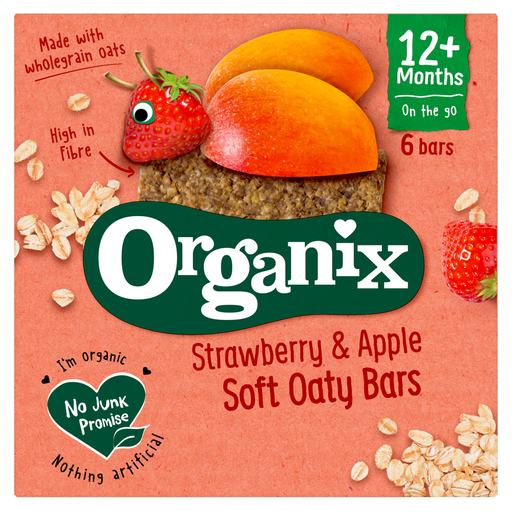
Each listed bar weighs 23 g, making portion size an important check if you are buying for an adult coffee stop. The product is positioned for children aged 12 months and over. Its information identifies oats and precautionary statements for tree nuts, soya and milk; check the exact pack before buying for someone with an allergy.
Look for an explicit organic claim and accompanying labelling information for the exact product. UK Department for Environment, Food & Rural Affairs guidance says food described as organic must meet organic production rules and contain at least 95% organic agricultural ingredients. A brand name or oat-based recipe is not enough to establish that claim.
No. Those descriptions concern different attributes and do not establish that a cereal bar meets UK organic-labelling rules. Check the organic information on the exact flavour you intend to buy.
Yes. Organic status does not set a low-sugar limit, so read the sugars declaration for the serving you will eat. For context, Action on Salt & Sugar classified 37% of 458 snack bars sampled from 10 major UK retailers in November 2025 as high in sugars under UK front-of-pack thresholds; that sample figure does not describe organic bars specifically.
Check the exact bar’s ingredients and precautionary allergen statements on the current pack. Organic status does not remove those ingredients or possible cross-contact, and different flavours can carry different information. Follow your established allergy-management advice when deciding whether a product is suitable.
Its organic status does not establish that use. Organix markets its 23 g Banana Soft Oaty Bar for children aged 12 months and over; it may be considered as a small coffee accompaniment, but check the portion and per-bar nutrition rather than treating it as an adult breakfast replacement.