Organic-first desk-side snackers
You want a portable cereal bar for a gaming session without treating words such as “natural” or “wholegrain” as an organic claim. Check the exact pack’s organic information before comparing its nutrition per bar.


For a gaming snack where organic status matters, start with the claim and certification details for the exact cereal bar, then compare nutrition per 100g and per bar. FREEE describes several of its oat bars as organic; if protein matters more, selected TREK and Nature Valley bars offer stated protein amounts, but their organic status needs a separate check.
The useful starting point depends on whether organic status, dietary requirements or protein matters most to you.
You want a portable cereal bar for a gaming session without treating words such as “natural” or “wholegrain” as an organic claim. Check the exact pack’s organic information before comparing its nutrition per bar.
You need to assess an organic bar against particular ingredients or dietary requirements. FREEE describes its Apricot with Chia and Cranberry oat bars as organic and makes product-specific free-from claims; check the current label for the flavour you choose.
You are comparing protein per bar and may consider a product without a confirmed organic claim. TREK and Nature Valley publish protein figures for selected lines, so compare the exact product rather than assuming every bar in a range has the same amount.
Screen the exact bar for your essential requirements first. Then compare the portion you expect to eat during a gaming session, not just the front of the pack.
| Priority | What to check | Your needs |
|---|---|---|
| Organic status | Look for an organic claim and certification details for the exact flavour and pack. GOV.UK guidance links UK organic labelling to organic production rules and approved control-body certification. | I want an organic bar, rather than one described only as natural, wholegrain or plant-based. |
| Sugars and portion | Compare sugars and saturates per 100g and per bar. Check the stated bar size against the number you expect to eat; NHS food-label guidance explains how to use these figures. | During a long session, I may eat more than one bar, so the figures for a single bar might not describe my whole snack. |
| Fibre and protein | Read the grams of fibre and protein for the exact flavour and portion. For example, FREEE lists 4.6g fibre per 35g Apricot with Chia bar, while TREK states 9g plant-based protein for its Protein Flapjacks. | If protein is my main priority, I want to compare stated amounts rather than assume an oat bar and a protein flapjack serve the same purpose. |
| Ingredients and allergens | Read the current ingredient list, declared allergens and any “may contain” statement. Check free-from claims against the exact flavour; organic or vegan wording does not answer every allergen question. | I need to know whether this particular bar fits the ingredients I avoid, not whether its product category sounds suitable. |
| Desk-side use | Check the pack format, individual bar size and product-specific storage instructions. A multipack weight alone does not tell you the nutrition in the portion you will eat. | I want a bar that is straightforward to portion during a session, with pack information I can use to compare it fairly. |
Those descriptions refer to different characteristics. GOV.UK guidance ties UK organic labelling to organic production and certification conditions, not to whether a bar contains oats or is plant-based.
If organic status is essential, check the claim and certification information for the exact product before comparing flavours or nutrients.
FREEE lists 6.9g sugars per 35g Chocolate Chip bar, 8.0g per Apricot with Chia bar and 9.3g per Cranberry bar. Its Chocolate Chip bar also lists 3.0g saturates per bar.
Compare flavours per 100g as well as per bar, then consider how many bars you intend to eat.
Organic, oat-based and vegan descriptions do not replace a product-specific ingredient and allergen check. FREEE makes particular free-from claims for its named bars; those claims should not be extended to another flavour or brand.
Read the current pack’s ingredients, allergen declaration and any precautionary statement for the exact bar.
TREK and Nature Valley state protein amounts for selected bars, but a protein figure does not establish an organic claim.
Decide whether organic status is a requirement or a preference, then check both attributes on any bar you are considering.
These brand examples show different product characteristics; a claim for one named bar or line does not apply to every item from that brand.
FREEE describes its Apricot with Chia, Chocolate Chip and Cranberry oat bars as organic, making those named products relevant when organic status is the starting requirement.
TREK is a comparison point when stated protein per bar takes priority over an organic requirement.
Nature Valley has selected protein bars with published per-bar figures for comparison.
Graze describes its Oat Boost flapjacks as made with high-fibre wholegrain oats.
Eat Natural describes a UK range that includes fruit-and-nut bars and vegan, gluten-free and high-fibre cereal-bar choices.
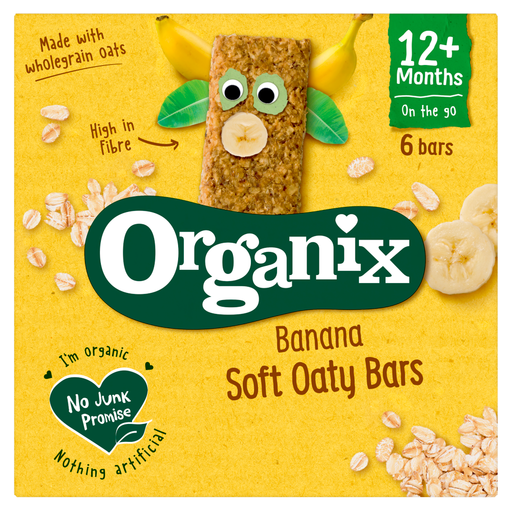
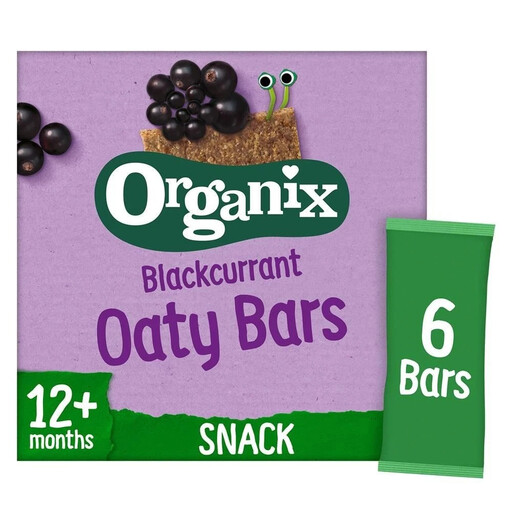
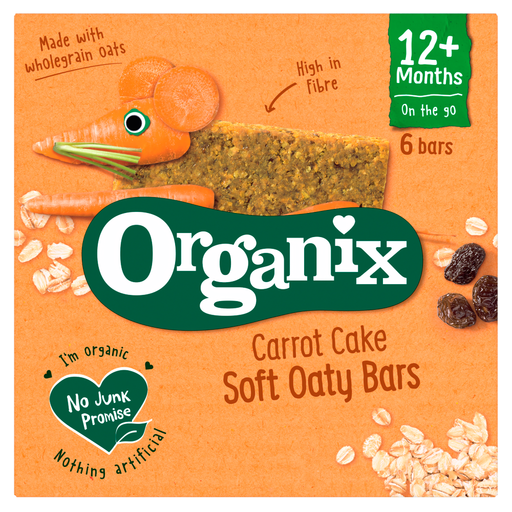
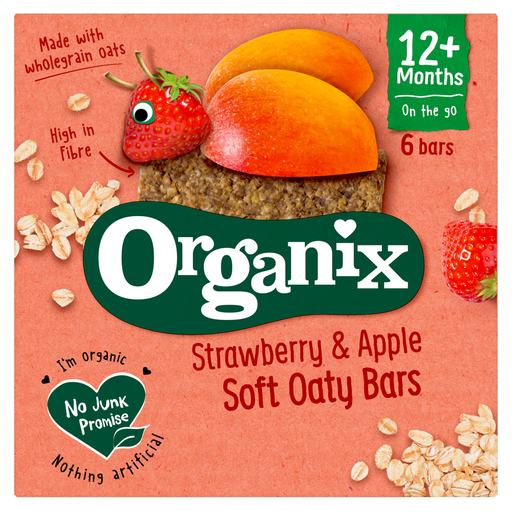
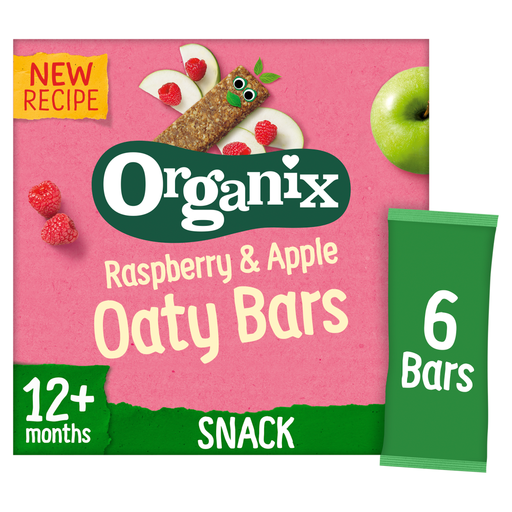
These Organix soft oat bars are labelled 12+ Months and are aimed at toddlers. If you are considering one as a gaming snack, check the exact pack’s organic information, ingredients and nutrition against your own requirements; the product names alone do not establish the same claims for every flavour.
 No image available
For a desk-side snack, compare the nutrition for one 23g bar with the number you expect to eat. This six-bar pack is labelled for children aged 12+ Months; check the current pack for its organic claim and ingredients.
 No image available
Organic appears in this flavour’s product name; check the current pack’s certification details and ingredients before choosing it for your requirements. The pack contains six 23g bars and is labelled 12+ Months.
 No image available
The 138g pack is labelled 12+ Months. Check the bar size on the current pack before using per-bar nutrition figures to plan a desk-side snack, and confirm its organic and allergen information separately.
 No image available
This 12+ Months pack contains six 23g bars. If you want one for a gaming session, compare its per-bar nutrition and check the exact flavour’s organic claim and allergen statement.
 No image available
For this six-bar, 23g-per-bar pack, check sugars both per 100g and per bar if you might eat several during a session. It is labelled 12+ Months; confirm the current pack’s organic information and ingredients as well.
Look for an organic claim and certification information for the exact product, rather than relying on “natural”, “plant-based” or “wholegrain”. GOV.UK guidance connects UK organic labelling with organic production rules and certification of the product and suppliers by an approved control body.
Organic status does not tell you its sugar content. FREEE lists 6.9g sugars per 35g Chocolate Chip bar, 8.0g per Apricot with Chia bar and 9.3g per Cranberry bar. Compare the exact flavour’s sugars per 100g and per bar; NHS food-label guidance classifies more than 22.5g sugars per 100g as high.
Use the per-bar figures for the number of bars you expect to eat, and the per-100g figures to compare different products. Check sugars, saturates and other nutrients on the exact pack rather than assuming its stated serving matches your snack.
No. Organic status is separate from ingredient and free-from claims. Read the current pack’s ingredients, declared allergens and any precautionary statement for the exact flavour; do not extend a gluten-free or other free-from claim from one bar to another.