Choose organic cereal bars for the office when an organic claim is part of the brief, but check the exact product’s label rather than relying on words such as “natural” or “plant-based”. For a shared biscuit tin, keep ingredient and allergen information with individually wrapped bars, then compare sugars, saturated fat and portion size: organic status does not settle those questions.
Who is choosing the bars?
The right office assortment depends on whether organic labelling, accessible allergen information or nutrition comparison is the main buying requirement.
Buyers with an organic requirement
If the office wants an organic option, check the claim on the exact bar. Under UK guidance from the Department for Environment, Food & Rural Affairs, food labelled organic must meet organic production rules, including the requirement that at least 95% of its agricultural ingredients are organic. “Natural”, wholegrain and plant-based describe different things.
Planners of shared office snacks
Individually wrapped bars help keep each snack with its ingredient and allergen information. Check gluten-free, vegan or dairy-free claims on the exact product where colleagues need those options; no single claim establishes suitability for every allergy.
Buyers comparing nutrition labels
Compare sugars and saturated fat per 100g, then look at the amount in one bar. Fibre and protein figures are useful when those are part of the office brief, but an organic label does not replace the nutrition panel.
What should you check before buying?
Start with the requirement that cannot be substituted—such as an organic claim or a colleague’s dietary restriction—then compare the bars that meet it by label and portion.
| Priority | What to check | Your needs |
|---|
| Organic claim |
Check the exact product’s organic labelling and certification information. UK guidance from the Department for Environment, Food & Rural Affairs requires organic-labelled foods to meet production rules, including at least 95% organic agricultural ingredients. |
I’m stocking an organic option, so a natural-sounding name or a protein claim will not meet that requirement on its own. |
| Nutrition |
Compare sugars and saturated fat per 100g, as well as the amount per bar. The NHS describes more than 22.5g sugars or more than 5g saturated fat per 100g of food as high. |
If colleagues want to compare snacks by their labels, I need both the per-100g figures and the size of the bar they will take. |
| Allergens |
Read the ingredients and allergen statement for every flavour. Keep wrappers and the outer pack available; check any gluten-free, vegan or dairy-free claim on the exact bar. |
I want colleagues to be able to check a bar before taking it, rather than relying on a label attached to the communal tin. |
| Fibre or protein |
Compare the declared grams per bar on products that meet the primary brief. Treat fibre, protein and organic status as separate product attributes. |
Protein might matter more to our office than organic labelling; if so, I can compare protein bars without presenting them as organic substitutes. |
What can go wrong with a shared tin?
-
Using “organic” as a nutrition score
Organic labelling concerns how a food is produced; it does not establish its sugars or saturated-fat content. The NHS uses per-100g figures for its high-sugars and high-saturated-fat guidance.
Confirm the organic claim, then read the nutrition panel per 100g and per bar before choosing a flavour.
-
Emptying unwrapped bars into the tin
Removing wrappers can separate a bar from the ingredients and allergen information a colleague needs. Oats, milk, nuts and soya may be relevant, depending on the recipe.
Leave bars wrapped and retain the outer packaging while that batch is being offered.
-
Replacing an organic requirement with another claim
A wholegrain, protein or lower-sugar claim does not establish that a cereal bar meets UK organic labelling rules.
If organic is essential, check it on the exact product first. Use the other claims to compare options only after that check.
-
Checking the brand but not the flavour
Ingredients can differ across a range. Nature Valley lists distinct protein-bar variants, while Kellogg’s lists barley, oats, milk, soya and wheat for its Special K Red Berry Bar.
Read the ingredient and allergen information for every flavour in the proposed assortment, including bars in a variety pack.
Which brands offer relevant options?
These brand references show different routes through the office-snack decision; a range-wide description is not a substitute for checking the particular bar.
FREEE
FREEE has organic oat-bar options relevant to an individually wrapped office assortment.
- FREEE describes its Chocolate Chip Oat Bars as Soil Association certified and vegan, and made without gluten, milk, peanut, egg and soya.
- Ocado lists 8.0g sugars and 4.6g fibre per 35g FREEE Apricot & Chia bar. Check nutrition and allergen information for the flavour being ordered rather than applying one bar’s figures to the range.
TREK
TREK is a route to consider when declared protein content, rather than organic labelling, is the priority.
- TREK states that its Protein Flapjacks contain 9g plant-based protein and its High Protein Bars contain 15g.
- Check the organic claim separately if the office brief requires it; a protein figure does not establish organic status.
Graze
Graze describes its Oat Boost flapjacks as wholegrain-oat, high-fibre snacks.
- The range gives buyers another oat-based option to compare when organic status is optional.
- Graze’s sugar comparison is its own brand claim. Compare the chosen flavour’s nutrition label directly with other bars.
Nature Valley
Nature Valley lists crunchy and protein-bar varieties for buyers considering a conventional cereal-bar assortment.
- Nature Valley lists 10g protein and 4g fibre for selected Protein Peanut & Chocolate and Protein Salted Caramel Nut bars.
- Check each flavour’s ingredients, allergen statement and organic labelling against the office brief.
Eat Natural
Eat Natural offers fruit-and-nut and other cereal-bar varieties for an office where those ingredients are appropriate.
- Eat Natural describes vegan, gluten-free and high-fibre options within its UK offering.
- Check the exact recipe before putting a bar in a shared tin, particularly where peanuts or tree nuts are a concern. Those dietary descriptions do not establish organic status.
Joybuy product options
These Organix soft oat bars are organic-labelled options intended for children aged 12 months and over. That intended audience matters when deciding whether they belong in a general adult office biscuit tin; check each pack’s ingredients, allergen information and nutrition before ordering.
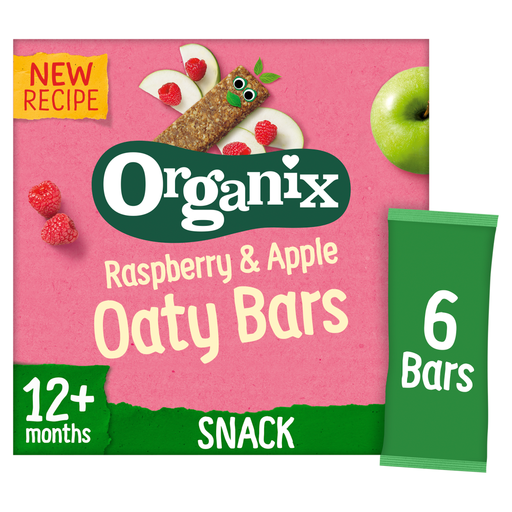 Image unavailable
Organix Raspberry & Apple Soft Oaty Bars, 12+ Months, 6 x 23g
Individually wrapped bars described as organic. They are intended for children aged 12 months and over, so consider that positioning before selecting them for an adult office tin. Check the pack’s oat allergen information and nutrition panel.
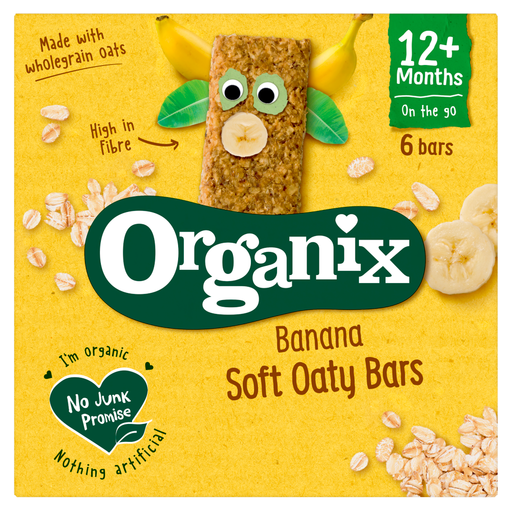 Image unavailable
Organix Banana Soft Oaty Bars, 12+ Months, 6 x 23g
These individually wrapped bars are described as organic and vegan-friendly. Their 12+ Months positioning makes them a children’s snack option rather than an obvious default for a general office tin; check the ingredients and oat allergen information on the pack.
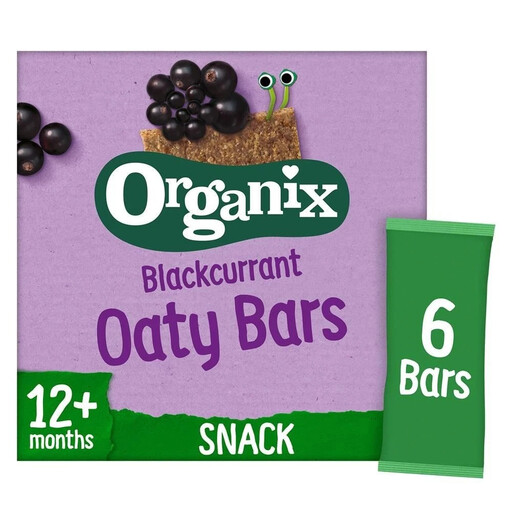 Image unavailable
Organix Blackcurrant Organic Soft Oat Snack Bars, 12+ Months, 6 x 23g
An individually wrapped organic-labelled option intended for children aged 12 months and over. For a shared office tin, check the pack’s precautionary allergen wording, particularly for tree nuts, soya and milk.
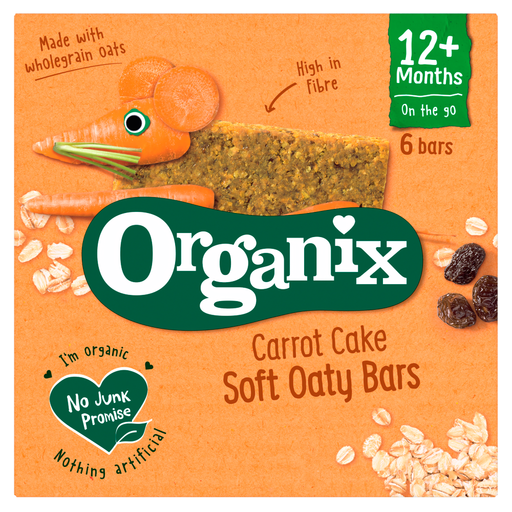 Image unavailable
Organix Carrot Cake Soft Oaty Bars, 12+ Months, 138g
An individually wrapped oat-bar option described as organic and intended for children aged 12 months and over. Before adding it to a shared office assortment, check the current ingredient list and any precautionary tree-nut, soya or milk wording.
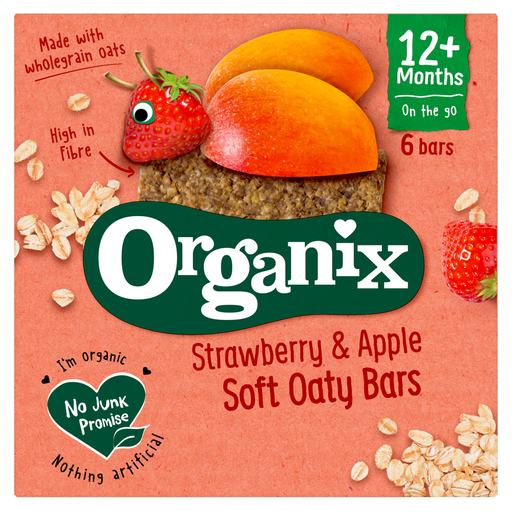 Image unavailable
Organix Strawberry & Apple Soft Oaty Bars, 12+ Months, 6 x 23g
These individually wrapped bars are described as organic and are intended for children aged 12 months and over. Check the pack’s ingredients and any precautionary allergen wording before offering them in a communal tin.
Questions about organic office snacks
What establishes that a cereal bar is organic in the UK?
Check the organic claim on the exact product, not words such as “natural” or “plant-based”. Department for Environment, Food & Rural Affairs guidance says food labelled organic must meet organic production rules; at least 95% of its agricultural ingredients must be organic, and certification requirements also apply.
Does an organic label mean a bar is low in sugar?
No. Organic labelling and sugar content answer different questions. Compare total sugars per 100g and per bar: the NHS classifies more than 22.5g sugars per 100g of food as high, while Ocado lists 8.0g sugars in one 35g FREEE Apricot & Chia Oat Bar.
How can colleagues check allergens in a shared biscuit tin?
Keep each bar wrapped and retain its outer pack so the ingredients and allergen statement remain available. Check every flavour separately; a vegan or gluten-free claim does not mean the bar is free from every allergen.
Should an office choose organic oat bars or protein bars?
Choose an organic-labelled oat bar when organic status is a firm requirement, subject to checking the exact product’s labelling and dietary suitability. If declared protein content is the priority instead, compare that figure per bar: TREK states 9g for its Protein Flapjacks and 15g for its High Protein Bars, but those figures do not establish organic status.


