If organic status matters for an afternoon tea break, start with the exact bar’s organic claim and certification information, then compare its portion, ingredients, nutrition panel and allergens. Freee has a 35g organic gluten-free Chocolate Chip oat bar; MadeGood describes certified organic bars made in a dedicated nut-free facility; and Organix’s organic Raspberry & Apple bar is a smaller, toddler-focused 23g option. Check the chosen flavour rather than assuming every bar in a range has the same details.
Who is choosing an afternoon cereal bar?
Shoppers looking for an organic claim
If organic production is the reason you are choosing one bar over another, look at the exact product rather than a natural-sounding brand or flavour name. UK Department for Environment, Food & Rural Affairs guidance on organic labelling, published in August 2025, describes production and approved-certification requirements for foods labelled organic.
Shoppers checking gluten or allergens
Organic and gluten-free answer different questions. Freee Foods describes its Chocolate Chip oat bar as gluten free and made without the top 14 allergens; MadeGood says its range is made in a dedicated nut-free facility. Check the ingredients and allergen statement for the flavour you intend to eat.
Shoppers choosing a portion for a tea break
A small toddler-format bar and a larger flapjack need not serve the same purpose. Organix’s Raspberry & Apple bar is 23g, Freee’s Chocolate Chip bar is 35g, and TREK’s Cocoa Oat flapjack is 50g. Compare the amount in the bar as well as its per-bar nutrition.
What should you check before choosing?
Decide whether organic status is essential, then check the exact flavour against any allergen requirement and the portion you want for your break.
| Priority |
What to check |
Your needs |
| Organic status |
Look for organic wording and certification information on the exact product. Read the ingredients alongside the claim; organic status alone does not describe the bar’s nutrition. |
I want an organic cereal bar, not one whose name or packaging merely sounds natural. |
| Gluten and allergens |
Check the exact flavour’s gluten-free claim, ingredients and precautionary allergen statement. The Food Standards Agency says food labelled gluten-free must contain no more than 20mg/kg gluten; oats must still be emphasised as an allergen. |
If I need to avoid gluten or a named allergen, I need product-specific information rather than an assumption based on oats or organic ingredients. |
| Portion size |
Read the weight and serving definition: Organix Raspberry & Apple is 23g per bar, Freee Chocolate Chip is 35g per bar, and Nature Valley Apple & Cinnamon gives figures for a two-bar, 42g serving. |
For a light tea-break bite, I may choose a smaller portion. If I want a larger snack, I’ll compare the actual bar or serving size rather than the picture on the pack. |
| Nutrition panel |
Compare sugars, saturates, fibre and protein both per bar or stated serving and per 100g. Freee Foods lists 6.9g sugars and 4.7g fibre per 35g Chocolate Chip bar; TREK lists 14g sugars and 9g protein per 50g Cocoa Oat bar. |
I want to know what is in the portion I would eat, without treating organic, wholegrain or protein wording as a summary of the whole nutrition panel. |
Common mistakes to avoid
-
Treating organic as a complete nutrition claim
Organic labelling concerns production and certification; it does not tell you the bar’s sugars, saturates, fibre or portion size.
Check the organic information and the nutrition panel on the same product, using both per-bar and per-100g figures where available.
-
Assuming an oat bar meets a gluten or allergy requirement
Organix lists oats and gluten for its Raspberry & Apple bar and warns that it may contain tree nuts, soya and milk. A different oat bar may carry different statements.
Read the current ingredients, gluten-free wording and allergen declaration for the exact flavour; do not transfer a free-from claim from another product.
-
Comparing figures without checking serving size
Figures for a 23g bar and a 50g bar describe different amounts of food. A two-bar serving is different again.
Use per-100g figures for a like-for-like comparison, then use per-bar or per-serving figures to see what the portion you plan to eat contains.
-
Reading “natural” or “wholegrain” as “organic”
Ingredient and nutrition descriptions do not establish that a particular cereal bar is certified organic.
If organic status is essential, check for an explicit claim and certification information on the exact pack. Otherwise, assess the bar against the ingredient, portion and nutrition features that matter to you.
Brand references worth checking
These examples illustrate different product formats and claims; a brand’s range does not establish the details of every flavour.
Freee
Freee Foods describes its Chocolate Chip Organic Oat Bars as organic and gluten free.
- The manufacturer lists 4.7g fibre and 6.9g sugars per 35g bar and describes the product as made without the top 14 allergens.
- Check the current ingredients and allergen statement if you need to avoid a particular ingredient.
MadeGood
MadeGood describes its range as certified organic, gluten free and vegan.
- The brand says its products are made in a dedicated nut-free facility.
- Check the chosen bar’s pack and flavour-specific nutrition before comparing it with another product.
Organix
Organix markets its Raspberry & Apple Oaty Bar as an organic toddler snack in a 23g portion.
- Organix lists 3g fibre and 5.1g sugars per 23g Raspberry & Apple bar.
- That flavour contains oats and gluten and may contain tree nuts, soya and milk. Check other flavours separately.
Nature Valley
Nature Valley lists Crunchy and Protein formats for shoppers comparing cereal-bar styles.
- Its Apple & Cinnamon Crunchy product lists 3.1g fibre and 9.4g sugars per two-bar, 42g serving.
- That product may contain soya, wheat, peanuts and tree nuts. Check its exact pack for any organic claim rather than inferring one from the range.
Graze
Graze describes Oat Boost as a wholegrain-oat flapjack range.
- The brand describes the range as high in fibre.
- That description does not establish organic status; check the selected flapjack’s label and nutrition panel.
TREK
TREK Cocoa Oat is a 50g vegan, gluten-free protein-flapjack option according to the brand.
- TREK lists 9g plant protein per bar.
- It also lists 14g sugars and 5g saturates per bar and says it may contain peanuts, nuts and milk. Check the pack if organic status is required.
Eat Natural
Eat Natural describes fruit-and-nut, vegan and gluten-free bar formats in its range.
- Its range gives shoppers different ingredient and bar-format choices to compare.
- Several product names include nuts. Check the exact bar’s allergens and organic wording rather than relying on the brand name.
Alpen
An Alpen and Weetabix Food Co. product list dated November 2021 included fruit-and-nut, protein and oat-blend bars.
- That historical list cannot establish the details of a bar being sold now. Check the current product and its pack for ingredients, nutrition and any organic claim.
Kellogg's
Kellogg's describes granola bars among its cereal and snack products.
- Its range offers another bar format to assess by ingredients and portion.
- A range description does not establish that a particular bar is organic; check the exact pack if that matters to your choice.
A Joybuy oat-bar option
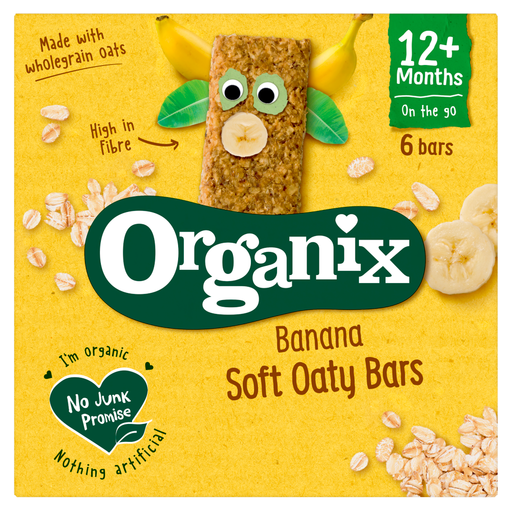
This child-focused, small-portion oat bar is an option to consider for a deliberately light afternoon break. Check the banana flavour’s own pack for the organic claim and allergen details that matter to you.
 No image available
Organix Banana Soft Oaty Bars, 12+ months, 6 x 23g
The 23g toddler-format bar may suit a deliberately small tea-break portion. It contains oats; check the banana variant’s current organic wording, ingredients and allergen declaration rather than applying details from another Organix flavour.
View on Joybuy
Questions about organic cereal bars
What does “organic” mean on a UK cereal-bar label?
UK Department for Environment, Food & Rural Affairs guidance published in August 2025 says food labelled organic must meet applicable production rules and certification requirements, including certification by an approved organic control body. It also specifies that at least 95% of a food’s agricultural ingredients must be organic. Check the claim and certification information on the bar you are buying.
Does an organic cereal bar automatically contain less sugar?
No. Organic status describes production and certification, not the amount of sugar in a bar. Freee Foods lists 6.9g sugars per 35g Chocolate Chip bar, while Organix lists 5.1g per 23g Raspberry & Apple bar; compare portion sizes as well as the figures.
Are oat bars automatically gluten free?
No. Look for an explicit gluten-free claim on the exact bar. The Food Standards Agency says food labelled gluten-free must contain no more than 20mg/kg gluten and that oats must still be emphasised as an allergen.
Which organic bars have nut-related information to check?
MadeGood says its certified organic range is made in a dedicated nut-free facility, while Freee Foods describes its Chocolate Chip Organic Oat Bars as made without nuts. Neither range-level nor product-level wording replaces checking the current ingredients and precautionary statements for the exact flavour you intend to eat.
Can an adult choose an organic toddler oat bar for afternoon tea?
An adult can choose a toddler-format bar if its portion and ingredients suit the intended snack. Organix markets its organic Raspberry & Apple Oaty Bar for toddlers and lists a 23g bar; check the nutrition and allergens on that flavour rather than assuming they apply to every Organix bar.


