Who this is for

Parents choosing an organic cereal for a toddler

For households that value certified organic production but still want to compare the nutrition panel and ingredients rather than assume organic means lower sugars or suitability for every toddler. UK organic labelling rules are set out by the Department for Environment, Food & Rural Affairs.

Parents of toddlers under 2

For carers choosing cereal within a varied toddler diet. The NHS says wholegrain foods can be offered, but wholegrain starchy foods should not be the only option for under-2s because they can be filling.

Families managing gluten, wheat or nut exposure

For shoppers who need to check every exact pack before serving or packing it. Organic wheat cereals can contain wheat and gluten, while fruit-and-nut muesli can also contain gluten-containing cereals and nuts.

What to check before buying

Organic wheat biscuit cereal

Consider it when: organic certification is important and wheat is suitable for your child.

Keep in mind: these are wholegrain wheat products and are not the only starchy-food option to offer an under-2.

Organic fruit-and-nut muesli

Consider it when: the child can safely manage the texture and has no relevant cereal or nut allergy.

Keep in mind: a muesli containing whole nuts is not a default choice for an under-5.

Plain oats or no-added-sugar muesli

Consider it when: organic certification is not essential and you want to compare a simpler oat-based breakfast.

Keep in mind: plain oats are not automatically gluten-free, and no-added-sugar muesli can still contain substantial total sugars from dried fruit.

Priority What to check Your needs and the share of respondents concerned
Organic status Look for an organic claim on the exact pack and an approved organic control-body certification. Check the pack rather than relying on a retailer search title. I want the organic claim to have a defined meaning, not to be a vague marketing description. Department for Environment, Food & Rural Affairs rules require organic food to meet production rules and certification conditions.
Sugars and salt Compare sugars and salt per 100g before comparing serving sizes. Read total sugars alongside dried-fruit ingredients and any no-added-sugar wording. I want to compare the nutrition panel, not just the front claim. A 2023 Cambridge University Press analysis of 133 UK cereals with child-appealing packaging found that 81% exceeded its cited sugar-reduction guideline of 12.3g per 100g; this describes products, not parents or toddlers.
Age and texture Check whether the cereal is wholegrain, whether it contains whole nuts and whether its texture suits the child. Keep a range of suitable starchy foods in the diet for an under-2. I need a breakfast cereal that fits my child’s age and texture skills without becoming the only starchy-food choice.
Allergens Read the current ingredients and allergen declaration for wheat, gluten and nuts. Treat any may-contain statement as product-specific. I need to avoid ingredients that conflict with an allergy, coeliac disease or my nursery or school’s own packed-lunch rules.

Common buying pitfalls

  • Treating organic certification as a nutrition score

    Organic regulation concerns production and certification conditions, not a universal sugars or salt result. The organic examples here range from 2.4g to 18g sugars per 100g.

    Confirm the organic claim first, then compare sugars, salt, fibre and ingredients on the same per-100g basis.

  • Choosing fruit-and-nut muesli because it says no added sugar

    Dorset Cereals Wonderfully Organic lists 18g sugars per 100g and contains Brazil nuts. The NHS advises that whole nuts should not be given to children under 5 because of choking risk.

    Check total sugars and the ingredient list, and avoid cereals containing whole nuts for an under-5.

  • Assuming every cereal contains gluten, or that oats are gluten-free

    The organic wheat examples contain wheat and gluten, while Quaker Traditional Rolled Oats states that it may contain wheat and barley. Allergen status depends on the exact product.

    Check the current pack’s ingredients and allergen statement each time, especially where coeliac disease, wheat allergy or a school or nursery rule applies.

  • Making wholegrain cereal the only starchy breakfast option for an under-2

    The NHS says wholegrain starchy foods can be filling and may reduce the calories and nutrients an under-2 consumes if they are the only option.

    Offer wholegrain cereal as part of a varied diet rather than as the exclusive cereal or starchy-food route.

Relevant brand references

Weetabix

Weetabix Organic is an organic wheat-biscuit option for households seeking a familiar, portionable cereal format.

  • Weetabix Cereals lists 95% organic wholegrain wheat, 4.4g sugars, 10g fibre and 0.28g salt per 100g.
  • It contains wheat and malted barley extract, and wholegrain cereal should not be the only starchy-food option for an under-2.

Kellogg's

W. K. Kellogg Organic Wheats Classic is an organic wholewheat cereal route rather than a claim about the wider Kellogg's range.

  • Kellogg's UK lists 100% organic wholewheat, with 2.4g sugars, 10g fibre and 0.03g salt per 100g.
  • The product contains gluten and wheat; Kellogg's advises checking the ingredient list and nutrition declaration on the pack before purchase.

Dorset Cereals

Wonderfully Organic Muesli is a fruit, grain, seed and nut option for families considering a muesli format.

  • Dorset Cereals lists organic oat, barley and wheat flakes alongside dried fruit and seeds.
  • It lists 18g sugars per 100g and contains Brazil nuts and gluten-containing cereals, so it is not a default under-5 option where whole nuts are present.

Quaker

Traditional Rolled Oats provide a non-organic plain-oat comparison route when a simple oat base matters more than organic certification.

  • Quaker UK lists 100% rolled oats, 1.1g sugars, 9g fibre and 0g salt per 100g.
  • Quaker states that the product may contain wheat and barley, so it is not a substitute for a specifically verified gluten-free product.

Alpen

Alpen No Added Sugar is a non-organic fruit-and-nut muesli comparison route that needs reading beyond its front-of-pack claim.

  • Alpen lists wholegrain wheat, wholegrain rolled oats, raisins, milk ingredients, hazelnuts and almonds.
  • It lists 18g sugars per 100g, so no added sugar does not mean low total sugars or remove allergen considerations.

Joybuy options for toddler breakfasts

These Joybuy options include a rice cereal for early feeding and organic porridge oats for a warm breakfast. Check the pack, your child’s age and their dietary needs before choosing.
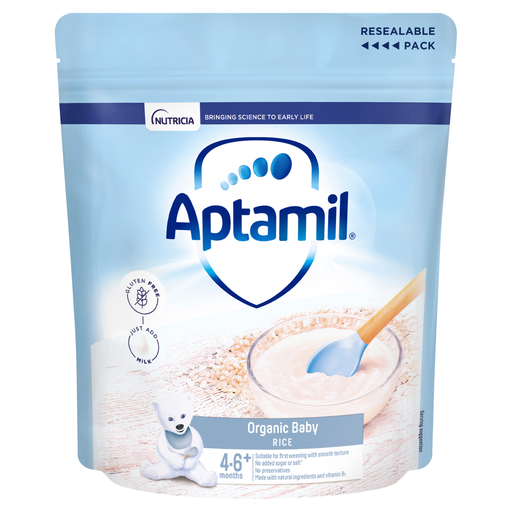
Aptamil Organic Baby Rice 4–6+ Months 100g

Aptamil Organic Baby Rice, 4–6+ Months, 100g

A rice cereal listed for early feeding from 4 months, with instructions to mix it with the child’s usual milk and adjust the consistency.

The listing states 99.99% organic rice flour, less than 0.5g sugars per 100g and 0.02g salt per 100g, with no added sugar or salt.

It may contain milk and soya. Check the pack’s organic control-body details and confirm that it suits the child’s age and established breakfast pattern.

Joybuy

Flahavan's Organic Porridge Oats 2 x 1kg

Flahavan's Organic Porridge Oats, 2 x 1kg

An organic porridge-oat option for a warm sit-down breakfast.

The listing describes 100% organic wholegrain oat flakes and lists 0.9g sugars, less than 0.01g salt, 8.3g fibre and 11g protein per 100g.

It is declared to contain gluten and oats. For an under-2, the NHS advises offering wholegrain foods within a varied diet rather than as the only starchy-food choice.

Joybuy

Flahavan's Organic Porridge Oats 1kg

Flahavan's Organic Porridge Oats, 1kg

An organic porridge-oat option for a warm toddler breakfast where the serving texture is suitable for the child.

The listing describes 100% organic wholegrain oat flakes and lists 0.9g sugars, less than 0.01g salt, 8.3g fibre and 11g protein per 100g.

It is declared to contain gluten and oats. Check the pack’s organic control-body details and prepare a texture and portion appropriate for the individual child.

Joybuy

Frequently asked questions

Does “organic” on a UK cereal pack have a regulated meaning?

Yes. The Department for Environment, Food & Rural Affairs says food can be labelled organic only when it meets organic production rules, at least 95% of its agricultural ingredients are organic, and the product and suppliers are certified by an approved UK organic control body.

Does organic cereal automatically have less sugar or salt?

No. Compare the exact nutrition panel: Kellogg's UK lists 2.4g sugars per 100g for W. K. Kellogg Organic Wheats Classic, Weetabix lists 4.4g for Weetabix Organic, and Dorset Cereals lists 18g for Wonderfully Organic Muesli.

Can a toddler under 2 have wholegrain cereal every day?

Wholegrain foods can be offered, but the NHS says it is not a good idea to give under-2s only wholegrain starchy foods because they may become full before taking in enough calories and nutrients. Rotate cereal choices within a varied diet.

Can I give an organic nut muesli to a toddler?

Check the exact texture and ingredients first. The NHS says whole nuts should not be given to children under 5 because they can choke; Dorset Cereals Wonderfully Organic includes Brazil nuts, so it is not a default choice for an under-5 where whole nut pieces are present.

Does every breakfast cereal contain gluten?

No. Allergen status is product-specific. The organic wheat cereals discussed here contain wheat and gluten, while Quaker Traditional Rolled Oats may contain wheat and barley, so check the exact current pack for any gluten-free, wheat-free or school or nursery requirement.