Hosts stocking a shared tea tray
Choose tea bags that guests can prepare with hot water, and leave the box available so they can check the blend before adding milk or making a cup.


For a holiday cottage, choose a chai whose exact pack supports its organic description and lets guests check the ingredients; words such as ‘natural’ and ‘spiced’ do not establish organic status. Clipper Organic & Fairtrade Indian Chai is a black-tea option with a stated spice blend. If you prefer a vanilla chai for the tea tray, check that variant’s pack before describing it as certified organic.
A shared tea tray needs clear product information because the host may not know how each guest takes their chai.
Choose tea bags that guests can prepare with hot water, and leave the box available so they can check the blend before adding milk or making a cup.
Check the exact pack’s organic description and certification information. GOV.UK says organic food labelling in Great Britain depends on organic-production rules and certification by an approved control body.
Make it easy for guests to distinguish black-tea chai from other blends and to read the ingredients. A chai label alone does not tell them which spices or botanicals are in the bag.
Start with the organic wording on the exact pack, then choose the blend and format that make sense for an occasionally used cottage tea tray.
| Priority | What to check | Your needs |
|---|---|---|
| Organic status | Check the exact pack or manufacturer’s product page for its organic designation and certification information. GOV.UK says organic food labelling in Great Britain requires compliance with organic-production rules and certification by an approved control body. | I want to call the cottage’s chai organic without relying on words such as ‘natural’ or ‘spiced’. |
| Tea and spice blend | Read whether the blend contains black tea and compare its listed spices. Clipper Tea Shop lists black tea, cinnamon, orange peel, cloves and fennel seed for its Organic & Fairtrade Indian Chai. | For guests who like chai with milk, I may choose a black-tea blend; a different spice mix offers another flavour choice. |
| Ingredient visibility | Keep the current carton or a legible copy of its ingredient list beside the tea. Check each variant separately: Pukka Herbs UK lists liquorice in Original Chai, while Clipper’s Indian Chai has a different ingredient list. | Guests should be able to see what is in their drink without having to guess from the word ‘chai’. |
| Storage between stays | Check whether bags are individually wrapped if a box will remain open between bookings. Pukka says its individual envelopes protect its herbal blends from air and moisture. | If the cottage is vacant between visits, I want guests to find clearly identified tea bags in a practical format. |
Teapigs describes its chai as ‘all-natural’, but that wording does not establish organic certification. GOV.UK sets separate requirements for organic food labelling in Great Britain.
Check the organic information for the exact chai pack you buy, and leave that pack where guests can read it.
Clipper’s Organic & Fairtrade Indian Chai contains black tea, so it is not a caffeine-free choice.
If you want the tea tray to offer that choice, provide a separately identified caffeine-free drink rather than relying on the chai label.
Chai recipes differ: Pukka Herbs UK lists liquorice in Original Chai, while Clipper Tea Shop lists black tea, cinnamon, orange peel, cloves and fennel seed in Indian Chai.
Keep the current carton, or provide a legible ingredient list for the exact variant left in the cottage.
A previous listing does not establish what a particular shop will have when the cottage needs replenishing. Sainsbury’s offers a store stock checker for checking a specific product locally.
Check the current listing or local stock and inspect the pack’s organic information before buying a replacement.
These examples show why organic status and ingredients need checking by product, rather than by brand name alone.
Pukka Herbs UK describes its range as certified organic and lists an Original Chai blend containing cardamom, liquorice, ginger and cinnamon.
Clipper Tea Shop identifies its Organic & Fairtrade Indian Chai as a 20-bag black-tea product.
Twinings describes Classic Chai as black tea flavoured with ginger, cinnamon, cardamom and cloves.
Teapigs describes its chai as a black-tea blend and suggests serving it with plenty of milk.
Tesco grocery listings include both a Pukka organic vanilla chai and a Tesco Finest chai.
Sainsbury’s provides a store stock checker for looking up a specific product at a local shop.
This vanilla chai tea-bag option may suit a shared cottage tea tray; check its exact pack if organic certification or individual wrapping is important to your choice.
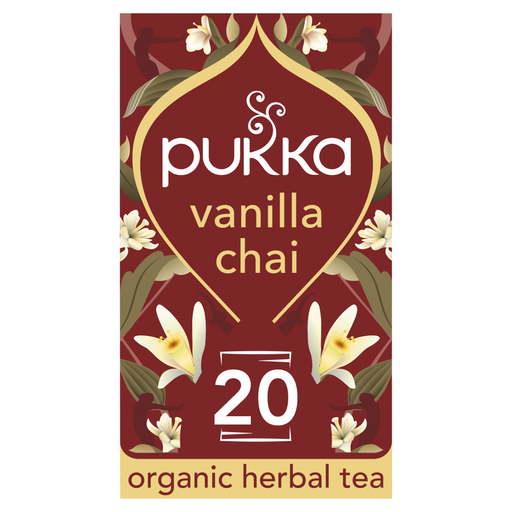 No image available
For a shared cottage tea tray, keep the packaging available so guests can check the ingredients, including the listed liquorice. Confirm the exact pack’s organic information and whether the sachets are individually wrapped if either detail affects your choice.
Check the exact pack’s organic designation and certification information rather than relying on ‘natural’ or ‘spiced’. GOV.UK says organic food labelling in Great Britain requires the product to meet organic-production rules and the product and suppliers to be certified by an approved organic control body.
Black-tea chai is an option for those guests: Clipper’s Organic & Fairtrade Indian Chai contains black tea, and Teapigs suggests serving its black chai with plenty of milk. Identify it as black-tea chai rather than assuming every guest wants that style.
Leave the original box or a legible ingredient list for the exact chai supplied. For example, Pukka Herbs UK lists liquorice in Original Chai, whereas Clipper Tea Shop lists black tea, cinnamon, orange peel, cloves and fennel seed in its Indian Chai.
Do not apply one brand’s disposal statement to every chai bag. Pukka says its tea bags are certified home compostable and can go into food waste; check the exact product and the cottage’s local collection instructions before leaving disposal guidance for guests.