Who is each type of chai for?
The useful distinction for an afternoon serving is whether the recipient wants black tea or needs to avoid caffeine, followed by an ingredient check.
People avoiding afternoon caffeine
A chai explicitly labelled caffeine-free offers a spiced drink without a black-tea base. This distinction matters if the recipient has been advised to reduce caffeine or finds that it aggravates bladder symptoms; NHS Lancashire Teaching Hospitals notes that caffeine can irritate the bladder. Check the herbs separately rather than assuming that caffeine-free means suitable for everyone.
Hosts who want organic black-tea chai
A black-tea blend keeps tea at the centre of the cup. Clipper Organic Indian Chai lists black tea and spices, but it is not the choice for someone avoiding caffeine. Check the organic information on the exact pack being served.
Households checking ingredients alongside medicines
If the recipient takes regular medicines or supplements, or has been advised to avoid liquorice, read the complete ingredient list. Pukka Vanilla Chai and Original Chai list liquorice. Collingwood Health Group NHS advises asking a GP or pharmacist about possible liquorice interactions; a tea label cannot settle individual suitability.
What should you check before choosing?
Choose the tea base first, then check the organic claim and ingredients on the particular blend you plan to serve.
Organic caffeine-free herbal chai
Choose when: Avoiding caffeine is important for the afternoon cup and a spiced infusion without black tea appeals.
Trade-off: It will not have a black-tea base, and the herbs still need checking; Pukka Vanilla Chai contains liquorice root.
Organic black-tea chai
Choose when: The recipient wants black tea with spices and does not need to avoid caffeine.
Trade-off: A blend such as Clipper Organic Indian Chai contains black tea, so its organic claim does not make it caffeine-free.
| Priority |
What to check |
Your needs |
| Organic claim |
Look for an organic claim and certification information on the current pack or product listing. Do not treat “natural” or another certification as an organic claim. |
I want the chai I serve to meet an organic preference, rather than relying on how its ingredients are described. Soil Association Certification distinguishes UK organic standards from general product wording. |
| Caffeine |
Check whether the tea base is black tea or whether the blend explicitly says caffeine-free. Do not infer caffeine content from the word “chai”. |
If afternoon caffeine is a concern, I would choose an explicitly caffeine-free herbal blend instead of a black-tea chai. NHS Lancashire Teaching Hospitals notes that caffeine can irritate the bladder. |
| Liquorice and other herbs |
Read the full ingredient list, particularly for liquorice root. Ask a pharmacist or GP about relevant conditions, medicines or supplements rather than judging suitability from the blend name. |
Someone I serve may need to avoid liquorice or check possible interactions. Collingwood Health Group NHS advises seeking professional advice about liquorice alongside medicines, herbs and supplements. |
| Tea character and preparation |
Compare a herbal infusion with a black-tea base and named spices. Follow the brewing directions for the particular blend, since instructions differ between products. |
For a familiar tea-led cup, I would look at a black-tea chai; for a spiced cup without black tea, I would look at a caffeine-free herbal blend. I can offer milk or sweetness according to the recipient’s preference. |
Brand and blend references
These examples show why the exact blend matters: an organic claim, a black-tea base and a caffeine-free claim are separate things to check.
Pukka
Pukka Vanilla Chai is a caffeine-free herbal option; Pukka Original Chai is a different blend that includes black tea.
- Tesco identifies Soil Association organic certification for its listing of Pukka Vanilla Chai.
- The Vanilla Chai and Original Chai ingredient information identifies liquorice, so check its relevance for the recipient.
Clipper
Clipper Organic & Fairtrade Indian Chai is a black-tea option with cinnamon, orange peel, cloves and fennel seed listed by Clipper.
- Its product listing identifies an organic black-tea chai rather than a herbal infusion.
- Black tea makes it unsuitable when the requirement is to avoid caffeine.
Twinings
Twinings Classic Chai is a black-tea blend; Twinings lists black tea as 70% of its ingredients.
- The listed tea base helps identify it as a tea-led chai.
- Check the exact pack for an organic claim if organic status is required; the Classic Chai information here does not establish one.
Teapigs
Teapigs Chai lists Assam black tea with spices and vanilla and is described by Teapigs as suitable with milk.
- The ingredient list identifies a black-tea base and named flavour ingredients.
- Teapigs states that this chai naturally contains caffeine; its “natural” wording does not establish organic certification.
Tesco Finest
Tesco Finest Chai is listed as a 50-bag spiced black-tea blend with ginger, cinnamon, cardamom, clove, black pepper and anise.
- The listing names the tea base, spices and pack size.
- Its stated Rainforest Alliance assurance for black tea should not be mistaken for an organic claim.
A Joybuy chai option
This herbal chai is an option to consider when choosing a spiced afternoon drink without caffeine; check its current pack if organic certification or liquorice is decisive for the recipient.
 No image available
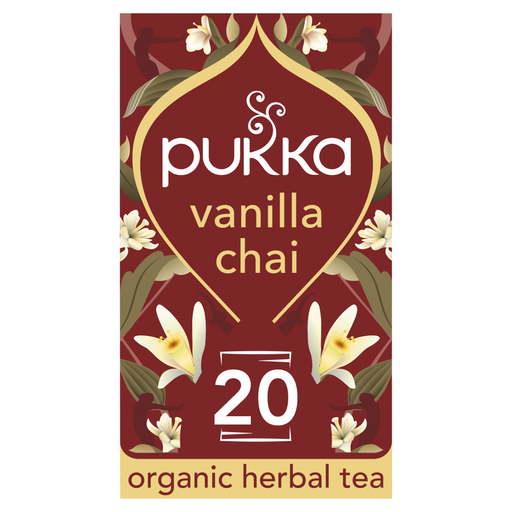
Pukka Vanilla Chai 20 Herbal Tea Sachets 40g
This caffeine-free herbal chai fits an afternoon serving where avoiding caffeine matters. The pack contains 20 sachets, 40g. Check the current UK pack for the organic certification you require and for liquorice root; if relevant conditions or medicines are involved, ask a pharmacist or GP about suitability.
View on Joybuy
Questions about serving chai
How can I check whether a chai is organic?
Look for an organic claim and certification information for the exact product on its current pack or manufacturer or retailer listing. Soil Association Certification sets out standards for food and drink sold as organic in the UK; wording such as “natural” is not a substitute for checking the organic claim.
Which chai should I choose if afternoon caffeine is a concern?
Start with a blend explicitly labelled caffeine-free and check that it is a herbal infusion rather than a black-tea chai. Pukka Vanilla Chai is described as caffeine-free, while Clipper Indian Chai, Twinings Classic Chai, Teapigs Chai and Tesco Finest Chai list black tea. NHS Lancashire Teaching Hospitals notes that caffeine can irritate the bladder.
Does caffeine-free chai need an ingredient check?
Yes. Pukka Vanilla Chai lists liquorice root, so its caffeine-free description does not settle whether it is suitable for every older person. Collingwood Health Group NHS advises seeking GP or pharmacist advice about possible liquorice interactions with medicines, herbs or supplements; ask for individual advice where this is relevant.
Can I serve chai with milk without making a sweetened chai latte?
You can offer milk separately and let the recipient decide whether to add it or any sweetener. Pukka describes Original Chai as drinkable with or without milk, while Teapigs describes its black-tea chai as suitable with milk. Check the particular blend’s preparation directions rather than assuming every chai is made the same way.
How long should chai tea bags brew?
Follow the directions on the particular pack. Twinings gives 2–3 minutes for Classic Chai, while Tesco gives 4–5 minutes for Tesco Finest Chai; those instructions should not be applied automatically to a different blend.


