What should you check before choosing?
Decide whether organic certification and a black-tea base are requirements, then compare the spices and preparation directions for the cup you want at breakfast.
| Priority |
What to check |
Your needs |
| Organic status |
Check the organic claim and certification information on the exact pack. The Department for Environment, Food & Rural Affairs says food labelled organic must have at least 95% organic agricultural ingredients, with the product and suppliers certified by an approved organic control body. |
I want an organic chai, not simply a tea described as natural or spiced. |
| Tea base |
Read the ingredient list for black tea, or look for an explicit caffeine-free statement if avoiding it. If adding milk matters, check the maker’s serving or brewing directions; Pukka says its Original Chai can be served with or without milk. |
A black-tea cup suits the breakfast I have in mind. Alternatively, I may want a spiced herbal drink without caffeine. |
| Spice recipe |
Compare named ingredients rather than assuming all chai tastes alike. Clipper lists cinnamon at 17%, cloves at 8% and fennel seed at 5%; English Tea Shop lists organic black tea at 33%, ginger at 18% and cinnamon at 13%. |
I care which spices are in the blend, especially if I favour a particular recipe or need to avoid an ingredient. |
| Preparation |
Check the brewing time, water temperature and pack size for the exact product. English Tea Shop specifies 100°C water and a 3–5 minute brew for its Chai Black Tea. |
At a leisurely breakfast, I can follow the stated method and decide whether the resulting cup suits the way I serve chai. |
| Ingredient suitability |
Read the full list, particularly for herbal blends. Pukka identifies liquorice in its chai products; a caffeine-free description does not answer every ingredient question. |
If an ingredient could matter because of a medicine or personal circumstance, I want to check before making the tea a regular choice. |
Which brands offer useful comparisons?
These product lines illustrate different tea bases, spice recipes and serving information; a brand name alone does not establish the details of every blend it sells.
Clipper
Clipper Tea Shop lists Organic & Fairtrade Indian Chai as a 20-bag black-tea blend.
- Its listed ingredients include black tea, cinnamon, orange peel, cloves and fennel seed.
- Check the pack for brewing or milk-serving directions if either affects how you prepare breakfast chai.
Pukka
Pukka describes Original Chai as organic and suitable with or without milk; it describes Spiced Vanilla Chai as caffeine-free.
- The two descriptions help distinguish a milk-serving option from an explicitly caffeine-free spiced blend.
- Pukka identifies liquorice in these chai products. Check the ingredients and organic information for the exact variant you choose.
English Tea Shop
Its Chai Black Tea lists organic black tea alongside ginger, cinnamon and other spices.
- The product information gives ingredient proportions and specifies a 3–5 minute brew with 100°C water.
- Check the pack if you want directions specifically for serving it with milk.
Twinings
Twinings Classic Chai is a black-tea comparison for shoppers considering a milk-style chai preparation.
- Twinings lists black tea at 70%, with cloves and cardamom, and describes the tradition of infusing chai spices and tea leaves in milk.
- The Classic Chai product information does not establish an organic claim for this item; check the exact pack if organic certification is essential.
A Joybuy herbal chai option
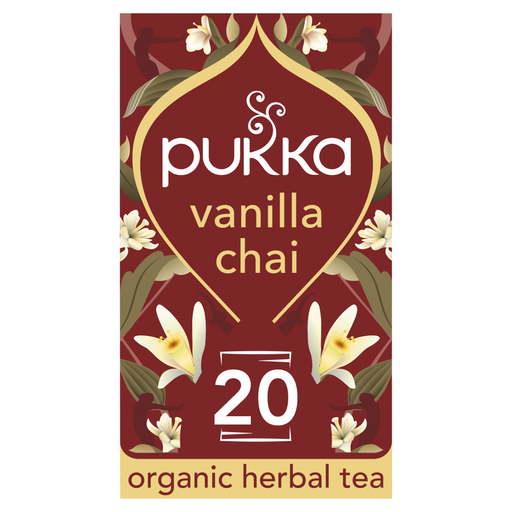
This Pukka herbal chai is an option for a spiced weekend-breakfast cup. If you specifically want black-tea chai or a certified-organic product, check the tea base and organic information on the exact pack before choosing it.
 No image available
Pukka Vanilla Chai Herbal Tea, 20 sachets (40g)
For a herbal rather than black-tea breakfast chai, this pack contains 20 sachets weighing 40g. The listing describes the blend as caffeine-free and makes an organic claim; check the exact pack’s certification details if organic status is essential, and read its ingredients and brewing directions before use.
View on Joybuy
Questions about organic breakfast chai
How can I check whether chai is organic in the UK?
Check the organic claim and certification information on the exact product, not just descriptions such as “natural” or “spiced”. The Department for Environment, Food & Rural Affairs says food labelled organic must meet organic-production requirements, have at least 95% organic agricultural ingredients, and have its product and suppliers certified by an approved organic control body.
Which chai should I consider if I drink it with milk?
Pukka says its Original Chai can be served with or without milk. If you also want a black-tea base, Clipper lists black tea in its Organic Indian Chai; check that pack for preparation directions rather than assuming the two blends are made the same way.
How do I brew English Tea Shop Chai Black Tea?
English Tea Shop specifies 100°C water and a 3–5 minute brew for its Chai Black Tea. Its listed recipe includes organic black tea, ginger and cinnamon, so check the full ingredient list as well as the directions if the spice mix matters to you.
Does caffeine-free chai suit everyone?
A caffeine-free claim does not settle every ingredient consideration. Pukka describes Spiced Vanilla Chai as caffeine-free and identifies liquorice in the blend; read the exact pack and seek appropriate professional advice if an ingredient raises a concern for your circumstances.
Can I put chai tea bags in food waste?
Check the packaging and your local collection rules. Pukka says its tea bags are certified home compostable in the UK and can go in a food-waste bin, but that statement should not be assumed to cover another brand’s bags or packaging.


