What to check before ordering
Decide whether you need a drink or a cooking ingredient, then check the exact item’s organic claim and any ingredients that matter to you.
| Priority | What to check | Your needs |
|---|
| Organic status |
Look for an organic claim on the exact listing and delivered pack. UK government guidance says organic-labelled food must meet production rules and certification requirements; “vegan” alone is not an organic claim. |
I want the coconut product I receive to be organic, not simply plant-based. |
| Drink or cooking milk |
Check the format, intended use and coconut content. Waitrose & Partners lists 10% coconut milk in Plenish Organic Coconut Unsweetened and 7.5% in Rude Health’s organic coconut drink, compared with 60% coconut extract in Duchy Organic Coconut Milk. |
For cereal or a drink, I need something pourable; for a curry, I want the coconut ingredient specified by my recipe. |
| Ingredients and fortification |
Read the ingredient list and any nutrient statements separately. Waitrose & Partners lists coconut and rice in the Plenish and Rude Health drinks; Tesco Groceries lists added calcium and vitamins D2 and B12 in Koko Unsweetened. |
A short ingredient list may matter to me, or I may be looking for stated fortification. I will check the exact product rather than assuming it has both. |
| Nutrition and portions |
Compare the nutrition panels using the same basis, such as per 100g, and consider the amount a recipe uses. UK government nutrient guidance recommends comparing saturated-fat information when reducing saturated fat is a priority. |
If I use tinned coconut milk regularly, I want to compare the label for the portion I actually use. |
| Substitutions |
Review the retailer’s substitution setting before checkout and inspect any replacement against your required organic claim, format, ingredients and allergens. Tesco says it may offer an alternative for an unavailable item when substitutions are allowed. |
I do not want a replacement carton or tin accepted merely because its name sounds similar. |
Relevant brand references
These examples illustrate different coconut-product formats and label details; a brand name alone does not establish that every product in its range is organic.
Plenish
An organic carton coconut-and-rice drink for pouring.
- Waitrose & Partners lists Plenish Organic Coconut Unsweetened with 10% organic coconut milk and 6% organic rice, and describes it as having no added sugar, oils or additives.
- It is a coconut-and-rice drink, so check your recipe before substituting it for tinned coconut milk.
Rude Health
An organic long-life coconut drink made with rice.
- Waitrose & Partners lists 7.5% organic coconut milk alongside organic rice and describes the drink as having no added sugar.
- Check the full ingredients and intended use if your recipe calls specifically for tinned coconut milk.
Duchy Organic
An organic tinned coconut milk intended for cooking.
- Waitrose & Partners lists 60% organic coconut extract, water and organic guar gum, and suggests the product for curries, soups and desserts.
- Check the nutrition panel and pack instructions for the amount you will use and for storage after opening.
Alpro
A plant-based coconut-drink reference for shoppers comparing product descriptions.
- Alpro describes its Coconut No Sugars Drink as containing no added sugars or sweeteners.
- That description does not establish an organic claim; check the exact product if organic sourcing is required.
Koko
An unsweetened coconut-based drink with stated nutrient fortification.
- Tesco Groceries lists calcium and vitamins D2 and B12 in Koko Dairy Free Unsweetened Alternative Drink.
- The listed ingredients also include an emulsifier and stabilisers; check the exact pack for an organic claim if that is your priority.
Joybuy product options
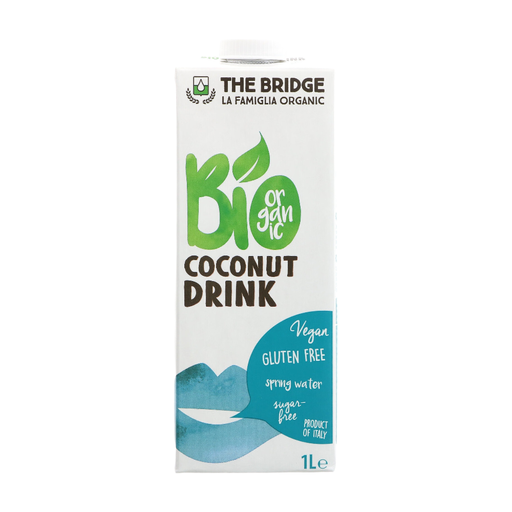
This coconut-drink option is relevant if you are shopping for a pourable format. Check its exact organic labelling before treating it as an organic choice.
 No image available
The Bridge Coconut Drink 1L
This 1L coconut drink is a carton-format option rather than tinned cooking milk. If your order depends on organic status, check the claim on the exact listing and delivered pack; review the ingredients and intended use for your recipe or drink.
View on Joybuy
Questions about organic coconut products
What does “organic” mean on a coconut product in the UK?
It is a regulated food-labelling claim, not another word for plant-based. UK government guidance says products labelled organic must meet organic production and certification rules, including a requirement that at least 95% of their agricultural ingredients are organic.
Can I use an organic coconut drink instead of tinned coconut milk?
Check the recipe before swapping them: the products listed by Waitrose & Partners have different formats and coconut content. Its Plenish and Rude Health carton drinks list 10% and 7.5% coconut milk respectively, while Duchy Organic Coconut Milk lists 60% coconut extract and is intended for cooking.
What should I do if my organic coconut product is substituted?
Check whether the offered item still meets the conditions that matter to you, especially its organic claim, carton or tin format, ingredients and allergens. Tesco says it may offer an alternative when an item is unavailable and substitutions are allowed, so review your preferences before checkout.
How should I store coconut products after opening?
Follow the instructions on the exact pack you receive. A carton drink and tinned coconut milk may have different refrigeration, container and use-after-opening directions, so check them before storing any leftovers.
Does organic coconut milk have less saturated fat?
An organic claim does not establish a product’s saturated-fat content. If that content matters to your choice, compare the nutrition labels on the same basis, such as per 100g, and consider the amount you will use; UK government nutrient guidance recommends comparing labels when reducing saturated fat is the goal.


