Cyclists choosing organic first
If an organic label matters to you, check it on the exact bar and count that bar’s carbohydrate towards your plan for a longer ride. The two checks answer different questions.


Choose a bar with an organic claim on the product label, then check its carbohydrate amount per bar: organic status alone does not tell you how it fits a ride. For rides over 90 minutes, British Cycling gives 30–60 g of carbohydrate per hour as a rule of thumb; the Lifefood and Organix organic examples discussed here provide 16 g and 13 g per bar respectively, so each is one part of a wider fuelling plan.
If an organic label matters to you, check it on the exact bar and count that bar’s carbohydrate towards your plan for a longer ride. The two checks answer different questions.
An oat, fruit or nut bar may be convenient to carry, but a small portion is not automatically enough carbohydrate for an hour of a longer ride. Check the serving size before deciding how many portions to pack.
Compare the exact flavour’s ingredients and allergen warnings, including any statements about oats, gluten, nuts, soya or milk. Neither an organic nor a vegan description replaces that check.
Start with the organic label and the nutrition panel, then decide whether the portion and ingredients work for the ride you have planned.
| Priority | What to check | Your needs |
|---|---|---|
| Organic status | Look for the organic claim and certification details on the current product. UK government guidance says food labelled organic must meet organic production rules, have at least 95% organic agricultural ingredients and be certified by an approved organic control body. | I want an organic bar, rather than one described only as natural, wholegrain or free from artificial preservatives. |
| Carbohydrate per bar | Read grams of carbohydrate per bar, not just per 100 g. For rides over 90 minutes, British Cycling gives 30–60 g per hour as a rule of thumb; count any bars alongside other food or drink. | On a longer ride, I need to know what each portion contributes before deciding what else to carry. |
| Portion timing | Check the bar’s size and whether you can carry and eat the portions you plan. For big rides, British Cycling advises spreading intake over two or three small feeds every 20–30 minutes. | I would rather plan regular portions than assume one bar will cover a long stretch of riding. |
| Ingredients and allergens | Read the exact flavour’s ingredient list, declared allergens and may-contain statements. Check a gluten-free claim on the specific product rather than assuming all oat bars qualify. | If I avoid particular ingredients, the current pack matters more to me than a description of the brand or range. |
Organic labelling concerns how a food is produced and certified, not how much carbohydrate one bar supplies. British Cycling’s rule of thumb for rides over 90 minutes is 30–60 g of carbohydrate per hour; the organic Lifefood and Organix examples provide 16 g and 13 g per bar respectively.
Check the organic label and the carbohydrate figure separately, then count the bar within your planned intake.
Nature Valley UK lists 9.8 g carbohydrate, 7.1 g protein and 6.5 g fibre per 36 g Protein + Fibre Chocolate & Orange bar. The product name alone does not show how much carbohydrate a portion contributes to a longer ride.
Compare carbohydrate per serving with your ride plan, and try an unfamiliar food during ordinary training before relying on it during an important ride.
Organix declares gluten and oats for its Banana Oaty Bar and warns of possible traces of tree nuts, soya and milk. Ingredient and cross-contact statements differ between products.
Read the current pack for the exact flavour, including its may-contain statement, rather than relying on another bar in the range.
These references describe specific products or ranges; a brand name alone does not establish organic status or carbohydrate content for another bar.
Lifefood describes its 40 g LIFEBAR Oat Snack Protein Hazelnut Crunch as organic certified.
Organix describes its Banana Oaty Bar as organic and markets it as a toddler snack.
Graze describes a snack range using ingredients such as wholegrains, fruit and nuts.
Nature Valley UK lists nutrition for its Protein + Fibre Chocolate & Orange bar, an example of why a bar’s nutrient emphasis should be checked against the ride.
Alpen’s referenced UK range is muesli, which is more relevant to a breakfast choice than to selecting a portable organic cycling bar.
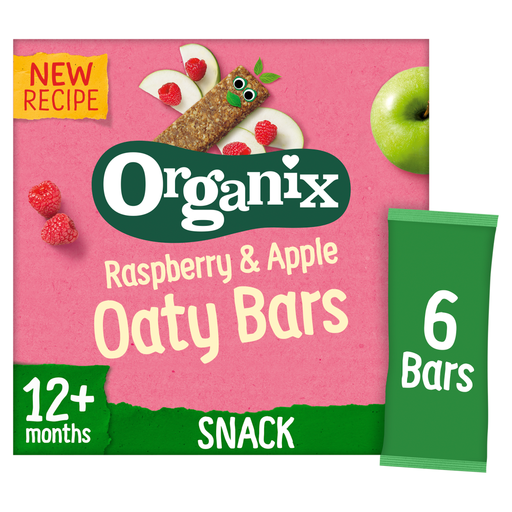
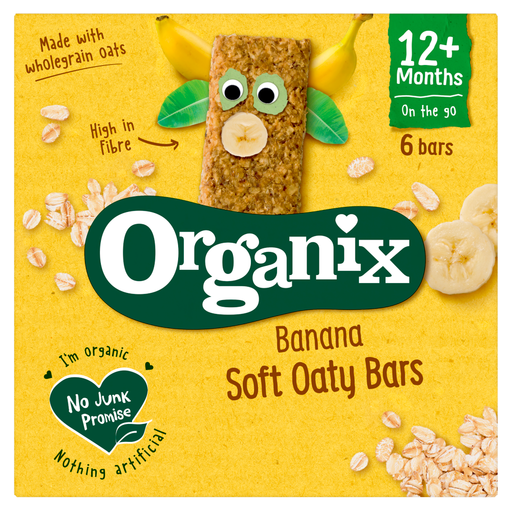
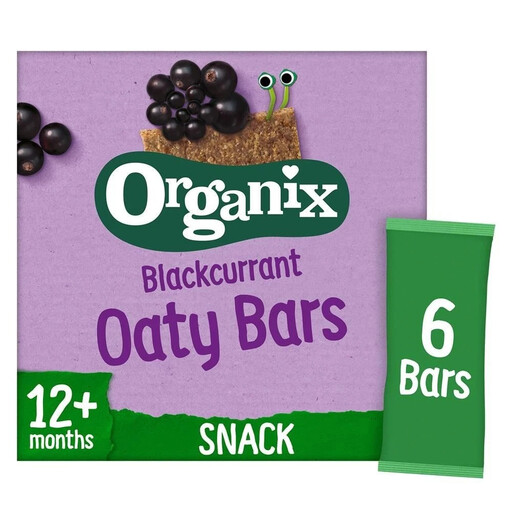
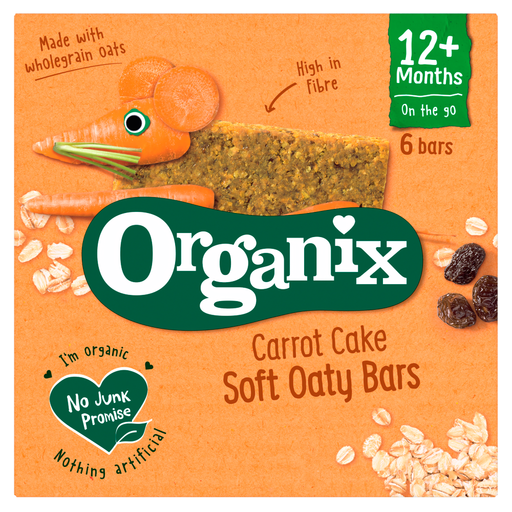
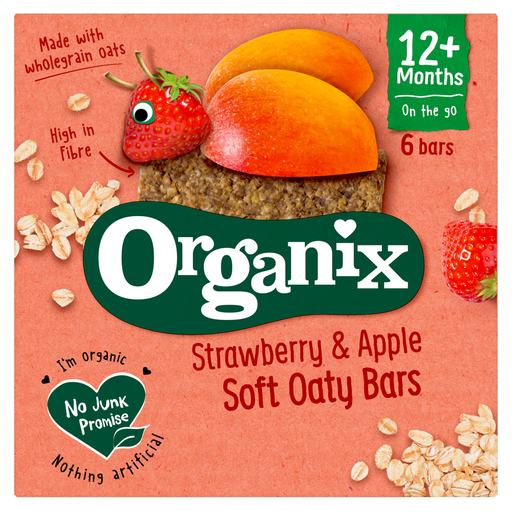
These Organix oat-bar flavours are small snack portions to consider as part of a cycling food plan. They are marketed for children aged 12 months and over, not as adult cycling bars; check each pack’s organic claim, carbohydrate per bar and allergens before relying on it for a ride.
 No image available
A small oat-bar portion to count within a ride snack plan, rather than assume it covers an hour’s carbohydrate intake. Marketed for ages 12 months and over; check the current pack’s carbohydrate figure, organic claim and allergen statement.
 No image available
Organix lists 13 g carbohydrate per 23 g Banana Oaty Bar, so count each bar as one contribution to a longer-ride plan. Marketed for ages 12 months and over; the brand declares gluten and oats and warns of possible traces of tree nuts, soya and milk.
 No image available
An organic-labelled oat-bar option in small portions; use the current pack’s carbohydrate per bar to plan how it fits alongside other ride food or drink. Marketed for ages 12 months and over; check the exact flavour’s allergen and may-contain statements.
 No image available
A 138 g pack of small oat bars marketed for ages 12 months and over. Check the organic claim and carbohydrate per individual bar on the current pack before counting a portion towards a cycling plan, along with its allergen statement.
 No image available
Small oat-bar portions that can be counted alongside other food for a longer ride. Marketed for ages 12 months and over; check the current pack for its organic claim, carbohydrate per bar and flavour-specific allergen warnings.
No. UK government guidance ties an organic food label to production rules, organic agricultural ingredients and certification, not to carbohydrate per serving. Read the bar’s nutrition panel and count its carbohydrate against the demands of your ride.
British Cycling gives 30–60 g of carbohydrate per hour as a rule of thumb for rides over 90 minutes. Its big-ride guidance also describes 0.5–1 g per kilogram of body weight per hour, depending on intensity, spread over two or three small feeds every 20–30 minutes; these are guidance for planning, not a claim that any single bar meets the amount.
Not if you are using British Cycling’s 30–60 g carbohydrate-per-hour rule of thumb for rides over 90 minutes: Lifefood’s 40 g Hazelnut Crunch bar provides 16 g, while Organix lists 13 g for its 23 g Banana Oaty Bar. Count either as part of the hour’s food and drink, rather than the whole plan.
British Cycling says most indoor sessions under an hour do not need additional fuel during the session, while hydration remains important. That guidance is specific to typical short indoor sessions, not every outdoor ride or longer event.
Read the current ingredient, allergen and may-contain statements for the exact bar. Organix declares gluten and oats for its Banana Oaty Bar and warns of possible traces of tree nuts, soya and milk; an organic description does not remove those considerations.