Sellers planning to advertise organic tea
Check the wording and certification information on the exact tea pack before describing the drink as organic. A general ethical or natural claim is not a substitute.


Choose a decaf tea with certification shown on the exact pack if you plan to describe your car boot sale refreshments as organic. If an organic claim is not important, choose a pack size and brewing method that suit expected demand; before selling cups, check the organiser’s rules and any requirements that apply to your activity with the local authority.
Check the wording and certification information on the exact tea pack before describing the drink as organic. A general ethical or natural claim is not a substitute.
Choose a tea-bag count you can plan servings around, keep stock dry and check the pack’s brewing instructions. Selling refreshments may also call for checks with the organiser and local authority.
Decaf does not automatically mean caffeine-free. Keep the pack available so customers can check information for the tea being served.
Decide whether you need to make an organic claim, then choose a quantity you can serve consistently and check the arrangements for selling drinks at your event.
| Priority | What to check | Your needs |
|---|---|---|
| Organic claim | Check the exact pack’s organic wording and certification details. Defra says organic labelling requires compliance with organic-production rules and certification by an approved control body; GB-ORG-05 identifies Soil Association Certification Ltd for products produced or packed in Great Britain. | I want to call the tea organic on my stall sign, so I need a pack that substantiates that description. Fairtrade or natural wording alone will not do. |
| Serving quantity | Compare tea-bag counts with the cups you expect to serve. Check the pack’s storage instructions and best-before information before planning stock for the event. | If footfall is uncertain, I would rather choose a quantity based on a serving estimate than assume a larger pack will be used. |
| Brewing and caffeine | Read the instructions for the exact pack and make them available to anyone preparing cups. Check product-specific caffeine information before making a stronger claim than decaf. | I want cups prepared consistently and need to answer customers’ questions without describing decaf as caffeine-free. |
| Permission to sell | Ask the event organiser about refreshment sales and check with the local authority responsible for the sale location. Food Standards Agency guidance covers food businesses operating from temporary premises; whether that applies depends on the activity. | Before I advertise hot drinks, I need to know which food-business and stall arrangements apply to this particular sale. |
Fairtrade, natural and organic describe different things. Defra’s organic-labelling rules require the relevant production and certification conditions to be met before food is advertised as organic.
Use the wording supported by the exact pack and keep its label available at the stall.
Tea-bag counts affect how many individual cups you can plan from a pack; demand at a particular sale may differ from your estimate.
Estimate servings, allow a contingency and check storage and best-before information on the packs you buy.
A larger pack can leave more unused stock if fewer customers ask for decaf.
Twinings states that its Everyday Decaffeinated 80-bag tea contains tea decaffeinated to 0.02% caffeine. That figure is specific to the named product, not every decaf tea.
Describe the drink as decaf and refer customers to the relevant pack or manufacturer information for product-specific details.
Food Standards Agency guidance says selling or preparing food can constitute a food business, including at temporary premises. The permissions needed for a particular car boot sale depend on the activity and local arrangements.
Check with the organiser and the local authority before trading. Where food-business registration applies, Food Standards Agency guidance says to register at least 28 days before trading or starting food operations.
These named decaf lines offer different pack and labelling considerations; a brand name alone does not establish what is printed on the pack you buy.
Clipper’s Organic Everyday Decaf is relevant when you intend to offer organically labelled decaf black tea.
Yorkshire Tea Decaf is a black-tea alternative when an organic claim is not part of the offer.
Twinings Everyday Decaffeinated provides a named 80-teabag alternative.
Tetley Decaffeinated is another black-tea option for comparing pack quantities.
PG Tips Decaf is a standard decaf option where bag count is the immediate planning consideration.
These options include teas described as organic and standard decaf alternatives for planning car boot sale refreshments. Check the pack you receive before making an organic claim or setting brewing instructions for your stall.
 No image available
The 80-bag format gives you a stated quantity for serving plans. If you intend to advertise the tea as organic, check the certification information on the exact pack; follow that pack’s brewing instructions when preparing cups.
 No image available
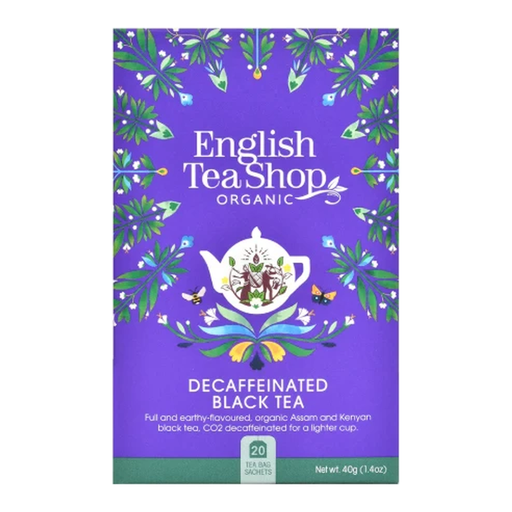
This 20 g decaffeinated black tea is an option to examine if an organic claim matters to your stall. Check the exact pack’s certification details, tea-bag count and brewing directions before using it to plan or advertise servings.
 No image available
The stated 80-bag count can help plan cups when an organic claim is not essential. Check the pack for its brewing directions and any product-specific organic or caffeine information before making those claims to customers.
 No image available
This 250 g decaf tea is an alternative when certified-organic tea is not required. Check its tea-bag count to estimate servings, and use the instructions and product claims on the exact pack.
Check the exact product’s organic wording and certification details. Defra says food advertised as organic must meet organic-production rules and the applicable certification requirements; ethical or Fairtrade wording alone does not establish that status. Its approved-control-bodies list identifies GB-ORG-05 as the code for Soil Association Certification Ltd for products produced or packed in Great Britain.
Registration may apply if your refreshment activity constitutes a food business, including one operating from temporary premises. Food Standards Agency guidance says that, where registration is required, you should register with the local authority at least 28 days before trading or starting food operations. Ask the authority responsible for the sale location about your activity and check the organiser’s conditions.
Check with the car boot sale organiser and the local council before assuming your pitch permits hot-drink sales. GOV.UK says market-stall traders need a council licence, but whether your particular car boot sale arrangement falls under those rules needs to be confirmed locally; a stall permission is a separate question from food-business registration.
Follow the instructions on the Clipper pack you buy. Tesco’s listing for the 40-bag Clipper Fairtrade Organic Decaf pack says to pour boiling water over the tea bag and brew for 2–4 minutes; do not assume instructions for another format are identical. The cited pack also calls for cool, dry storage.
No: do not treat decaf as a caffeine-free claim. Twinings states that its Everyday Decaffeinated 80-bag product contains tea decaffeinated to 0.02% caffeine. Check information for the specific tea you serve if a customer asks about its caffeine content.