Hosts who require organic tea
You want decaf black tea for a cream-tea table and need the organic claim to apply to the product you serve. Check its exact pack and certification details rather than relying on the brand name.


Choose an organic-certified decaf black tea if organic status is essential to your cream-tea plans; check the exact pack, as a decaf label alone does not establish an organic claim. If organic certification is optional, a conventional decaf black tea is another route for serving with milk. Compare the pack directions and remember that decaf does not necessarily mean caffeine-free.
You want decaf black tea for a cream-tea table and need the organic claim to apply to the product you serve. Check its exact pack and certification details rather than relying on the brand name.
You want a decaf black-tea option to serve with scones and pastries, with milk available. Organic certification may matter less to you than the tea style and the pack’s brewing directions.
You want a decaf option later in the day. Twinings notes that decaffeinated tea can retain traces of caffeine, so do not treat the word “decaf” as a promise of none.
Decide whether organic certification is a requirement, then choose a tea style and pack that fit how you plan to serve it.
| Priority | What to check | Your needs |
|---|---|---|
| Organic status | Check the exact pack’s organic claim, ingredients and control-body details. UK government guidance makes organic food labelling subject to production, composition and certification conditions. | Organic production matters to me, so I want the claim to apply to the tea I am buying—not just to another product from the same brand. |
| Residual caffeine | Read the product information if caffeine avoidance matters. Twinings explains that decaffeination removes nearly all caffeine, but traces can remain. | I am choosing decaf to reduce caffeine, but I do not want to mistake it for caffeine-free tea. |
| Tea style and milk | Check whether the product is decaf black tea and follow its own infusion directions. Yorkshire Tea advises brewing in a mug before adding milk; the UK Tea & Infusions Association describes lighter Afternoon Tea blends as a different style. | Will guests add milk to a black-tea brew, or would they prefer a lighter tea alongside the scones and pastries? |
| Serving size | Compare the stated tea-bag count and net weight, and check the pack directions before planning how many cups to make. | I want enough tea for the gathering without assuming that packs of different weights contain the same number of bags. |
Neither term establishes that the exact tea meets the UK conditions for organic food labelling.
If organic status is essential, check the product’s organic wording and control-body information. UK government guidance requires the applicable production and certification conditions to be met.
Decaffeinated tea can retain traces of caffeine, according to Twinings.
Check the exact product information if complete caffeine avoidance is necessary; seek individual professional advice where a medical restriction applies.
Brewing advice differs between products, which matters when preparing several cups for guests.
Follow the chosen pack’s infusion directions. For tea made in a mug, Yorkshire Tea advises brewing before adding milk.
These brand and retailer references describe particular decaf ranges or products; they do not establish that every tea from a brand is organic or available here.
Clipper describes Organic Everyday Decaf as decaffeinated organically grown black tea. A Tesco listing for its 40-bag product also gives organic certification information.
Twinings lists several decaf tea styles. Its All Day Decaf pyramid-bag product contains decaffeinated black tea and has a stated 3–5 minute infusion time.
Yorkshire Tea positions its Decaf blend as a flavour-focused black tea and gives general advice to brew for 4–5 minutes.
Tesco lists PG Tips among its decaf tea-bag options.
Tesco lists Tetley decaf tea bags among its decaf options.
Tesco lists several branded decaf teas alongside its own-label Tesco Decaff Original.
These options include teas labelled organic and conventional decaf black teas for a cream-tea gathering. If organic certification is a requirement, check the exact pack details before choosing; the product names alone do not settle that question.
 No image available
An organic-labelled decaf black-tea option for serving from tea bags. The Joybuy product description states that the 80 bags are plastic-free and unbleached. Check this pack’s certification details and brewing directions if either is essential to your plans.
 No image available
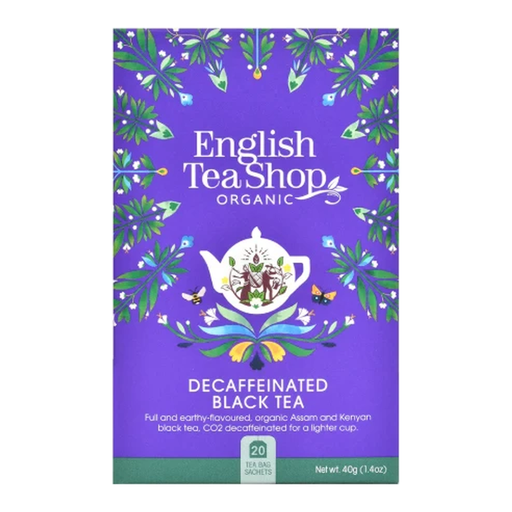
A 20g decaffeinated black tea labelled organic. For a cream-tea service, check the exact pack’s certification details, serving count and brewing directions before planning how much to prepare.
 No image available
An 80-bag decaf option for serving several guests. Follow the pack directions when preparing it with milk, and check the exact label if organic certification is a purchase requirement.
 No image available
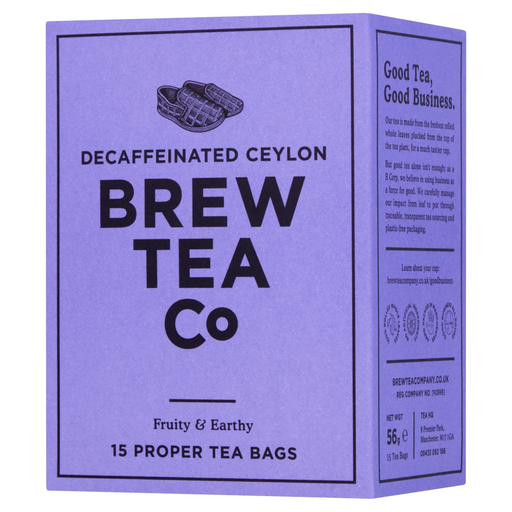
A smaller tea-bag pack labelled as CO2-decaffeinated tea. Check the exact pack’s ingredient wording, organic certification details and brewing directions if those points determine your choice.
 No image available
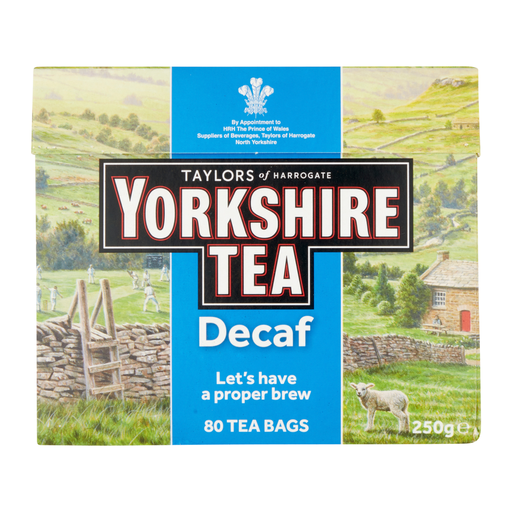
A decaf black-tea option for guests who take a familiar tea style with milk. The pack is labelled 250g; check its brewing directions and exact organic status if those affect your choice.
Check the organic claim and control-body details for the exact product. UK government guidance says organic-labelled food must meet applicable production rules, composition requirements and certification conditions. For example, Tesco’s listing for Clipper’s 40-bag Organic Everyday Decaf gives GB-ORG-05 information; check other pack variants on their own labels.
Not necessarily. Twinings explains that decaffeination removes nearly all caffeine but can leave traces. If complete avoidance is necessary, check the exact tea and seek individual professional advice where a medical restriction applies.
When brewing directly in a mug, make the tea before adding milk, as Yorkshire Tea advises. Follow your chosen product’s infusion directions rather than assuming all decaf blends need the same brewing time.
A decaf black tea suits a gathering where guests expect a conventional brew and may add milk; a lighter afternoon-tea style is another option if delicacy matters more. The UK Tea & Infusions Association describes Afternoon Tea blends as light and suitable alongside cream pastries and fruit cake. Check any lighter tea separately if it must also be decaf and organic.