Organic-first black-tea drinkers
If an everyday black tea is part of your afternoon break, check the organic claim on the particular decaf product rather than relying on its brand or retailer category.


For a familiar afternoon black tea, start with an organic decaf everyday blend; choose Earl Grey if you want bergamot, or green tea if you prefer a different tea style. Check the exact product for its organic claim, and remember that decaf tea can retain traces of caffeine. If avoiding those traces matters more than tea-leaf flavour, consider a suitably checked fruit or herbal infusion instead.
If an everyday black tea is part of your afternoon break, check the organic claim on the particular decaf product rather than relying on its brand or retailer category.
Decaf black, Earl Grey and green tea keep tea leaves in the cup. Twinings and University Hospitals of Leicester NHS Trust both note that decaffeinated tea can still contain small traces of caffeine.
A plain black blend, bergamot-flavoured Earl Grey and green tea offer different afternoon cups. The tea style matters alongside the organic and decaf claims.
Choose the drink style first, then check the exact pack for the claims and ingredients that matter to you.
| Priority | What to check | Your needs |
|---|---|---|
| Organic status | Look for an organic claim and certification information for the exact product. The Department for Environment, Food & Rural Affairs says UK organic labelling depends on applicable production rules and certification by an approved control body. | I want the decaf tea itself to be organic, not merely listed beside organic products. |
| Caffeine | Distinguish decaffeinated tea from a fruit or herbal infusion. Twinings and University Hospitals of Leicester NHS Trust say traces of caffeine can remain in decaf tea; check an infusion’s ingredients if avoiding caffeine is essential. | Reducing caffeine may be enough for me, or I may need to check an alternative that does not use tea leaves. |
| Tea style | Compare plain black tea, black tea with bergamot, and green tea. Clipper’s product descriptions identify these as distinct organic decaf options. | For a conventional cup I would choose plain black tea; bergamot or green tea would make it a different kind of break. |
| Current pack details | Read the current ingredients, organic information and preparation directions for the chosen variant. Tesco advises checking food labels because product information can change. | If a particular ingredient or brewing method matters to me, I want to check the pack I am buying. |
Decaffeination and organic certification describe different things. A decaf category label does not establish that an individual tea meets UK organic labelling conditions.
Check the organic claim and certification information for the exact pack.
Twinings and University Hospitals of Leicester NHS Trust note that small amounts can remain after decaffeination.
If avoiding caffeine traces is essential, check an appropriate fruit or herbal infusion and its ingredients rather than treating decaf tea as a zero-caffeine drink.
Clipper’s plain black tea, bergamot Earl Grey and green tea have different ingredients and flavour profiles.
Match the tea style to how you want your afternoon cup to taste before choosing a variant.
Tesco advises that food products can be reformulated, so an earlier listing may not describe the pack in hand.
Read the current label for ingredients and organic information, particularly if a specific detail affects your choice.
These brand examples help distinguish organic decaf products from wider decaf ranges; they do not describe what every product from each brand contains.
Clipper lists organic decaf everyday black tea, Earl Grey and green tea products.
Twinings provides decaffeinated tea options and explains how decaf differs from naturally caffeine-free infusions.
Yorkshire Tea describes its Decaf as a black-tea blend intended to retain its character after decaffeination.
Tesco lists own-label decaf tea and decaf products from several brands, including an organic Clipper product.
These options include organic decaf black teas for a conventional afternoon cup and a herbal infusion for a different drink style. The infusion is not decaf black or green tea.
 No image available
An everyday decaf black-tea option for a conventional afternoon cup. The pack contains 80 tea bags and weighs 277g. Check the current pack for organic certification details; decaf does not necessarily mean caffeine-free.
 No image available
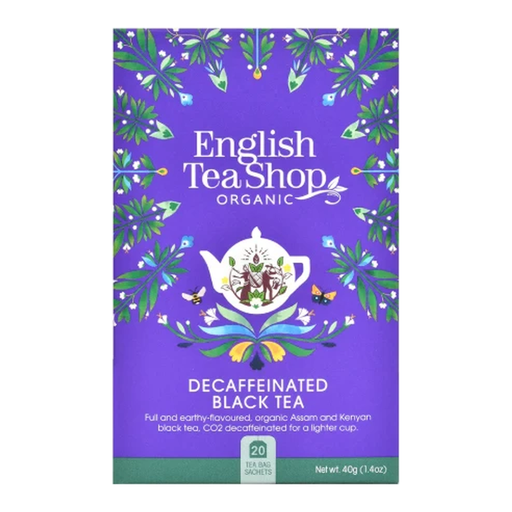
Another organic decaf black-tea option for an afternoon break, in a 20g pack. Check the current pack for certification details. Do not assume a caffeine amount per cup from a figure without a clear serving basis.
 No image available
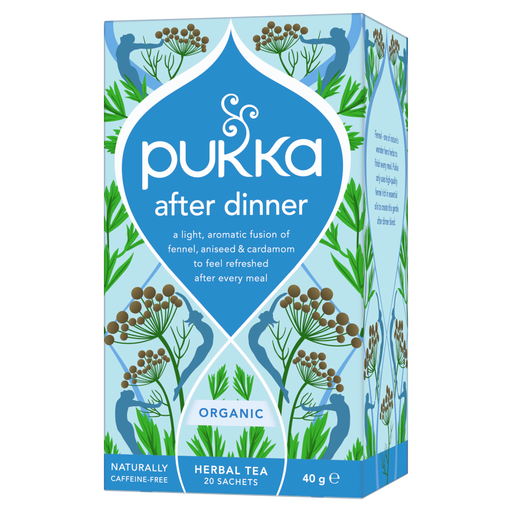
An organic herbal infusion rather than decaf black or green tea, supplied as 20 sachets in a 40g pack. Choose it only if an herbal drink suits your break. Check the current ingredients and caffeine information if avoiding caffeine is essential, and the pack’s allergen information if celery is a concern.
Check the organic claim and certification information for the exact product. The Department for Environment, Food & Rural Affairs says UK organic labelling requires applicable production rules to be met and certification by an approved control body; a decaf label alone does not establish organic status.
Not necessarily. Twinings and University Hospitals of Leicester NHS Trust say small traces of caffeine can remain in decaffeinated tea. If avoiding traces is essential, check a suitable fruit or herbal infusion and its ingredients instead.
A plain decaf black blend is the closest style. Clipper describes its Organic Everyday Decaf as a robust blend made with decaffeinated organically grown black tea; Earl Grey adds bergamot, while green tea is a different tea style.
Choose Earl Grey if you want black tea with bergamot flavouring; choose green tea if you prefer green tea to a black-tea base. Clipper lists organic decaf products in both styles, so the choice comes down to the cup you want rather than organic status alone.
Yes. Tesco advises that food products can be reformulated and that shoppers should read the label rather than rely only on a website listing. Recheck the exact pack when its ingredients or organic information affect your choice.