Choose organic dried fruit if organic production and a fruit ingredient matter to you, but do not rely on it as the protein component of a meal: the Sainsbury’s SO Organic fruit and Crazy Jack mango examples listed below each provide less than 1g protein per 30g. If protein is the priority, have the fruit alongside a protein-rich food, or compare a fruit-and-nut mix on its own protein, ingredients, allergens and organic labelling.
Who this choice matters to
The useful distinction is whether you want an organic fruit accompaniment, a snack that contributes protein, or both.
Organic-first shoppers
If organic dried fruit is your starting point, compare the label and ingredients before deciding what to eat it with. Sainsbury’s lists less than 1g protein per 30g for its SO Organic apricots, dates and prunes, so these are fruit additions rather than the main protein component.
Protein-focused snack planners
A fruit-and-nut mix can differ substantially from fruit alone: Whitworths lists 4.1g protein per 30g for its 1DERS fruit-and-nut mix, alongside peanuts and sweetened cranberries. Check the particular mix rather than assuming it is organic or suits your protein goal.
Ingredient- and allergen-conscious shoppers
Read the current ingredients and allergen declaration for each product. The Food Standards Agency notes that sulphites are often used in dried fruit; mixes may also contain peanuts or carry other allergen warnings.
What to check before buying
Start with the protein contribution you want from the whole meal or snack. Then compare organic labelling, nutrition on the same serving basis, and the ingredients you need to account for.
| Priority |
What to check |
Your needs |
| Protein contribution |
Compare protein per labelled serving on the same quantity of food. Sainsbury’s SO Organic apricots and dates each list 0.7g per 30g, while its prunes list less than 0.5g; Crazy Jack mango lists 0.7g per 30g. For a protein-led meal, Cambridge University Hospitals identifies foods including dairy, eggs, pulses and tofu as protein-rich choices. |
I want the meal or snack to contribute protein, not just contain dried fruit. I’ll compare the whole combination rather than counting fruit as its main protein source. |
| Organic status |
Check that the particular product is labelled organic, rather than relying on a brand’s wider range. Defra explains that organic labelling is tied to production rules and certification by an approved control body. Check a fruit-and-nut mix separately from any organic fruit sold by the same supplier. |
Organic production matters to me, so I want to confirm the status of the pack I’m buying. |
| Sugars and portions |
Compare sugars per 30g, not per bag: Sainsbury’s lists 9.4g for its SO Organic apricots and 17.4g for its SO Organic dates, while Crazy Jack lists 18.3g for its organic mango. The NHS counts 30g dried fruit as one 5 A Day portion and advises eating it at mealtimes rather than between meals to reduce tooth-decay risk. |
A large bag might contain several portions. I’d rather measure the amount I plan to eat and compare products on that basis. |
| Ingredients and allergens |
Read the ingredients, preservative information and allergen declaration on the current pack. The Food Standards Agency notes that dried fruit can contain sulphites; ASDA’s dried mango lists sulphur dioxide and a may-contain warning for nuts and peanuts. Whitworths’ cited fruit-and-nut mix contains peanuts and sweetened cranberries. |
I need to check for an ingredient or allergen that affects me, rather than assuming all dried fruit or mixes have the same formulation. |
Common buying mistakes
-
Expecting organic fruit to supply the meal’s protein
The Sainsbury’s SO Organic apricots, dates and prunes and Crazy Jack organic mango listed here each provide less than 1g protein per 30g. Their organic status does not change those protein figures.
Choose the fruit for the role you want it to play, then compare a suitable protein-rich food alongside it. Cambridge University Hospitals lists options including dairy, eggs, pulses and tofu.
-
Comparing bag sizes instead of servings
A pack’s total weight does not tell you how its sugars, fibre or protein compare with another pack. The cited organic fruits list between 9.4g and 18.3g sugars per 30g, depending on the product.
Use the same quantity when reading nutrition labels. For a 5 A Day comparison, the NHS counts 30g dried fruit as one portion and advises having it at mealtimes.
-
Assuming dried fruit is free from preservatives or nut warnings
Ingredients differ between products. ASDA’s dried mango lists sulphur dioxide and a may-contain warning for nuts and peanuts; Whitworths’ cited fruit-and-nut mix contains peanuts.
Check the current pack’s ingredient and allergen statements, particularly if sulphites, peanuts or other nuts affect your choice.
-
Assuming a fruit-and-nut mix is organic
Whitworths lists 4.1g protein per 30g for its cited mix, but the supplier’s accreditation to supply organic ingredients does not establish the organic status of that particular retail product.
Check the mix’s own organic labelling as well as its protein per serving, sweetened ingredients and allergens.
Relevant brand and retailer ranges
These examples show different ways to shop for dried fruit; a range name or supplier credential does not replace checking the individual pack.
Sainsbury’s SO Organic
Sainsbury’s lists SO Organic apricots, prunes and dates in 250g packs, with ingredients and nutrition given per 30g.
- The product labels allow a like-for-like check of sugars, fibre and protein across these three fruits.
- Each cited fruit provides less than 1g protein per 30g, so consider a separate protein-containing food for a protein-led meal.
Crazy Jack
The Crazy Jack Organic Mango listing describes a 4 x 30g pack and identifies Soil Association Organic certification.
- The 30g pack size matches the quantity used in the cited nutrition panel.
- Sainsbury’s lists 18.3g sugars and 0.7g protein per 30g for this mango; choose a separate protein source if that is the purpose of the snack.
Whitworths
Whitworths sells dried fruit, nuts and seeds and states that it has Soil Association accreditation to supply organic ingredients.
- Its cited 1DERS fruit-and-nut mix lists 4.1g protein per 30g.
- That mix contains peanuts and sweetened cranberries. Confirm the organic status of the individual retail product rather than inferring it from supplier accreditation.
M&S Organic
The M&S Food fruit-snacks range lists organic soft apricots, dates and prunes, as well as organic raisins and sultanas.
- The range offers several fruit types for shoppers who want an organic-labelled option.
- Stock depends on the selected local Foodhall. Check the individual pack for ingredients and nutrition before comparing it with another product.
Tesco
Tesco Groceries lists Tesco Organic Medjool Dates and Marketplace organic dried-fruit products, including figs, mango strips and pitted dates.
- The category provides several organic-labelled fruit types to investigate.
- Use each product’s own ingredients, nutrition and organic details for a buying comparison; the category listing alone does not establish those details across products.
Joybuy product options
These Joybuy options are a seed-and-goji berry mix and portioned raisins. Check each product’s organic labelling and protein per serving before choosing it for an organic, protein-conscious meal or snack.
 No image available
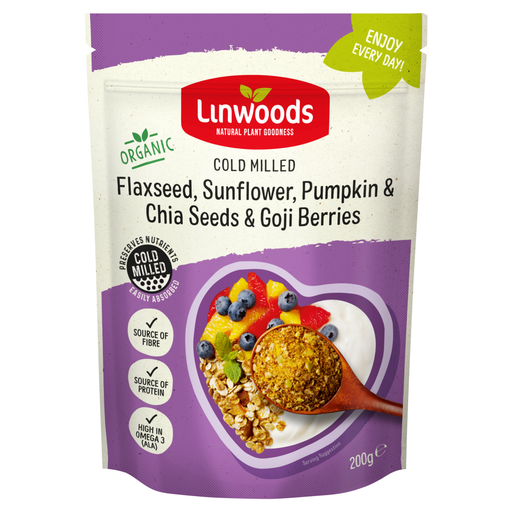
Linwoods Seed & Goji Berry Mix 200g
This 200g mix contains flaxseed, sunflower, pumpkin and chia seeds with goji berries. If you want it for a protein-led meal, compare its protein per serving and check the current pack for organic labelling and allergens.
View on Joybuy
 No image available
Organix Goodies Raisins 12+ Months, 12 x 14g
The listing names twelve 14g boxes of raisins labelled for ages 12 months and over. Compare the pack’s protein per box and organic labelling if you are considering them as part of a protein-conscious meal.
View on Joybuy
Questions about organic dried fruit
Is organic dried fruit a high-protein snack?
The cited plain-fruit products contribute little protein per 30g: Sainsbury’s SO Organic apricots and dates each list 0.7g, its prunes list less than 0.5g, and Crazy Jack organic mango lists 0.7g. If protein is your main aim, compare the whole meal or snack and include a protein-rich food that suits you.
What should I check when a dried-fruit pack says organic?
Check the organic claim on the individual product, not just the brand or retailer range. Defra explains that organic labelling in the UK is tied to organic-production rules and certification by an approved control body; the ingredients and nutrition still need their own check.
What amount of dried fruit counts as a 5 A Day portion?
The NHS counts 30g of dried fruit as one 5 A Day portion. It advises eating dried fruit at mealtimes rather than as a between-meal snack to reduce the risk of tooth decay; a pack may contain more or less than 30g.
Does organic dried fruit always contain no preservatives?
Do not infer that from the organic label alone; read the particular product’s ingredients. Sainsbury’s says its SO Organic dried apricots contain no preservatives, but that statement should not be applied to every organic dried-fruit product.
What if sulphites or nuts affect what I can buy?
Read the current pack’s ingredient and allergen statements before choosing. The Food Standards Agency notes that sulphites are often used in dried fruit; ASDA’s cited dried mango lists sulphur dioxide and a may-contain warning for nuts and peanuts, while Whitworths’ cited fruit-and-nut mix contains peanuts.


