What should you check?
Start with the gluten information on the exact pack, whether you are considering organic or non-organic fruit. Then compare the fruit format and ingredients for the way you plan to use it.
| Priority |
What to check |
Your needs |
| Gluten labelling |
Check the current pack for a gluten-free claim or Crossed Grain Trademark. Read the ingredients and any precautionary wording about cereals containing gluten. The Food Standards Agency defines a gluten-free claim as no more than 20 mg/kg gluten in the food as sold. |
I need clear gluten information for the exact fruit product I am buying, not an assumption based on its organic label. |
| Organic status |
Check that the exact product is labelled organic. The Department for Environment, Food & Rural Affairs says products may be labelled organic only if they meet organic production rules; this does not establish gluten-free status. |
Organic production matters to me, but I will assess gluten labelling separately. |
| Ingredients |
Read the ingredient and allergen panels for the exact variety. Mixed fruit can contain other ingredients: Sainsbury's lists candied peel with glucose-fructose syrup in one mixed dried-fruit product. |
For baking, I want to know whether I am buying plain fruit or a mixture with additional ingredients. |
| Product format |
Check whether the product is whole fruit, a mix or a purée, and whether its pack size suits its intended use. Assess gluten information again if you switch varieties or formats. |
A purée could serve a different purpose from dried fruit I want to carry as a snack or add to a recipe. |
| Repeat purchases |
Read the pack received rather than relying solely on an earlier order or retailer page. Sainsbury's advises shoppers that product ingredients can change. |
Even when I recognise a product, I want to check its current label before using it. |
Brand and retailer references
These examples show why an organic listing or a brand-wide statement cannot replace checking the exact product pack.
Sainsbury's SO Organic
Sainsbury's lists SO Organic Raisins 500g with raisins (99%) and high-oleic sunflower oil as its declared ingredients.
- The listing identifies the organic variety and its declared ingredients.
- Check the current pack for gluten information; the listed ingredients and organic name do not establish gluten-free status.
Tesco
Tesco’s dried-fruit category lists Tesco Organic Medjool Dates 200g.
- The category listing identifies an organic date option.
- Use the exact product’s current pack to assess ingredients and gluten labelling.
Whitworths
Whitworths lists dried-fruit varieties including apricots, prunes and sultanas.
- The range includes several fruit formats to compare for different uses.
- ASDA’s listing for Whitworths Amazing Apricots identifies sulphur dioxide or sulphites. Check the exact variety’s ingredient and allergen panels.
Sunsweet
Sunsweet’s international product page states that its dried fruits are gluten-free.
- The brand makes a gluten-free statement about its dried-fruit range.
- That international statement does not establish the labelling or organic status of a particular UK pack; check the exact product.
Joybuy product to assess
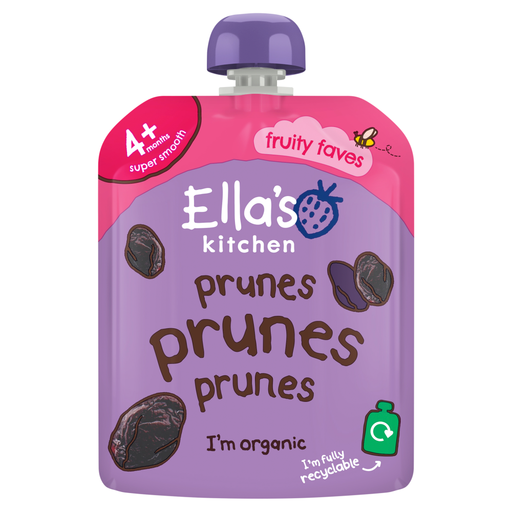
This selection is a Stage 1 prune purée for babies aged 4+ months, rather than whole dried fruit for snacking or baking. Check its current pack’s organic and gluten information if considering it for coeliac shopping.
 No image available
Ella's Kitchen Prunes Stage 1 4+ Months 70g
This infant prune purée is a different format from whole or chopped dried fruit for general snacking or baking. Check the current pack for organic and gluten-free labelling, ingredients and precautionary allergen wording before choosing it for coeliac shopping.
View on Joybuy
Questions about dried fruit and coeliac shopping
Is organic dried fruit automatically suitable for someone with coeliac disease?
No. Organic labelling concerns production rules, not whether a product is gluten-free. Check the exact pack’s gluten labelling, ingredients and precautionary allergen wording before choosing it for coeliac shopping.
What does a UK “gluten-free” claim mean?
The Food Standards Agency defines “gluten-free” as no more than 20 mg/kg gluten in the food as sold to the final consumer. An organic label does not make that claim.
What if the dried-fruit pack has no gluten-free claim?
Check the current ingredients for cereals containing gluten and read any precautionary allergen wording about those cereals. Coeliac UK notes that foods without gluten-containing ingredients can encounter them during processing, so do not use organic status alone to settle the decision.
Should I recheck a dried-fruit label when buying it again?
Yes. Read the pack you receive, even if you have bought the product before. Sainsbury's advises shoppers that ingredients can change and that they should read the label before use.
Can I assess a fruit-and-nut mix like plain dried fruit?
Assess the mix as its own product, including all ingredients and precautionary allergen wording. A Joybuy listing for BE&CHEERY Daily Mixed Nuts and Dried Fruits 750g, for example, says it may contain wheat (gluten) due to shared production lines; the fruit ingredients alone do not describe the mix’s allergen information.


