Choose organic dried fruit as a convenient carbohydrate-containing addition to food after training, not as the only food you rely on when recovery protein matters. Compare the organic label, ingredients and nutrition per serving: an explicitly no-added-sugar mango may suit that ingredient preference, while organic raisins offer a different fruit format. The NHS counts 30g of dried fruit as one 5 A Day portion and advises eating it at mealtimes rather than between meals to reduce tooth-decay risk.
Who is this choice for?
Gym-goers adding carbohydrate to a meal
Dried fruit is portable when a meal is not immediately to hand. If you are planning food around recovery from demanding exercise, consider it alongside a protein-containing food rather than treating the fruit alone as a complete recovery snack. A 2015 review in Current Sports Medicine Reports discusses the complementary roles of carbohydrate and protein for endurance athletes seeking to maximise recovery.
Shoppers comparing organic ingredients
An organic claim and a no-added-sugar statement answer different questions. Check the pack’s organic information, ingredient list and nutrition panel separately, particularly if you prefer fruit without added sugar or other ingredients.
People who prefer a defined portion
A measured serving or smaller pack makes it easier to see how much dried fruit you are having. The NHS counts 30g as one dried-fruit portion and advises having dried fruit at mealtimes, rather than grazing between meals, to reduce tooth-decay risk.
What should you check?
Start with how the fruit will fit into your post-gym meal, then compare labels using the same serving size.
| Priority |
What to check |
Your needs |
| Carbohydrate and protein |
Compare carbohydrate and protein per stated serving. Ocado lists 22.9g carbohydrate and 0.72g protein per 30g of Crazy Jack Organic Dried Mango; Tesco lists 22.1g and 0.9g respectively per 30g of its Organic Raisins. |
I want fruit as part of my food after training, but will include another protein-containing food when recovery protein matters. A 2015 Current Sports Medicine Reports review discusses both nutrients for endurance athletes seeking to maximise recovery. |
| Organic claim and ingredients |
Check the organic information and complete ingredient list on the pack. Ocado describes Crazy Jack Organic Dried Mango as no added sugar; the researched Tesco and Sainsbury’s organic raisin listings include sunflower oil. |
If I prefer no added sugar or fewer ingredients, I need to check those details separately from the organic claim. |
| Portion and timing |
Check the pack size against a measured serving. The NHS counts 30g of dried fruit as one 5 A Day portion and advises eating it at mealtimes rather than between meals to reduce tooth-decay risk. |
A smaller pack may make my serving easier to plan; I can include dried fruit with a post-gym meal rather than repeatedly eating it between meals. |
| Sugars and allergens |
Compare sugars using the same serving size: Ocado lists 16.5g per 30g of Crazy Jack Organic Dried Mango, while Tesco lists 20.3g per 30g of its Organic Raisins. Check allergen and cross-contact statements for the exact product. |
No added sugar does not mean sugar-free. If nuts or sesame are relevant to me, I also need to note Ocado’s possible cross-contact warning for the Crazy Jack mango. |
What can be easy to overlook?
-
Treating dried fruit as the whole recovery snack
The organic mango and raisin examples listed by Ocado, Tesco and Sainsbury’s each provide less than 1g protein per 30g. A 2015 Current Sports Medicine Reports review identifies roles for both carbohydrate and protein in recovery for endurance athletes seeking to maximise it.
If recovery protein matters to you, include a suitable protein-containing food or have the dried fruit as part of a meal.
-
Reading “organic” as “no added sugar”
Organic labelling does not describe the product’s sugar content or full ingredient list. The researched organic raisin listings from Tesco and Sainsbury’s include oil, while Ocado explicitly describes the Crazy Jack organic mango as no added sugar.
Read the organic information, ingredients and nutrition panel as separate parts of the label.
-
Eating repeatedly from a large bag
The NHS counts 30g of dried fruit as one 5 A Day portion and advises eating dried fruit at mealtimes rather than between meals to reduce tooth-decay risk.
Measure a serving or use a smaller pack, and include it with your post-gym meal instead of grazing on it.
-
Overlooking cross-contact information
Ocado’s listing for Crazy Jack Organic Dried Mango warns that it may contain nuts and sesame. That warning can change the choice for someone who must avoid them.
Check the current pack’s allergen and cross-contact information for the exact dried fruit you intend to buy.
Organic dried-fruit brand references
These are references for comparing the specified products and their labels, not claims about every product sold under each brand.
Tesco Organic
Tesco’s Organic Raisins listing identifies an organic-control-body code for its 375g raisin pack.
- Tesco lists 22.1g carbohydrate, 20.3g sugars, 1.3g fibre and 0.9g protein per 30g.
- The ingredient list includes sunflower oil; check it if added ingredients matter to you.
Sainsbury’s SO Organic
Sainsbury’s lists SO Organic Raisins in a 500g pack.
- Its listing gives 19.8g carbohydrate, 19.8g sugars, 1.1g fibre and 0.6g protein per 30g.
- The listed ingredients include high-oleic sunflower oil; the raisins alone provide little protein per serving.
Crazy Jack
Ocado lists Crazy Jack Organic Dried Mango as an organic, no-added-sugar mango option.
- Ocado lists 22.9g carbohydrate, 16.5g sugars, 2.19g fibre and 0.72g protein per 30g.
- The listing warns that the mango may contain nuts and sesame.
Raisin options on Joybuy
This Joybuy selection is a 12 × 14g raisin format for shoppers considering smaller portions after the gym. Check the pack’s organic information before choosing it specifically as an organic dried-fruit option.
 No image available
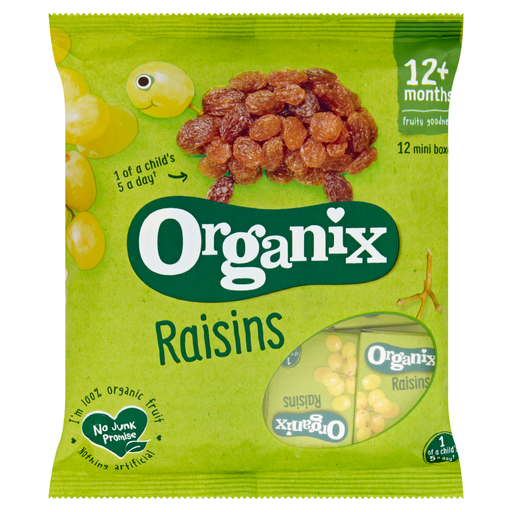
Organix Goodies Raisins 12+ Months, 12 × 14g
The 12 × 14g format offers smaller raisin portions if you want to plan how much dried fruit to include with a post-gym meal. The product name specifies 12+ Months; check the current pack for organic labelling, ingredients, allergens and nutrition if those details affect your choice. The NHS advises having dried fruit at mealtimes rather than between meals to reduce tooth-decay risk.
View on Joybuy
Frequently asked questions
Is organic dried fruit enough on its own after the gym?
Not if recovery protein is an important part of that eating occasion. The organic mango and raisin examples listed by Ocado, Tesco and Sainsbury’s each provide less than 1g protein per 30g. A 2015 Current Sports Medicine Reports review discusses carbohydrate and protein together for endurance athletes seeking to maximise recovery, so include another protein-containing food when that goal applies.
What counts as a portion of dried fruit?
The NHS counts 30g of dried fruit as one portion of 5 A Day. Check the pack’s serving size and nutrition panel when comparing products, since a smaller individual pack need not weigh 30g.
When should I have dried fruit after training?
The NHS advises eating dried fruit at mealtimes rather than as a between-meal snack to reduce tooth-decay risk. If dried fruit is part of your post-gym food, include it with a meal rather than repeatedly grazing on it.
Does no added sugar mean dried fruit is sugar-free?
No. Dried fruit can contain naturally occurring sugars even when none has been added. For example, Ocado describes Crazy Jack Organic Dried Mango as no added sugar but lists 16.5g sugars per 30g; check the nutrition panel as well as the ingredient statement.


