Home workers adding fruit to lunch
A measured serving can go alongside lunch instead of leaving an open bag on the desk. The NHS uses 30g of dried fruit as its reference for one 5 A Day portion and advises eating dried fruit at mealtimes.


For a work-from-home lunch, look for a clear organic claim and choose dried fruit you can add to the meal rather than graze on at your desk. The NHS counts 30g of dried fruit as one 5 A Day portion and advises eating it at mealtimes to reduce the risk of tooth decay. Compare ingredients, nutrition per serving and allergen information before deciding between plain fruit and a mix.
A measured serving can go alongside lunch instead of leaving an open bag on the desk. The NHS uses 30g of dried fruit as its reference for one 5 A Day portion and advises eating dried fruit at mealtimes.
If organic production matters to your choice, check the product’s own label and certification details. The Department for Environment, Food & Rural Affairs sets out the requirements for food labelled organic in the UK.
Plain fruit and mixed snacks can have different ingredients. Check for added ingredients, sulphites and nuts on the particular pack, especially when choosing a fruit-and-nut mix.
Start with the organic claim, then consider the serving you would use at lunch and what else is in the pack.
| Priority | What to check | Your needs |
|---|---|---|
| Organic claim | Look for an explicit organic claim on the product and check its control-body details. The Department for Environment, Food & Rural Affairs says UK organic food must meet production rules, have at least 95% organic agricultural ingredients and be certified through an approved control body. | I want an organic product, not one whose name or general packaging merely suggests it. |
| Lunch portion | Check the pack size against the amount you plan to serve. The NHS counts 30g of dried fruit as one 5 A Day portion and advises having dried fruit at mealtimes to reduce the risk of tooth decay. | A portion I can put with lunch suits me better than grazing from an open bag throughout the working day. |
| Ingredients and nutrition | Read the full ingredient list and compare nutrition using the same serving basis. For example, Tesco Groceries lists raisins and sunflower oil in Tesco Organic Raisins 375G, with 20.3g sugars per 30g serving. | I want to know what is in the fruit and what the nutrition panel says for the portion I will actually use. |
| Allergens and mixtures | Check the allergen statement on each pack. The Food Standards Agency notes that sulphites are used in some dried fruit; a Joybuy-listed fruit-and-nut mix, for example, declares tree nuts and sulphites and contains sweetened cranberries. | If I choose a mix rather than plain fruit, I need to know whether its nuts, sulphites or other ingredients suit me. |
Organic labelling concerns how food is produced, not how much dried fruit to serve. Tesco Groceries lists 20.3g sugars per 30g serving of its Organic Raisins, while the NHS advises eating dried fruit at mealtimes to reduce the risk of tooth decay.
Use the nutrition panel to plan a lunch portion, and check the product’s organic claim separately.
Mixes can contain other ingredients. A Joybuy-listed fruit-and-nut mix includes sweetened cranberries, tree nuts and raisins containing sulphites.
Read the complete ingredient and allergen statements on the pack you intend to buy.
A listing can identify an organic fruit option without giving you the ingredient, allergen and nutrition details needed to compare individual products.
Check the individual product page or pack before choosing a particular fruit, especially if those details affect your decision.
Tesco Groceries lists several organic dried-fruit options, including raisins, sultanas, Medjool dates and dried mango.
Marks & Spencer lists organic soft apricots, dates and prunes, alongside organic raisins and sultanas, in its fruit-snack range.
Whitworths lists dried fruit and portion-oriented multipacks, which may be relevant if pack format matters for lunch.
These options cover portioned raisins and a seed-and-goji mix that could be added to lunch. Check each pack’s organic claim before choosing it specifically as organic dried fruit; the seed mix is not a substitute for a pack of plain dried fruit.
 No image available
The individual 14g boxes offer a defined amount to put with lunch rather than an open bag to graze from. Each box is smaller than the NHS 30g reference for one 5 A Day portion of dried fruit; check the pack’s organic and ingredient information if those are part of your choice.
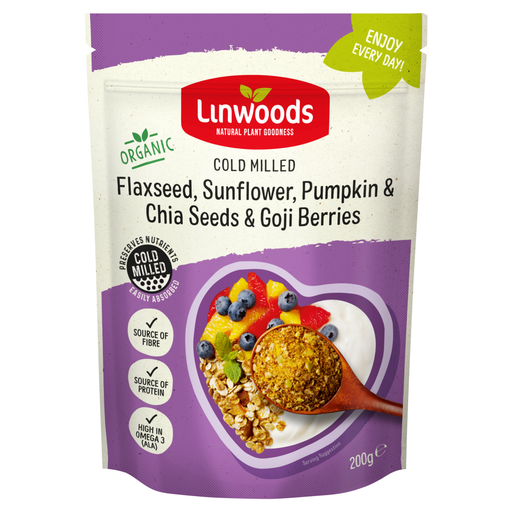 No image available
This seed-and-goji mix is an option if you want seeds as part of lunch, rather than a plain dried-fruit serving. Check the goji content, organic claim, ingredients, allergen statement and storage instructions on the pack before choosing it.
Look for an explicit organic claim and check the product’s certification details. The Department for Environment, Food & Rural Affairs says food labelled organic in the UK must meet organic production rules, contain at least 95% organic agricultural ingredients and be certified through an approved organic control body.
The NHS counts 30g of dried fruit as one 5 A Day portion. Use that reference when deciding how much to add to lunch, bearing in mind that an individual mini-pack may contain a different amount.
The NHS advises eating dried fruit at mealtimes rather than between meals to reduce the risk of tooth decay. For a work-from-home lunch, put the amount you intend to eat with the meal instead of leaving an open bag beside your desk.
Yes, particularly if those allergens are relevant to you. The Food Standards Agency notes that sulphites are used in some dried fruit and that people with asthma have a higher risk of reaction to sulphur dioxide; fruit-and-nut mixes can also contain tree nuts. Read the allergen statement for the specific pack.