Hosts choosing organic tea
If organic production matters for the party, check the claim on the particular fruit infusion you plan to serve. A brand’s wider range is not a substitute for the exact product’s labelling.


Choose a fruit infusion labelled organic if certified organic production matters to you, but check the exact product rather than assuming every flavour from the same brand qualifies. For a mixed afternoon tea, check each blend’s caffeine statement and full ingredients; an organic claim does not establish that it is caffeine-free or suitable for every guest.
If organic production matters for the party, check the claim on the particular fruit infusion you plan to serve. A brand’s wider range is not a substitute for the exact product’s labelling.
A fruit infusion can sit alongside conventional tea for guests avoiding caffeine. Twinings describes its fruit and herbal infusion range as caffeine-free, while Pukka makes that claim for its Elderberry & Echinacea tea; check the statement for the blend you select.
Fruit-flavoured blends can also contain herbs, liquorice root and flavourings. Keep the current ingredient information available so guests can check for allergens or ingredients they need to avoid.
Start with the exact product’s organic claim, then check caffeine, flavour and ingredients against the guests you are serving.
| Priority | What to check | Your needs |
|---|---|---|
| Organic status | Check the organic claim on the exact pack or current product description. The UK Department for Environment, Food & Rural Affairs says food described as organic must have been inspected and certified; a brand’s other products do not establish this blend’s status. | I want the fruit tea served at my party to carry its own organic claim, not one inferred from the brand name. |
| Caffeine | Look for a caffeine-free statement for the particular blend. Twinings describes its fruit and herbal infusions as a caffeine-free alternative; Pukka specifically describes Elderberry & Echinacea as naturally caffeine-free. | Some guests prefer to avoid caffeine, so I need to know which tea I can offer them. |
| Flavour and variety | Compare the named flavours with the full ingredients, including herbs and flavourings. Check each blend in a selection box separately if organic status or ingredients matter. | I would like guests to have a choice of fruit flavours, while knowing what is actually in each pot. |
| Guest ingredients | Read the current ingredient and allergen declaration; UK government guidance says specified allergens in prepacked food must be emphasised in the ingredients list. Check for liquorice root: NHS guidance advises pregnant people to avoid teas containing it. | Before I serve a shared drink, guests need a way to check allergens and any botanicals they avoid. |
A brand can sell fruit infusions and a separate organic range. Twinings has both fruit-and-herbal and organic-tea collections, so one collection does not establish the status of every product in the other.
Check the organic claim on the exact flavour’s current pack or product description.
Clipper Organic Blackcurrant & Blueberry lists liquorice root, nettle and natural flavourings alongside fruit ingredients. Those additions matter if guests avoid particular botanicals or expect a fruit-only blend.
Read the full ingredient list and keep another option available when a blend does not suit a guest.
NHS guidance advises pregnant people to avoid teas containing liquorice root. Clipper Organic Blackcurrant & Blueberry lists liquorice among its ingredients.
Identify the blend on the serving pot and offer an alternative without liquorice root for pregnant guests.
A flavour name cannot show the full recipe. UK government guidance requires specified allergens in prepacked food to be emphasised in its ingredients list when present.
Keep the original packaging available so guests can inspect the current ingredient and allergen declaration.
These brands offer different fruit-infusion choices; check the claims and ingredients of the particular product rather than applying a range-wide description to every blend.
Pukka describes its fruit-tea range as organic and identifies Elderberry & Echinacea as an organic fruit tea that is naturally caffeine-free.
Clipper’s Organic Blackcurrant & Blueberry infusion lists organically produced ingredients and sets out the blend’s composition.
Twinings offers fruit and herbal infusions as well as a separate organic-tea collection. Its Fruit Selection contains several fruit-flavour blends.
teapigs offers a Super Fruit Tea among its fruit and tea choices, with tea-bag and loose-leaf formats across its wider range.
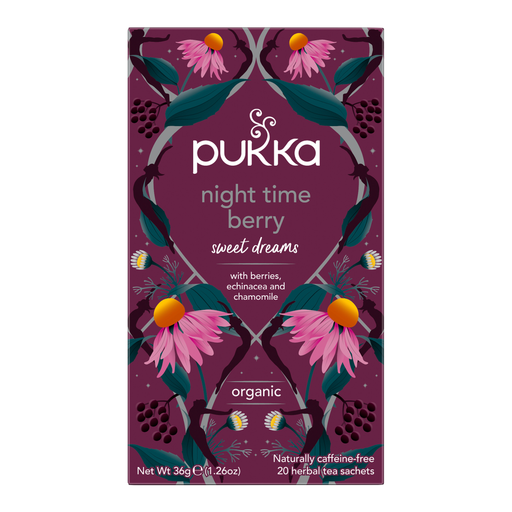
This Pukka berry-labelled sachet pack is one option for an afternoon tea table. Check its current organic labelling and caffeine status before relying on either claim for this particular blend.
 No image available
The berry-labelled, 20-sachet pack offers a single blend for a shared tea table. Check the current pack’s organic labelling, caffeine statement and ingredients before serving; NHS guidance advises pregnant people to avoid teas containing liquorice root.
Check the organic claim on the exact product’s current pack or description, not just the brand’s range. The UK Department for Environment, Food & Rural Affairs says food described as organic in labelling or advertising must have been inspected and certified.
Do not rely on the category name alone; check the particular blend. Twinings describes its fruit and herbal infusions as a caffeine-free alternative, and Pukka specifically describes its Elderberry & Echinacea tea as naturally caffeine-free.
Offer a different tea without liquorice root. NHS guidance advises pregnant people to avoid teas containing it, and Clipper Organic Blackcurrant & Blueberry lists liquorice root among its ingredients.
Keep each tea’s current packaging beside its serving pot so guests can read the full ingredients. UK government guidance says specified allergens in prepacked food must be emphasised in the ingredient list when present; a flavour name is not enough to check them.
No; the organic claim and the tea-bag claim describe different things. Pukka says the bags in its organic fruit-tea range are compostable, while Clipper describes its heat-seal bags as plant-based and biodegradable. Check the exact pack’s disposal instructions and local collection rules.