Organic-first tea drinkers
You want a fruit infusion for an afternoon break and need an organic claim on the product, not just fruit imagery or natural-sounding wording.


For an organic fruit tea at your afternoon break, check the organic claim on the particular product before choosing by berry flavour or packaging. Clipper Organic Blackcurrant & Blueberry has an organic ingredient declaration and a caffeine-free claim from Clipper; Pukka says its products are certified organic, but the ingredients and caffeine information still need checking for the blend you choose. If organic certification is essential, do not substitute a fruit infusion solely because it is described as natural or caffeine-free.
You want a fruit infusion for an afternoon break and need an organic claim on the product, not just fruit imagery or natural-sounding wording.
You want a berry-flavoured cup without caffeine and need to distinguish a fruit or herbal infusion from a tea that contains tea leaves.
You compare what is in a berry blend, including herbs, liquorice and flavourings, and check the brewing directions before making a cup.
Start with the requirement you would not compromise on, then compare the named blends rather than assuming all fruit infusions have the same ingredients or caffeine status.
| Priority | What to check | Your needs |
|---|---|---|
| Organic status | Look for an organic claim on the exact product. Defra’s UK organic food guidance describes organic food as inspected and certified; a fruit or herbal description is not the same claim. | If organic certification matters to me, I need to establish it for the box I am buying, not infer it from the flavour name. |
| Caffeine | Check for a caffeine-free statement on the named blend and read what type of tea or infusion it is. Clipper describes its Organic Blackcurrant & Blueberry as naturally caffeine-free. | I would choose an explicitly caffeine-free infusion if avoiding caffeine is part of my afternoon routine. |
| Blend ingredients | Read the full ingredient list, not just the named fruits. Clipper lists hibiscus, rosehip, liquorice and nettle among the ingredients in its Organic Blackcurrant & Blueberry infusion. | A berry name alone will not tell me whether the blend contains liquorice, herbs or flavourings I would rather avoid. |
| Brewing | Follow the chosen pack’s directions. Clipper Tea Shop gives 2–5 minutes for its Organic Blackcurrant & Blueberry; teapigs gives at least 3 minutes for Super Fruit Tea. | I want preparation instructions for the blend I choose, rather than using one brewing time for every fruit infusion. |
A fruit infusion can be caffeine-free without carrying an organic claim. Defra’s UK guidance treats organic labelling as a matter of inspection and certification.
When organic status is essential, check the claim on the exact pack or product listing before buying.
Berry-named infusions can include other botanicals. Clipper’s Organic Blackcurrant & Blueberry lists liquorice alongside hibiscus, rosehip and nettle.
Read the ingredients panel, particularly if you avoid liquorice or need to consider possible interactions with medicines or supplements.
Directions differ: Clipper Tea Shop specifies 2–5 minutes for its Organic Blackcurrant & Blueberry, while teapigs specifies at least 3 minutes for Super Fruit Tea.
Use the instructions on the pack you have chosen.
Brand ranges can help narrow a search, but compare the claim and ingredients on the particular fruit blend before deciding.
Pukka says all its products are certified organic and offers fruit blends including Morning Berry and Night Time Berry.
Clipper names its Blackcurrant & Blueberry infusion as organic, and Clipper Tea Shop describes it as naturally caffeine-free.
Twinings describes its fruit and herbal infusion range as naturally caffeine-free.
teapigs describes its Super Fruit Tea as naturally caffeine-free.
This Pukka berry blend is an organic-labelled sachet option to consider for an afternoon infusion; check its ingredients and pack directions against what matters to you.
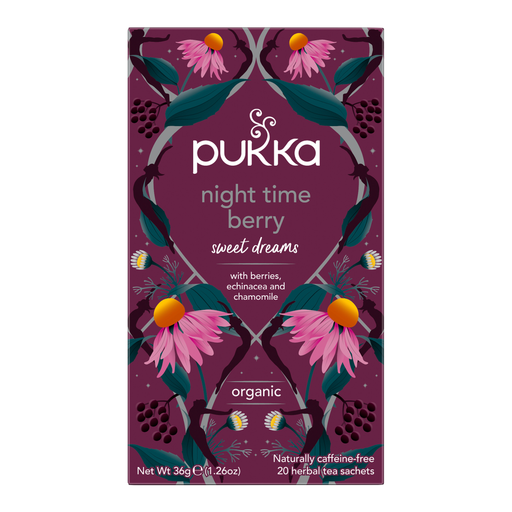 Image unavailable
An organic-labelled berry sachet blend for those prioritising organic status; Pukka says its products are certified organic. It contains liquorice root, so check the ingredients if you avoid liquorice. If caffeine avoidance matters, confirm the caffeine information for this particular blend, and follow its pack directions when brewing.
Look for an organic claim on the particular product. Defra’s UK organic food guidance describes organic food as inspected and certified; “fruit”, “herbal” and “natural” do not establish that status on their own.
Do not assume so from the words “fruit tea”. If caffeine avoidance matters, choose a named infusion with an explicit caffeine-free statement; Clipper makes that claim for its Organic Blackcurrant & Blueberry blend.
Yes. An organic claim does not tell you which botanicals a blend contains. Clipper’s Organic Blackcurrant & Blueberry, for example, lists liquorice, nettle, hibiscus and rosehip among its ingredients.
Check the ingredients of each berry blend before buying: Clipper’s Organic Blackcurrant & Blueberry contains liquorice. An NHS-hosted information page notes that liquorice can interact with some medicines, herbs and supplements; ask a GP or pharmacist if that is a concern for you.
Follow the directions for the product you choose. Clipper Tea Shop specifies 2–5 minutes for Organic Blackcurrant & Blueberry, whereas teapigs specifies at least 3 minutes for Super Fruit Tea.