People with diabetes choosing an unsweetened drink
Diabetes UK includes unsweetened tea among drink options for people with diabetes. A fruit infusion brewed with water lets you choose how to serve it, including whether to add sugar, honey or juice.


Choose a fruit infusion you can brew with water and drink without adding sugar; Diabetes UK includes unsweetened tea among drink options for people with diabetes. If organic production matters to you, check the claim on the exact product rather than relying on fruity flavour or the word ‘natural’. A bottled fruit infusion needs a separate look at its sugars, carbohydrate and serving size, and fruit tea is not a diabetes treatment.
Diabetes UK includes unsweetened tea among drink options for people with diabetes. A fruit infusion brewed with water lets you choose how to serve it, including whether to add sugar, honey or juice.
An organic claim belongs to the particular product, not every tea from the same brand. GOV.UK guidance ties organic food labelling to production, ingredient and certification requirements, so check the exact pack.
A plain infusion brewed at home and a ready-to-drink fruit beverage need different checks. For a bottle, read the nutrition panel and consider how much you will drink, even if its label says ‘no added sugar’.
Start with how you will prepare the drink, then check the organic claim on the exact blend. Treat bottled infusions and botanical ingredients as separate decisions rather than assuming a fruit-tea label answers every question.
| Priority | What to check | Your needs |
|---|---|---|
| Prepared drink | Check whether it is a tea bag or loose infusion brewed in water. Decide what, if anything, you will add after brewing; Diabetes UK includes unsweetened tea among drink options for people with diabetes. | I want fruity flavour in a drink I can prepare without adding sugar, honey, syrup or juice. |
| Organic claim | Look for an organic claim on the exact product and check its pack information. GOV.UK guidance links organic food labelling to production rules, ingredient requirements and approved-control-body certification. | If I am buying organic, I need the claim to apply to this blend—not just another tea in the brand’s range. |
| Bottled nutrition | For a ready-to-drink infusion, compare sugars and carbohydrate per 100 ml and for the amount you expect to drink. A ‘no added sugar’ claim does not establish that the drink is sugar-free; Diabetes UK notes that a total-sugars figure does not separate naturally occurring from free sugars. | A bottled fruit drink is convenient for me, but I want to know what its nutrition panel says before choosing it in place of a plain brewed tea. |
| Blend ingredients | Read the full ingredients and allergen information on the exact pack, particularly if a botanical ingredient matters to your medicines or other individual needs. Do not interpret herbal wording as a treatment claim. | I would rather choose a blend by its ingredients and flavour than assume it will affect my blood glucose. |
A fruit infusion can meet a flavour preference without meeting an organic-only requirement. GOV.UK guidance treats an organic food claim as subject to specific production and certification conditions.
Check the organic wording on the exact tea you intend to buy; do not transfer a claim from another product in the brand’s range.
A bottled infusion can list sugars and carbohydrate despite a no-added-sugar claim. That makes its nutrition panel more relevant than the claim alone when comparing it with a plain brewed tea.
Check the figures per 100 ml and for the amount you will drink. If you brew a tea bag and want an unsweetened drink, serve it without adding sugar, honey, syrup or juice.
A fruit or herbal tea’s name does not establish a blood-glucose effect. Diabetes UK says herbal remedies and supplements should not replace diabetes medication.
Choose an infusion as a drink, not a treatment. Ask an appropriate healthcare professional about a botanical ingredient if it may be relevant to your medicines or individual circumstances.
These examples show why the exact blend matters: a brand’s organic range, a fruit flavour and an unsweetened preparation are different things to check.
Pukka Herbs UK describes its Wild Apple & Cinnamon tea as naturally caffeine-free and made with 100% organically grown ingredients.
Clipper identifies organically produced ingredients in its Organic Blackcurrant & Blueberry infusion.
Twinings describes its Peach & Orange tea bags as sugar-free and caffeine-free, and separately offers an organic tea collection.
Teapigs offers Super Fruit in tea temples and loose leaf.
Tesco Groceries lists fruit and herbal tea bags, including Pukka Organic Wild Apple & Cinnamon.
Sainsbury's lists fruit and herbal teas alongside organic branded teas.
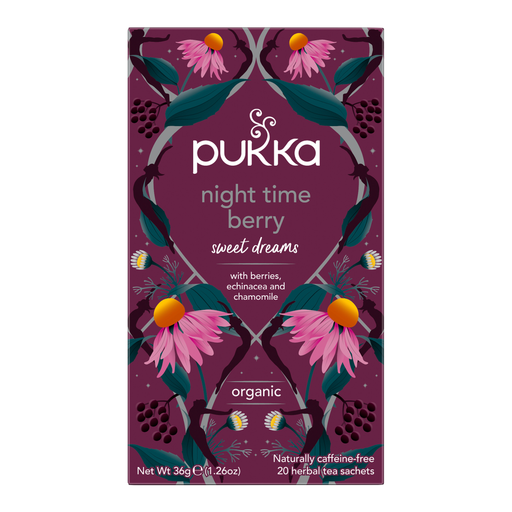
This berry tea in sachets is an option if you prefer to brew your own drink. If organic certification is essential, check the information on the exact pack rather than relying on the product name alone.
 No image available
The sachet format suits a drink you can brew with water and serve without adding sugar. Check the exact pack’s organic information if certification is a requirement, and read its ingredients if particular botanicals matter to your medicines or other individual needs. The ‘Night Time’ name is not a reason to expect a medical effect.
Diabetes UK includes unsweetened tea among drink options for people with diabetes, so a fruit infusion brewed with water and served without added sugar is one option to consider. Check bottled versions separately, and follow any individual dietary advice you have been given; fruit tea is not a diabetes treatment.
No. An organic claim concerns how the product is produced and certified, not whether a prepared drink contains sugar or carbohydrate. For a ready-to-drink infusion, read its nutrition panel even when the label says ‘no added sugar’.
Check the organic wording on the exact product and its pack information, including certification details where shown. GOV.UK guidance links organic food labelling to production rules, ingredient requirements and approved-control-body certification; ‘natural’ or ‘herbal’ is not the same claim.
Do not choose an ordinary fruit tea as a blood-glucose treatment. Diabetes UK advises that herbal remedies and supplements should not replace diabetes medication. If a blend’s botanical ingredients may be relevant to your medicines, speak to an appropriate healthcare professional.
Compare the bottled drink’s sugars and carbohydrate per 100 ml and for the amount you expect to drink. A tea bag brewed with water gives you control over what you add; a bottled drink’s ‘no added sugar’ statement alone does not tell you its total sugar content.