Choose a fruit or herbal infusion labelled organic, check its certification information and confirm the exact blend’s caffeine claim rather than relying on a fruit-flavoured name. Ingredients matter too: NHS guidance advises people who are pregnant to limit herbal tea and avoid teas containing liquorice root, while people who are breastfeeding should consider caffeine from all food and drink.
Who is choosing the tea?
New parents cutting back on caffeinated drinks
A fruit or herbal infusion confirmed as caffeine-free offers a different hot-drink choice from ordinary tea or coffee. If you are breastfeeding, remember that changing one drink does not account for caffeine elsewhere in your day. The NHS advises trying not to exceed 300 mg of caffeine a day while breastfeeding if you consume it.
Households choosing organic tea
Check the organic claim and certification information for the exact product, rather than treating words such as ‘natural’ as equivalent. UK Department for Environment, Food & Rural Affairs guidance ties organic food labelling to production rules and certification by an approved control body.
Pregnant shoppers checking herbal ingredients
Read the full ingredient list, even when a blend is organic and caffeine-free. NHS pregnancy guidance advises limiting herbal tea and avoiding teas containing liquorice root. Ask your midwife, GP or pharmacist about a blend if its ingredients or your circumstances raise questions.
What should you check before buying?
Start with the exact pack’s organic and caffeine information, then read the ingredients and choose a pack format that fits how you will use the tea.
| Priority |
What to check |
Your needs |
| Organic status |
Look for an organic claim on the exact pack and its certification information. UK Department for Environment, Food & Rural Affairs guidance explains that organic food labelling depends on production rules and approved control-body certification. |
I want to distinguish an organic product from one that merely uses botanical or natural-sounding descriptions. |
| Caffeine |
Check the exact blend’s caffeine statement and whether it is a fruit or herbal infusion rather than a product containing conventional tea leaves. If breastfeeding, account for caffeine from other food and drink too; the NHS advises trying not to exceed 300 mg a day if consuming caffeine. |
A caffeine-free hot drink would suit my routine, but switching tea alone would not tell me my total caffeine intake. |
| Ingredients |
Read the full list, not just the flavour on the front. If pregnant, follow NHS advice to limit herbal tea and avoid teas containing liquorice root; organic or caffeine-free labelling does not answer that ingredient question. |
Before choosing a blend during pregnancy, I need to know which herbs, roots and spices it contains. |
| Pack format |
Confirm the quantity and the exact blend before committing to a large pack. Clipper Tea Shop lists its Organic Berry Burst as a 250-envelope product and names liquorice root among its ingredients. |
If I am trying a flavour for the first time, a smaller pack may be more practical than a catering-size one. |
Common buying mistakes
-
Treating ‘organic’ as a pregnancy-suitability claim
Organic status concerns production and certification, not whether every herb in a blend suits an individual. Clipper Organic Berry Burst, for example, is described as organic but lists liquorice root.
If pregnant, check the full ingredients and avoid teas containing liquorice root, as the NHS advises. Discuss an uncertain blend with your midwife, GP or pharmacist.
-
Assuming a fruit-flavoured drink is caffeine-free
The flavour name alone does not identify every ingredient or establish caffeine status. A prepared fruit-flavoured drink may differ from a dry fruit or herbal infusion.
Check the exact product description, ingredients and caffeine statement when avoiding caffeine is important to your choice.
-
Buying a large pack before checking the blend
A pack intended for frequent use may be an awkward first purchase if its flavour or ingredients turn out not to suit the household.
Check the pack quantity and ingredient list before buying; consider a smaller format when trying an unfamiliar blend.
Unused tea is a practical risk if a large pack proves unsuitable.
Brand references
These brand ranges offer different starting points; check the individual blend rather than applying a range-wide description to every product.
Pukka
Pukka Herbs UK describes its fruit-tea range as organic. Its Wild Apple & Cinnamon product is described as naturally caffeine-free and made with 100% organically grown ingredients.
- The named Wild Apple & Cinnamon blend provides a product-specific organic-ingredient and caffeine-free claim.
- Those claims do not establish whether the blend suits an individual during pregnancy; check its ingredients.
Clipper
Clipper describes its herbal-infusion range as organic and caffeine-free. Its Organic Berry Burst listing describes a naturally caffeine-free infusion with organically grown ingredients.
- Berry Burst has an identifiable organic-ingredient and caffeine-free description.
- Its listed ingredients include liquorice root, which NHS pregnancy guidance says to avoid in tea.
Twinings
Twinings describes its fruit and herbal infusions as naturally caffeine-free. This is a route to consider when caffeine status matters but organic certification is not a requirement.
- The brand gives a caffeine-free description for its fruit and herbal infusion range.
- Do not treat that range description as an organic claim for a particular pack; check the product itself if organic status matters.
Joybuy product options
These English Tea Shop options include a fruit-oriented choice and a herbal alternative for households considering organic-labelled infusions. Check each exact pack’s certification information, caffeine statement and ingredients against your priorities.
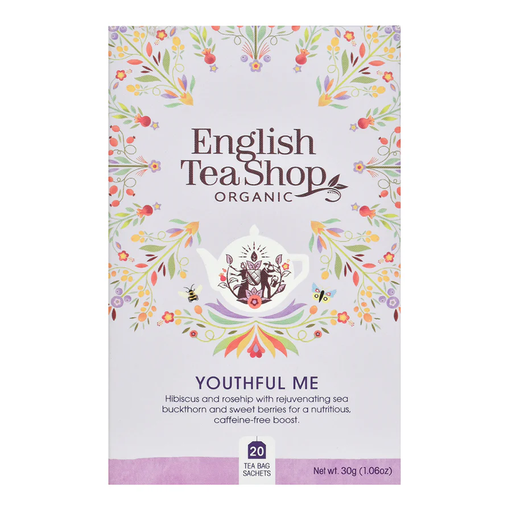 Image unavailable
English Tea Shop Organic Wellness Youthful Me, 30 g
Consider this option if you want a fruit-oriented infusion. Check the exact pack’s ingredients, organic certification information and caffeine statement; its name alone does not establish suitability during pregnancy.
View on Joybuy
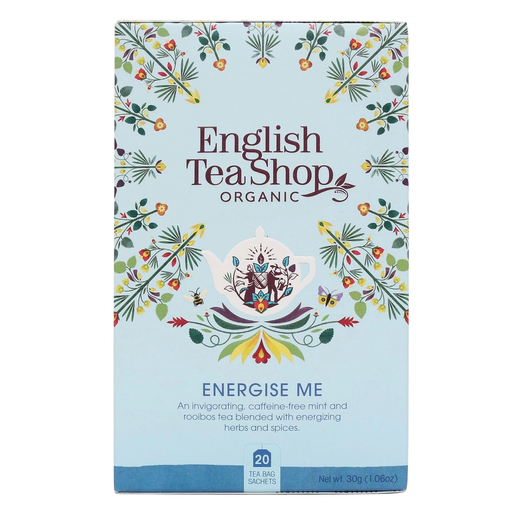 Image unavailable
English Tea Shop Organic Wellness Energize Me, 30 g
This is a herbal option rather than a fruit-led choice. Confirm the exact pack’s organic certification information, caffeine statement and full ingredients before deciding whether it fits your household.
View on Joybuy
Questions about organic fruit tea
How can I check whether a fruit tea is organic?
Check the organic claim and certification information for the exact product. UK Department for Environment, Food & Rural Affairs guidance explains that organic food labelling depends on meeting organic production rules and certification by an approved organic control body.
Is organic fruit tea always caffeine-free?
No: organic status and caffeine status are separate things to check. Look for a caffeine statement for the exact blend and read its ingredients rather than relying on the word ‘fruit’ in the name.
Does an organic label mean a herbal tea is suitable during pregnancy?
No. NHS pregnancy guidance advises limiting herbal tea and avoiding teas containing liquorice root. Read the full ingredient list and ask your midwife, GP or pharmacist about a blend you are unsure of.
What should I consider about tea while breastfeeding?
Consider caffeine from all the food and drink you consume, not just the tea you are replacing. The NHS advises trying not to exceed 300 mg of caffeine a day while breastfeeding if you consume it; check the exact infusion’s caffeine information when choosing a replacement drink.


