Hosts choosing organic tea
If an organic fruit tea is important for your brunch, check the claim on the particular box rather than relying on the brand’s wider range.


For a Sunday brunch, choose a fruit tea with an organic claim on the exact product, then check its caffeine statement and ingredients against your guests’ needs. Pukka Morning Berry offers a berry-and-herb profile; Clipper Organic Blackcurrant & Blueberry lists liquorice, which matters if a guest should avoid it. Defra’s UK guidance sets production, ingredient and certification conditions for foods labelled organic.
If an organic fruit tea is important for your brunch, check the claim on the particular box rather than relying on the brand’s wider range.
If guests want an alternative to black tea, look for a caffeine-free statement on the blend you plan to serve. Check its directions if you want to offer it hot or cold.
If you are serving a shared pot, read the exact ingredient list first. This is particularly important for blends containing liquorice root: NHS pregnancy guidance advises avoiding teas that contain it.
Start with the organic claim on the exact pack, then choose a flavour and check caffeine status, ingredients and brewing directions before brunch.
| Priority | What to check | Your needs |
|---|---|---|
| Organic claim | Look for an organic claim on the exact pack or product page. Defra’s UK guidance says food labelled organic must meet organic-production rules, contain at least 95% organic agricultural ingredients, and have certified products and suppliers. | I want the tea I put on the table to carry its own organic claim, not just belong to a brand that sells other organic teas. |
| Caffeine status | Check the selected blend’s caffeine statement. Pukka describes Elderberry & Echinacea as naturally caffeine-free, as Clipper does its Organic Berry Burst infusion; neither statement establishes the status of a different blend. | A caffeine-free fruit infusion would give guests another choice alongside black tea. |
| Ingredients | Read the full list for the exact blend, including liquorice root. Clipper lists liquorice in Organic Blackcurrant & Blueberry, and NHS pregnancy guidance advises avoiding teas containing liquorice root. | Before I brew one pot for everyone, I want to know whether its ingredients suit the guests I’m serving. |
| Preparation | Follow the directions on the chosen pack. Clipper specifies a 2–5-minute infusion for Organic Berry Burst; Twinings says its fruit and herbal teas can be enjoyed hot or cold. | If I’m making drinks while preparing brunch, clear brewing directions—and a cold-serving option if wanted—help me plan. |
A caffeine-free fruit selection does not, by itself, establish an organic claim for that product. Twinings describes its Fruit Discovery Collection as naturally caffeine-free, but its product description does not identify that box as organic.
If organic status matters for brunch, check the claim on the specific box or its product page before choosing it.
Clipper Organic Blackcurrant & Blueberry lists liquorice. NHS pregnancy guidance advises avoiding teas containing liquorice root.
Read the exact ingredients before making a shared pot, and offer a different blend when a guest needs to avoid liquorice.
Clipper gives a 2–5-minute infusion instruction for Organic Berry Burst; that direction should not be applied to another tea without checking its pack.
Read the chosen tea’s brewing directions before preparing a larger pot or jug, and confirm current stock when planning how many boxes to buy.
These examples illustrate different fruit-tea profiles; an organic claim or caffeine statement for one product does not automatically apply to another.
Pukka describes its UK fruit-tea range as organic. Its Morning Berry tea combines a berry-and-hibiscus description with rooibos, rosemary and ginseng.
Clipper identifies its Blackcurrant & Blueberry infusion as organic and publishes an ingredient list for that blend.
Twinings offers fruit and herbal infusions, including a Fruit Discovery Collection with several fruit profiles.
This berry-and-herb sachet option may suit a brunch table where guests can choose their own drink. Check its organic claim, caffeine status and ingredients on the exact pack before serving.
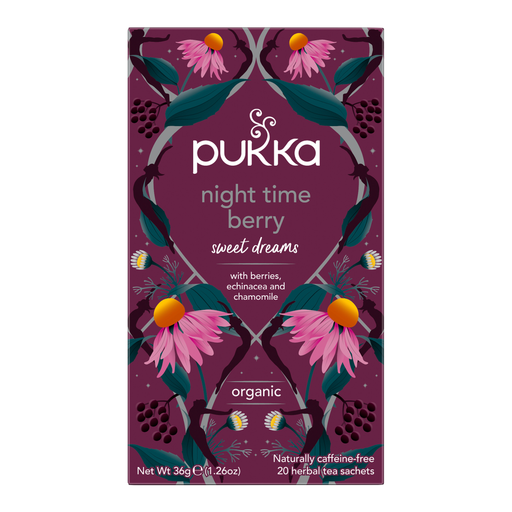 Image unavailable
A sachet option for serving individual cups at brunch. The product name calls it organic; check the exact pack for its organic details, caffeine status and brewing directions. The listed ingredients include liquorice root, which NHS pregnancy guidance advises avoiding in tea.
Check for an organic claim on the exact product and its pack. Defra’s UK guidance says food labelled organic must meet organic-production rules, contain at least 95% organic agricultural ingredients, and have certified products and suppliers. A brand’s wider range is not proof about every blend it sells.
Do not infer caffeine status from the word “organic”; check the particular blend. Pukka describes Elderberry & Echinacea as naturally caffeine-free, and Clipper makes the same statement about Organic Berry Burst.
Twinings says its fruit and herbal teas can be enjoyed hot or cold, but follow the directions for the product you choose. For example, Clipper specifies freshly boiled water and a 2–5-minute infusion for its Organic Berry Burst tea.
Check whether it suits the guests you are serving. Clipper lists liquorice in Organic Blackcurrant & Blueberry, and NHS pregnancy guidance advises avoiding teas containing liquorice root.
Clipper names Waitrose, Sainsbury’s, Tesco, Ocado and independent retailers among its UK stockists. Check whether your chosen organic fruit blend is currently stocked by the retailer you plan to use.