For a hot winter drink, start with a fruit tea explicitly labelled organic, then choose between apple and cinnamon, lemon and ginger, or a berry-led blend according to the flavour you prefer. Check the exact pack for caffeine information, ingredients such as liquorice and brewing directions; an organic label does not establish that a tea prevents or treats illness.
Who might choose fruit tea?
Caffeine-free evening drinkers
If you want a hot fruit infusion later in the day, check the exact blend for tea leaves or an explicit caffeine-free statement. Pukka describes Wild Apple & Cinnamon as naturally caffeine-free, but a fruity name alone is not enough to establish this for another product.
Organic-label-focused shoppers
If organic status matters to you, look for it on the exact product rather than assuming it applies across a brand’s range. The Department for Environment, Food & Rural Affairs says UK food can be labelled organic only when it meets organic production rules.
Winter flavour seekers who check ingredients
Apple, cinnamon, ginger and berries offer different flavour directions for a hot cup, while the full ingredient list can reveal herbs that the front-of-pack flavour name does not. Clipper’s Organic Lemon & Ginger, for example, contains liquorice and carries a warning for people with hypertension.
What should you check before buying?
Choose the flavour direction you want, then check the precise blend for the claims and ingredients that matter to your routine.
| Priority | What to check | Your needs |
|---|
| Organic status |
Look for an organic claim on the exact product. The Department for Environment, Food & Rural Affairs says UK organic food labels must meet organic production rules; a brand name alone does not establish the status of every blend. |
I want the fruit tea I buy, not just another tea from the same brand, to be labelled organic. |
| Caffeine |
Check the blend’s caffeine statement and whether it contains tea leaves from Camellia sinensis. Pukka calls its Wild Apple & Cinnamon blend naturally caffeine-free. |
For an evening cup, I would choose a blend whose caffeine status is clear on the pack. |
| Flavour |
Compare the named ingredients: Pukka lists apple, cinnamon and ginger in Wild Apple & Cinnamon; Clipper’s Organic Lemon & Ginger lists 15.5% ginger root. Check berry blends for other ingredients, including hibiscus. |
I might prefer spice, sharper citrus and ginger, or berries; a fruit name alone will not tell me everything in the cup. |
| Botanicals |
Read the full ingredients and pack warnings. Clipper says its Organic Lemon & Ginger contains liquorice and warns people with hypertension to avoid excessive consumption. |
If an ingredient or warning applies to me, I need to check the individual blend before buying. |
| Preparation |
Follow the chosen pack’s water and infusion instructions. Clipper gives 2–5 minutes for Organic Lemon & Ginger; that timing should not be assumed for other blends. |
I want a hot drink that fits the time I have to make it, using the directions for the tea I choose. |
Common buying mistakes
-
Assuming every fruit tea from an organic brand is organic
An organic claim applies to the product bearing it, not automatically to every infusion in a range.
Check the exact product name and pack label. UK organic labelling must meet the production rules described by the Department for Environment, Food & Rural Affairs.
-
Treating a winter blend as an illness remedy
A warming flavour or an organic label does not establish that a tea prevents or treats illness.
Choose the drink for its stated ingredients and flavour, and seek appropriate medical advice for illness or medicine-related questions.
-
Missing liquorice behind a fruit or ginger name
Clipper’s Organic Lemon & Ginger contains liquorice despite its front-of-pack flavour name. Its label warns people with hypertension to avoid excessive consumption.
Read the complete ingredient list and any warnings on the blend you intend to buy.
-
Expecting the fruit name to describe the whole blend
Berry teas can include other ingredients: Teapigs lists hibiscus in its Super Fruit Tea, while Clipper lists liquorice in its Blackcurrant & Blueberry infusion.
Compare ingredient lists when deciding between berry, citrus and spiced flavours.
Brand references
These examples show why the exact blend matters: a brand’s wider range does not establish every product’s organic status, caffeine content or ingredients.
Pukka
Pukka lists Wild Apple & Cinnamon and Elderberry & Echinacea in its organic fruit-tea range.
- Pukka describes both blends as naturally caffeine-free.
- Choose by flavour and listed ingredients, not by an implied illness-prevention claim.
Clipper
Clipper offers organic fruit and herbal infusions, including Organic Lemon & Ginger and Organic Blackcurrant & Blueberry.
- Its Organic Lemon & Ginger lists 15.5% ginger root and is described as naturally caffeine-free.
- Relevant blends list liquorice; check the individual pack, including the hypertension warning on Organic Lemon & Ginger.
Twinings
Twinings lists several fruit-infusion flavours for shoppers comparing tastes.
- Its range provides fruit and herbal options beyond a single flavour profile.
- Check the exact product label if organic status is a requirement.
Teapigs
Teapigs Super Fruit Tea is a berry-led blend that the brand describes as naturally caffeine-free.
- Its listed ingredients include hibiscus, elderberries, currants and blackcurrants.
- Check the exact pack for an organic claim if that is essential to your choice.
Joybuy fruit tea option
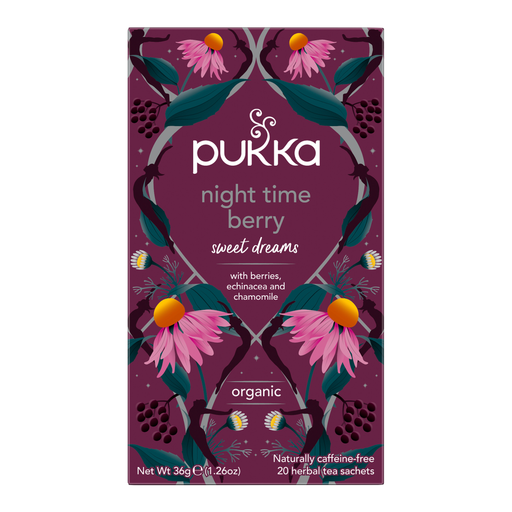
This berry tea in sachets is an option for the winter-drink scenario. Check its pack if organic status or caffeine information is decisive for you.
 No image available
Pukka Night Time Berry Organic 20 Tea Sachets 36g
A berry-named sachet tea to consider for a hot winter cup. The title specifies 20 tea sachets and 36g; check the exact pack for its organic label, caffeine information and brewing directions. The listed ingredients include liquorice root, so read the full ingredient information if that matters to you.
View on Joybuy
Frequently asked questions
How can I tell whether a fruit tea is organic in the UK?
Check for an organic claim on the exact pack or product listing rather than relying on the brand or an individual ingredient. The Department for Environment, Food & Rural Affairs says food labelled organic in the UK must meet organic production rules.
Are fruit teas automatically caffeine-free?
Do not rely on the fruit-tea name alone: check the specific blend for a caffeine statement and for tea leaves from Camellia sinensis. Pukka describes Wild Apple & Cinnamon as naturally caffeine-free, and Clipper says the same of its Organic Lemon & Ginger.
How long should I brew a fruit infusion?
Follow the instructions for the tea you buy. Clipper specifies freshly boiled water and a 2–5-minute infusion for its Organic Lemon & Ginger; Teapigs specifies boiling water and at least 3 minutes for Super Fruit Tea.
What should I check if a blend contains liquorice?
Read that product’s warning as well as its ingredient list. Clipper’s Organic Lemon & Ginger label says people with hypertension should avoid excessive consumption because it contains liquorice; seek individual professional advice if you are unsure whether a blend is suitable for you.
Does organic fruit tea prevent winter illnesses?
Organic status and fruit or spice ingredients do not establish illness prevention or treatment. Choose a tea for its flavour and stated product characteristics rather than treating wellness wording as a medical claim.


