Organic-first tea-and-biscuit shoppers
You want an organic claim on the tea you actually buy, rather than treating natural or ethical branding as evidence that a particular product is organic.


For a straightforward tea-and-biscuits cup, choose a plain green tea explicitly labelled organic; choose a mint or matcha blend if you want those ingredients in the cup. Check the exact product’s ingredients and organic claim rather than relying on the brand name. In the UK, the Department for Environment, Food & Rural Affairs says food labelled organic must meet production and certification rules.
You want an organic claim on the tea you actually buy, rather than treating natural or ethical branding as evidence that a particular product is organic.
You would prefer a single-ingredient green tea beside biscuits and want to distinguish it from teas containing mint, matcha or other ingredients.
You want to consider mint or matcha blends while still checking the organic claim and the composition of the exact tea.
Start with the organic claim on the exact product, then use its ingredient list and brewing directions to decide whether it suits your tea-and-biscuits break.
| Priority | What to check | Your needs |
|---|---|---|
| Organic claim | Look for an explicit organic claim on the exact pack and check its certification information. Under UK rules explained by the Department for Environment, Food & Rural Affairs, food labelled organic must meet production rules, at least 95% of its agricultural ingredients must be organic, and the product and suppliers must be certified by an approved organic control body. | I want the tea I buy to be labelled organic, not just to come from a brand associated with organic products. |
| Tea composition | Read the full ingredients for plain green tea, added mint or matcha. If the amount of matcha matters, check any declared proportion: Pukka says matcha is 2% of its Supreme Matcha Green blend. | A single-ingredient cup suits me better beside biscuits, or I might prefer a blend in which mint or matcha also contributes to the flavour. |
| Brewing directions | Follow the directions for the exact tea. Tesco’s listing for Clipper Organic Fairtrade Green Tea advises cooling boiled water for a minute and infusing for 1–3 minutes; Twinings specifies 200 ml of freshly boiled water and three minutes for its Pure Green Tea. | When I make tea with biscuits, I want a preparation method I can follow for the product I chose. |
In the UK, organic is a controlled food claim. The Department for Environment, Food & Rural Affairs explains that production and certification conditions apply; a brand’s general positioning does not establish the status of every tea it sells.
Check for an explicit organic claim on the exact product, along with its ingredients and certification information.
Matcha can be one ingredient in a blend. Pukka states that matcha accounts for 2% of its Supreme Matcha Green, so its name alone does not tell you how much matcha is in the tea.
If matcha content matters to you, read the ingredient list and any declared percentage before choosing a blend.
Tesco cautions that food products can be reformulated. A listing may therefore differ from the pack you receive.
Use listings to narrow your options, then check the current pack for the organic claim, ingredients, allergen information and brewing directions.
These examples help distinguish particular plain teas and blends; a claim made for one product should not be applied to a whole range.
Clipper Organic Fairtrade Pure Green Tea is a plain green tea offered in an 80-bag format.
Pukka’s Mint Matcha Green and Supreme Matcha Green offer organic-labelled blends rather than single-ingredient plain green tea.
Twinings Pure Green Tea is a plain, 20-bag option for shoppers whose choice does not depend on an organic claim.
The teapigs UK green-tea range includes popcorn tea, jasmine pearls, mao feng and green tea with mint.
Tesco lists products including Clipper Organic Fairtrade Green Tea and Pukka Organic Supreme Matcha Green.
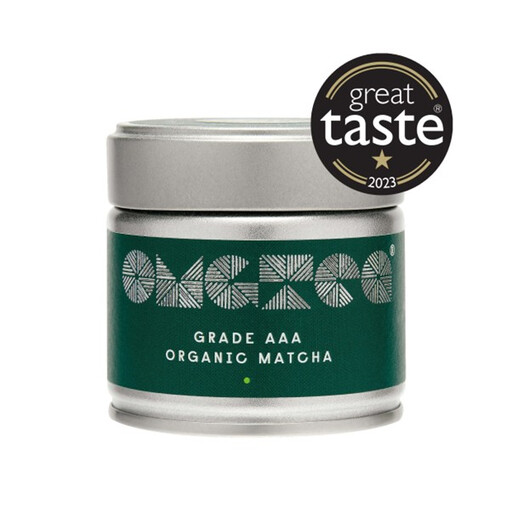
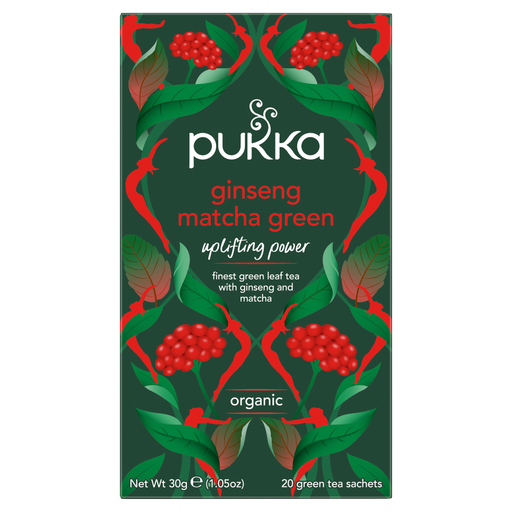
These options are a matcha product and a ginseng-matcha green-tea blend, rather than plain green-tea bags. If organic status is decisive, check the claim on the exact pack, particularly for the whole ginseng-matcha blend.
 No image available
Consider this 30g matcha product if you want matcha rather than a plain green-tea bag. Its listing calls it organic; check the current pack’s organic claim and preparation directions before relying on either for your choice.
 No image available
Consider this 30g ginseng-and-matcha-labelled tea if you prefer a blend to plain green tea. Check its full ingredient list and the organic claim for the whole product; an organic description of one ingredient does not establish the status of the entire blend.
The Department for Environment, Food & Rural Affairs says food labelled organic must meet organic production rules. At least 95% of its agricultural ingredients must be organic, other ingredients and processing aids must be permitted, and the product and suppliers must be certified by an approved organic control body. Check the claim on the exact tea you intend to buy.
No. Organic is a claim about the particular product, so check its pack and ingredients. For example, Clipper describes its Organic Fairtrade Pure Green Tea as organically grown, while the Twinings Pure Green Tea product page does not make an organic claim for that tea.
Choose a single-ingredient organic green tea if you want the tea itself to be plain; Clipper’s Organic Fairtrade Pure Green Tea lists organically grown green tea as its ingredient. If you want mint or matcha in the cup, consider an organic-labelled blend such as Pukka Mint Matcha Green and check its full ingredients.
Follow the directions for your exact tea. Tesco’s listing for Clipper Organic Fairtrade Green Tea advises boiling fresh water, leaving it to cool for a minute and infusing for 1–3 minutes. Twinings directs shoppers to infuse one Pure Green Tea bag in 200 ml of freshly boiled water for three minutes.
Not necessarily. Pukka says its Supreme Matcha Green contains organic whole-leaf green tea and that matcha accounts for 2% of the blend. Check the composition of the particular product if the amount of matcha affects your choice.