Organic-first tea drinkers
You want green tea with dinner or afterwards and prefer to check the organic claim on the exact product, rather than relying on a brand’s reputation.


Choose a certified-organic pure green tea if you want a tea-only ingredient list; choose an organic mint or lemon blend if its added flavours appeal more. For dinner, check caffeine separately from organic status: green tea can contain caffeine, while a labelled decaffeinated green tea or a caffeine-free herbal infusion offers a different route.
The useful starting point is whether organic certification, flavour or evening caffeine matters most for your cup.
You want green tea with dinner or afterwards and prefer to check the organic claim on the exact product, rather than relying on a brand’s reputation.
You would rather have mint, lemon or another botanical flavour than a plain green tea. The ingredient list helps you distinguish a flavoured blend from tea alone.
You need to consider caffeine before choosing a dinner-time drink. An organic label does not tell you whether a green tea is decaffeinated.
Start with the claim on the exact pack, then read its ingredients and caffeine information. Once those fit your plans, compare preparation instructions and pack formats.
| Priority | What to check | Your needs |
|---|---|---|
| Organic certification | Check the organic claim on the exact product, not just the brand name. Under UK organic food labelling rules, the Department for Environment, Food & Rural Affairs says an organic-labelled food must meet production rules, and the product and its suppliers must be certified by an approved organic control body. | I want an organic green tea, so I’ll check the particular pack rather than assuming every tea in a range has the same status. |
| Evening caffeine | Look for an explicit decaffeinated label if that matters to you. Check blends for ingredients such as matcha or guarana; Yogi Tea identifies its Green Energy blend as containing caffeine and guarana. | A cup with dinner needs to fit my caffeine plans. Organic certification alone does not settle that choice. |
| Ingredients and brewing | Decide between a single-ingredient tea and a blend with mint, lemon or other botanicals. Follow the product’s own directions: Clipper suggests a 1–3 minute infusion for its Organic Fairtrade Pure Green Tea, while Teapigs specifies 80°C water and three minutes for Mao Feng. | I’d prefer either a plain tea-led cup or a particular added flavour, without mistaking the two for the same drink. |
| Pack format | Compare bag counts and net weights on a consistent basis. Check that the format suits how often you expect to make tea with or after dinner. | For regular dinner-time cups, I want to know how many bags I’m getting, not judge packs by their size alone. |
A certified-organic blend can contain flavourings or botanicals as well as green tea. Clipper’s lemon green tea, for example, lists natural flavouring and lemon peel, unlike its pure green tea.
Read the exact ingredient list. If you want only green tea, choose a product that identifies green tea as its sole ingredient.
Organic green tea can still contain caffeine. Teapigs says its Mao Feng green tea naturally contains caffeine, and Yogi Tea explicitly labels Green Energy as caffeinated.
Check the exact product for caffeine information. If you want to avoid caffeine, look for a caffeine-free herbal infusion; if you want green tea with reduced caffeine, look for one explicitly labelled decaffeinated.
Tesco cautions that food ingredients and other label information can change when products are reformulated. That matters when a flavouring or other ingredient affects your choice.
Read the current pack before using the tea, particularly when checking ingredients, allergens and organic labelling.
These references illustrate different ingredient and flavour choices; check the exact product rather than applying a range-wide assumption to every pack.
Clipper offers both an organic pure green tea and an organic lemon green tea for shoppers choosing between a plain cup and added flavour.
Pukka is worth considering if mint and other botanicals appeal more than a plain green-tea flavour. Pukka states that all its products are certified organic.
Yogi Tea’s Green Energy is a botanical green-tea blend for shoppers considering a more pronounced flavour.
Twinings lists pure, flavoured and decaffeinated green-tea options, alongside an organic Matcha Green Tea Powder.
Teapigs’ Mao Feng is a plain green tea with specific brewing directions.
Tesco’s own-label green tea is a conventional tea-bag option to consider if certified-organic status is not essential to your choice.
These options include flavoured green teas, a decaffeinated green tea, a plain green tea and a peppermint herbal infusion. The peppermint option is an alternative dinner-time drink, not a green tea; check the exact pack when organic certification or caffeine status determines your choice.
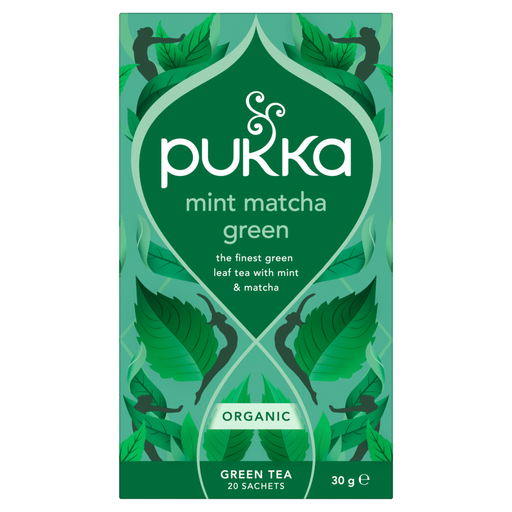 No image available
Consider this for a mint-flavoured green tea with dinner rather than a plain cup. Its listed ingredients include roasted tea, spearmint, mint leaves and matcha; Pukka states that its products are certified organic. Check the current pack for caffeine information if that affects your evening choice.
 No image available
This is a green-tea option labelled decaffeinated for shoppers who want to reduce caffeine with dinner. Decaffeinated does not itself mean caffeine-free or organic; check the current pack if you need a specific caffeine figure or organic certification.
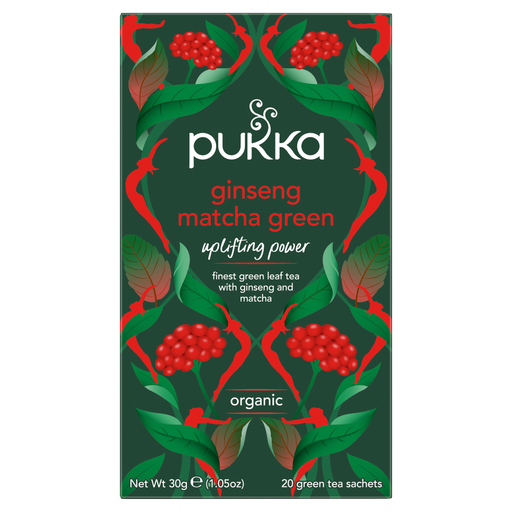 No image available
Choose this route only if you want a green-tea blend with ginseng and matcha rather than a tea-only ingredient list. Pukka states that its products are certified organic; check the exact pack’s ingredients, brewing directions and caffeine information for your dinner routine.
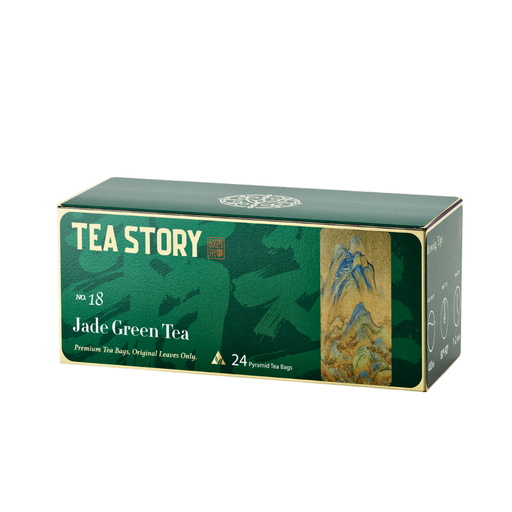 No image available
This is a plain green-tea route for shoppers who prefer tea without an added flavour. The product title makes an ECOCERT organic claim; check the current pack’s certification details before relying on it, and check its caffeine information for evening use.
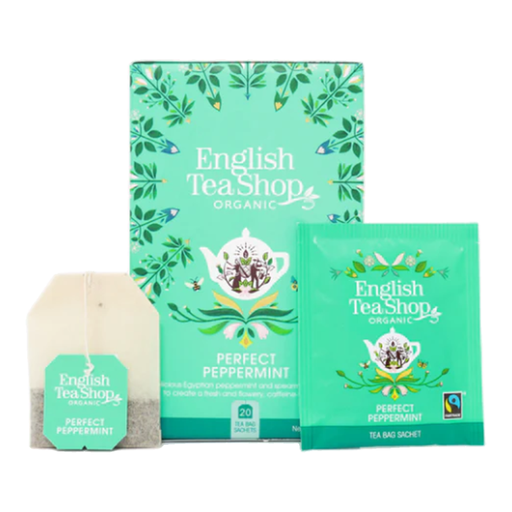 No image available
Consider this mint herbal infusion if you are happy to have something other than green tea with dinner. Check the current pack for its organic certification and caffeine information rather than treating the product name as the whole label.
The Department for Environment, Food & Rural Affairs says a food labelled organic must meet organic production rules, and the product and its suppliers must be certified by an approved organic control body. Check the claim on the particular green tea you are buying, rather than assuming it applies to every product from the same brand.
No: organic certification and caffeine status answer different questions. Teapigs says its Mao Feng green tea naturally contains caffeine, while Yogi Tea labels Green Energy as containing caffeine. If reduced caffeine matters, look for a green tea explicitly labelled decaffeinated; if you want to avoid caffeine, check a caffeine-free herbal alternative.
Use the instructions for the exact tea, because the supplied directions differ. Clipper advises letting freshly boiled water cool for a minute and infusing its Organic Fairtrade Pure Green Tea for 1–3 minutes; Teapigs specifies 80°C water and three minutes for its Mao Feng green tea.
No. Clipper’s organic lemon green tea includes natural flavouring and lemon peel, while Pukka Mint Matcha Green lists roasted tea, spearmint, mint leaves and matcha. Read the ingredient list if you want green tea alone rather than a flavoured blend.