Regular green-tea households
If several people drink plain green tea throughout the week, compare bag counts with how quickly your household finishes a box. Tesco lists Clipper Organic Fairtrade Green Tea in an 80-bag format.


For a household that regularly drinks plain green tea, start with an organic-labelled pack in a size you expect to use: Tesco lists Clipper Organic Fairtrade Green Tea in an 80-bag format. Choose a flavoured or matcha-containing blend if you want those ingredients, and look for an explicitly decaffeinated product if reducing caffeine matters. Check each claim on the exact pack; organic does not mean decaffeinated.
If several people drink plain green tea throughout the week, compare bag counts with how quickly your household finishes a box. Tesco lists Clipper Organic Fairtrade Green Tea in an 80-bag format.
Check the organic claim on the tea you are buying, rather than relying on a brand’s wider range. Defra’s organic food guidance says products labelled organic must meet organic production rules.
If you want to reduce caffeine, look for a green tea explicitly labelled decaffeinated. Twinings lists a separate decaffeinated green-tea product; an organic claim alone does not identify a tea as decaffeinated.
Choose the tea style first, then check the exact pack’s organic claim, bag count and caffeine labelling before adding it to a regular shop.
| Priority | What to check | Your needs |
|---|---|---|
| Organic status | Read the exact product’s organic claim and pack labelling. A brand’s organic range does not establish the status of every green tea it sells. | I want an organic claim that applies to the tea in my basket, not just to another product from the same brand. |
| Pack size | Compare bag counts with your usual use. Tesco lists an 80-bag Clipper organic pure-green-tea box; smaller formats may suit a trial of a new flavour. | For tea we drink regularly, I’d rather choose a box we can finish than buy an unfamiliar large pack. |
| Ingredients and flavour | Check whether the product is plain green tea or a blend containing matcha, mint, citrus or other ingredients. Read the ingredients on the individual blend. | Do I want a plain everyday tea, or would I actually drink a flavoured blend more often? |
| Caffeine | Look for an explicit decaffeinated label if that is a requirement. Check organic and decaffeinated claims separately when you need both. | I’m choosing tea with my caffeine intake in mind, so an organic label alone won’t answer that question. |
A brand may sell organic products without every tea in its range carrying that claim. Defra’s organic food guidance applies to products labelled organic, so the individual product matters.
Check the exact tea’s title and pack label rather than inferring its status from the brand or a category page.
An 80-bag box is a larger commitment to one tea style than a 20-bag pack. That matters if the household has not tried the flavour.
Match the bag count to established use, and check whether you are buying plain green tea or a blend.
Organic status and decaffeination describe different attributes. Twinings, for example, identifies decaffeinated green tea as a specific product.
If reducing caffeine is important, choose a tea explicitly labelled decaffeinated and check any separate organic requirement on that same pack.
Tesco says its Marketplace products are sent directly by the seller by post or courier, which can make them a separate delivery from groceries.
Check who sells and sends the tea, along with the delivery arrangements, before relying on it for the weekly shop.
Tesco lists Clipper Organic Fairtrade Green Tea as an 80-bag box of organic pure green tea; Clipper also describes its own 80-bag product as organic pure green tea.
Pukka’s green-tea range includes blends with matcha and other flavours. The brand states that its herbal teas are certified organic.
Twinings lists Pure Green Tea in an 80-bag format and identifies a separate decaffeinated green-tea product containing decaffeinated green tea.
Teapigs lists green-tea varieties including mao feng and jasmine pearls.
A Tesco category listing identifies Yogi Tea Organic Green Energy Tea as a 17-bag blend.
Tesco is a retailer reference for the Clipper 80-bag grocery listing, not a green-tea producer. It also carries Marketplace listings.
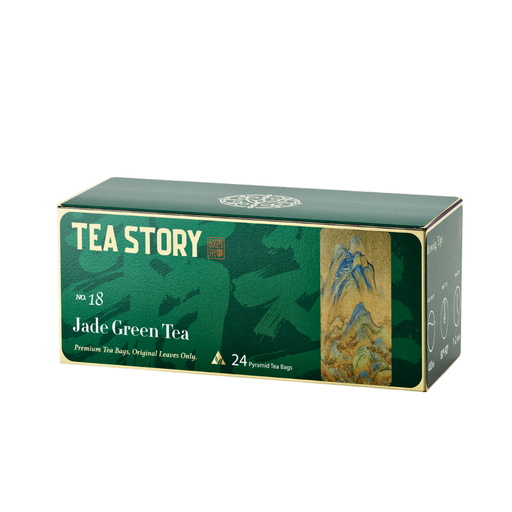
This Joybuy option is a 24-bag green tea with an organic claim in its product name. For a regular household shop, check whether that bag count suits your use and inspect the organic information on the pack.
 No image available
The 24-bag format is worth comparing with how much green tea your household uses between shops. The product name specifies pyramid bags, 2g per bag and Spring First Flush; check the exact pack’s organic certification information before relying on its organic claim.
Check the claim on the exact product and inspect its pack labelling. Defra’s organic food guidance says products labelled organic must meet organic production rules; a brand’s other organic teas do not establish the status of this one.
Not necessarily. Organic and decaffeinated are separate claims, so look for an explicitly decaffeinated product if that is what you need. Twinings identifies a separate decaffeinated green-tea product.
Do not assume it will. Tesco says Marketplace products are sent directly by the seller by post or courier; check the seller and delivery arrangements for the tea you choose.