What should you check?
Decide whether you want a mint, floral or spiced cup, then check that the exact product meets your organic, caffeine and ingredient requirements.
| Priority | What to check | Your needs |
|---|
| Organic claim |
Look for an organic claim for the product, not just one ingredient. For UK food labelled organic, the Department for Environment, Food & Rural Affairs specifies organic production rules, at least 95% organic agricultural ingredients and certification of the product and suppliers by an approved control body. |
I want the tea served with breakfast to carry an organic product claim, rather than rely on general ‘natural’ wording. |
| Drink style and caffeine |
Check whether the exact product is a herbal infusion or contains black or green tea, and read its own caffeine statement. Yogi Tea says some of its teas contain black or green tea, which naturally contains caffeine. |
Is a botanical cup what I want with this meal, or would I prefer conventional breakfast tea? If I am avoiding caffeine, I need the selected pack to say so explicitly. |
| Flavour and ingredients |
Compare the full ingredient lists. Clipper lists peppermint as 100% of its Organic Peppermint infusion; Pukka describes Three Chamomile as chamomile herbal tea, while Yogi Tea lists turmeric, lemon peel, liquorice and ginger among the ingredients of New Inspiration. |
A short mint or floral flavour may suit my table better than a layered spice blend—or I may want the stronger spice and citrus notes. The names alone do not tell me every ingredient. |
| Pack directions and warnings |
Read the selected pack’s brewing directions and any product-specific warnings. If medicines or a health condition make an ingredient relevant, check the full list and ask a pharmacist or clinician where appropriate. |
I want to prepare the tea as directed and make sure its botanicals are suitable for the people drinking it. |
Brand ranges to compare
These brand ranges offer different places to start browsing; check the details of any particular tea before treating it as an organic, caffeine-free option.
Pukka
Pukka says all its products are certified organic. Its Three Chamomile herbal tea is described by the brand as naturally caffeine-free.
- A starting point if brand-wide organic certification matters to you.
- Check the chosen product’s flavour, ingredients and caffeine statement; the description of Three Chamomile does not apply to every blend.
Clipper
Clipper offers organic single-herb infusions. Its Organic Peppermint product lists peppermint as 100% of the ingredients and is described as naturally caffeine-free.
- Its Organic Peppermint and Organic Chamomile pages provide clear single-herb ingredient lists.
- Check the particular product’s organic wording, ingredients and pack format rather than extending these details to the whole range.
Yogi Tea
Yogi Tea’s New Inspiration is an organic herbal blend whose product page lists turmeric, lemon peel, liquorice and ginger among its ingredients and marks it caffeine-free.
- Its product information helps shoppers compare a multi-ingredient spice blend with simpler infusions.
- Read the full ingredient list and any warnings. Yogi Tea identifies New Inspiration as limited edition, and caffeine status varies across its teas.
Twinings
Twinings has a UK Organic & Fairtrade collection alongside other tea and infusion ranges.
- Its collection provides another range to browse when comparing tea styles.
- The collection name does not establish that every Twinings herbal infusion is organic or caffeine-free; check the exact item.
Teapigs
Teapigs presents its herbal-tea range separately from black and green tea.
- The range gives shoppers herbal flavour styles to compare with a conventional tea choice.
- A place in the herbal range does not itself establish an organic claim for an individual product.
Joybuy herbal tea options
These options span mint, floral and other herbal blends you might consider for a Full Scottish breakfast. Check each pack against your preferred flavour, organic claim, caffeine requirement and ingredients; a product name alone does not settle every one of those questions.
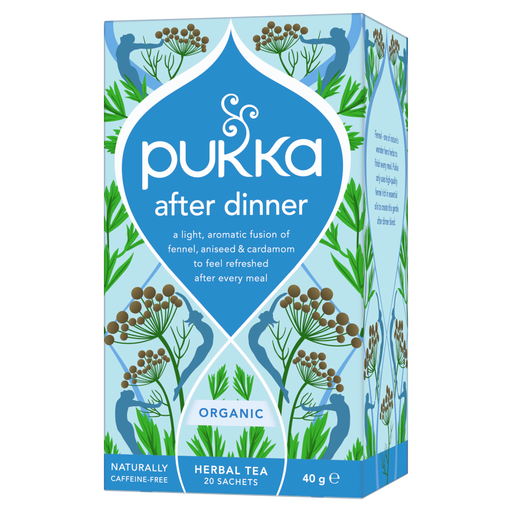 No image available
Pukka Feel New Organic, 20 sachets, 40g
Consider this if you want a blended herbal option rather than a single-herb cup with breakfast. The pack name specifies 20 sachets and 40g; Pukka says all its products are certified organic. Check this blend’s full ingredients, caffeine statement and any warnings on the exact pack.
View on Joybuy
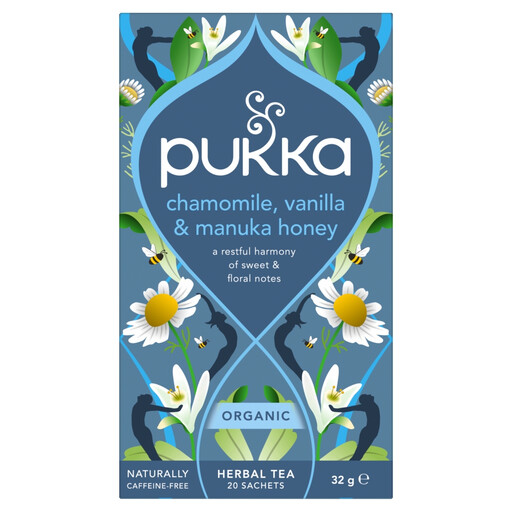 No image available
Pukka Chamomile Vanilla & Manuka Honey herbal tea, 20 sachets, 32g
The named chamomile and vanilla flavours make this a floral option to consider beside breakfast. The pack name specifies 20 sachets and 32g; Pukka says all its products are certified organic. Check the full ingredients, caffeine statement and any allergy or other pack warnings for this blend.
View on Joybuy
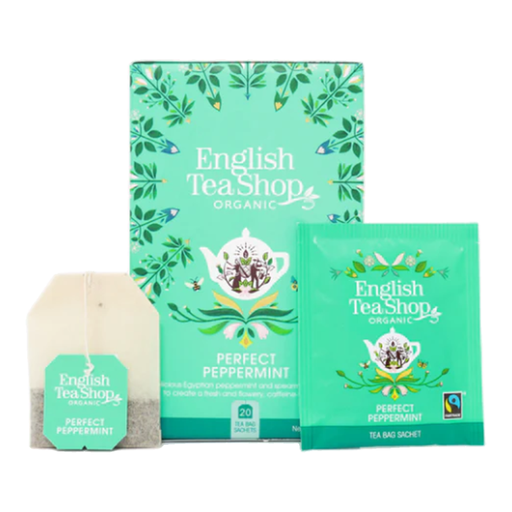 No image available
English Tea Shop Organic Perfect Peppermint, 20g
A mint-named option if you would rather serve that flavour than a floral or spiced blend; the pack name specifies 20g. Check the exact pack’s organic product claim, complete ingredient list and caffeine statement before choosing it for your table.
View on Joybuy
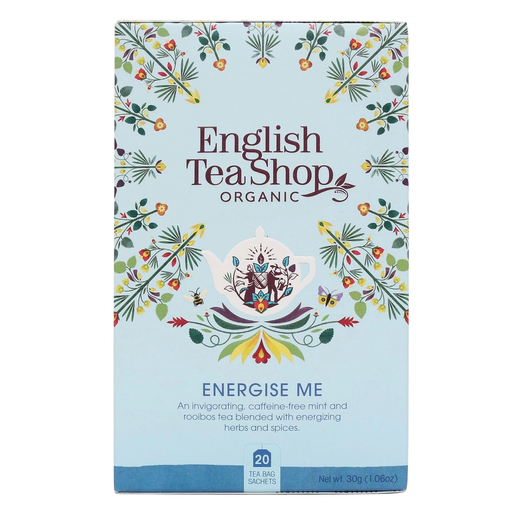 No image available
English Tea Shop Organic Wellness Energize Me, 30g
Consider this blend if you want to compare a multi-ingredient herbal cup with a simpler mint or chamomile infusion. The pack name specifies 30g. Read the exact pack’s organic wording, ingredients, caffeine statement and warnings; its name does not establish an effect on energy.
View on Joybuy
 No image available
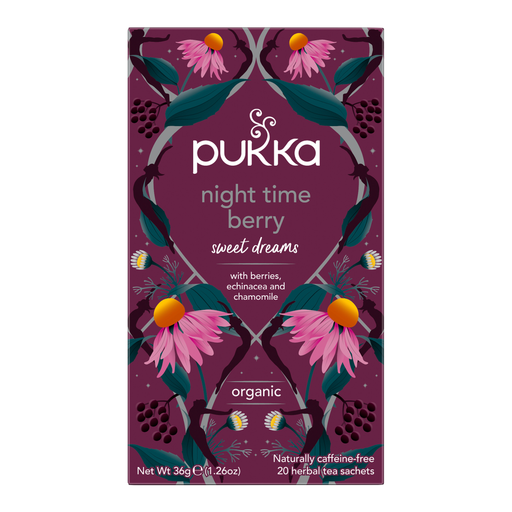
Pukka Night Time Berry Organic, 20 sachets, 36g
The berry-named flavour is another herbal style to consider, although the product is positioned for evening use rather than breakfast. The pack name specifies 20 sachets and 36g, and Pukka says all its products are certified organic. Check this product’s caffeine statement and full ingredients if either matters to your choice.
View on Joybuy
Common questions
What does an organic herbal-tea label mean in the UK?
For a food product to be labelled organic in the UK, it must meet organic production rules, have at least 95% organic agricultural ingredients, and have the product and its suppliers certified by an approved organic control body, according to the Department for Environment, Food & Rural Affairs. Check that the claim applies to the tea you are buying, not merely to an ingredient.
Is herbal tea automatically caffeine-free?
Do not assume so: check the particular product’s caffeine statement. Clipper describes Organic Peppermint as naturally caffeine-free, Pukka says the same of Three Chamomile, and Yogi Tea marks New Inspiration caffeine-free. Yogi Tea also says some teas in its wider range contain caffeine-bearing black or green tea.
Which flavour should I serve with a Full Scottish breakfast?
Choose by the drink style you and your guests prefer, rather than expecting one flavour to suit every breakfast. Clipper Organic Peppermint offers a single-herb mint option, Pukka Three Chamomile a floral option, and Yogi Tea New Inspiration a blend listing ginger, lemon peel and other botanicals. None is a like-for-like substitute for the flavour of black breakfast tea.
How should I brew a herbal infusion?
Follow the directions for the exact blend. Yogi Tea specifies a 5–7 minute steep for New Inspiration and advises 100°C water for its herbal and spice teas; another product may give different instructions.
What if I take medicines or need to check a blend’s suitability?
Read the complete ingredients and any pack warnings, then ask a pharmacist or clinician about concerns relevant to you. NHS Scotland pharmacy guidance cautions that herbal products can interact with prescription and over-the-counter medicines; ‘natural’ or ‘herbal’ is not a guarantee of safety.


