Occasional second-home users
If visits are spread out, a smaller box may be easier to use up than a large supply. Choose a bag count that reflects how often someone actually makes tea there.


For a second home used intermittently, start with a modest pack of an organic infusion whose ingredients and caffeine status suit the people drinking it. A single-herb option is simpler to assess for guests; a mixed collection offers more flavours, but check every blend because an organic collection can also contain green tea. Save larger packs for a home that gets through them regularly.
If visits are spread out, a smaller box may be easier to use up than a large supply. Choose a bag count that reflects how often someone actually makes tea there.
If organic certification matters to you, check the claim on the exact product. In the UK, the Department for Environment, Food & Rural Affairs says organic food labelling depends on meeting organic-production and certification requirements; words such as “natural” do not establish that status.
A clearly labelled caffeine-free infusion can be straightforward to offer in the evening. Check the individual product and its ingredients rather than assuming every bag in a herbal collection has the same contents.
Decide how much variety the cupboard needs, then check the organic claim, each blend and a realistic pack size before ordering.
Choose it when: You want a short ingredient list and a caffeine-free product that guests can identify easily. Clipper describes its organic peppermint and chamomile infusions as naturally caffeine-free.
Trade-off: One herb gives guests less flavour choice than an assortment.
Choose it when: Several flavours would be useful without opening a separate full-size box for each one.
Trade-off: Check blends individually: Tesco lists green tea with matcha in Pukka’s 20-sachet Herbal Collection, and Clipper lists green tea in its 45-serving organic selection.
| Priority | What to check | Your needs |
|---|---|---|
| Organic status | Look for an organic claim on the exact product and check its pack label. The Department for Environment, Food & Rural Affairs sets UK certification requirements for food labelled organic. | I want the tea I stock to carry an organic claim, rather than choosing it because the branding sounds natural. |
| Caffeine | Check each blend for tea leaves or matcha. If caffeine avoidance matters, look for an explicit caffeine-free statement on the individual product. | Guests may ask for tea in the evening, so I need to know which particular bags fit that request. |
| Ingredients | Read the full ingredient list, particularly for mixed botanical blends. Keep the pack available so guests can check its details themselves. | I would rather know what is in each blend before leaving a selection for visitors. |
| Pack size | Compare the bag count with how often the home is occupied and how many people drink tea there. A larger assortment also needs enough cupboard space. | For occasional visits, I want enough choice without leaving several opened boxes largely unused. |
| Flavour choice | Compare a familiar single-herb flavour with the individual flavours in a collection; do not rely on the collection name alone. | If different guests use the home, I may want a few flavours, provided I can check each blend. |
Those words are not interchangeable. The Department for Environment, Food & Rural Affairs sets certification conditions for food labelled organic in the UK.
Check the organic claim on the exact tea and its pack label, not just the brand’s wider range.
A collection can combine infusions with green tea. Tesco’s listing for Pukka’s Herbal Collection names a green tea and matcha blend; Clipper’s organic selection also includes green tea.
Read every blend name and ingredient list. For a caffeine-free guest option, choose an individual product explicitly described that way.
A large assortment may leave several opened flavours in the cupboard between occasional visits.
Match the bag count to likely occupancy; consider a smaller box before stocking a larger selection.
A short name does not tell guests every botanical or tea-leaf ingredient in a blend.
Keep the ingredient list accessible and consider a simpler infusion if an easy-to-check choice matters.
These ranges illustrate different choices; check the exact product rather than assuming every tea from a brand has the same organic status, ingredients or caffeine content.
Pukka says all its products are certified organic and offers both individual blends and collections.
Clipper lists organic single-herb infusions as well as a larger organic selection.
Twinings has an organic and Fairtrade range and lists Organic Pure Camomile.
Teapigs offers a herbal-tea range with a choice of blends.
Tesco’s grocery listings let shoppers inspect individual teas from different brands, including Pukka’s organic collection.
These individual herbal-tea packs offer modest quantities or a mint-focused option for a second-home cupboard. Check each product’s label and ingredients against the needs of the people who will use it.
 No image available
A 20-sachet pack to consider for occasional visits. Pukka says its products are certified organic; check the full blend ingredients with guests, particularly where chamomile or liquorice is a concern.
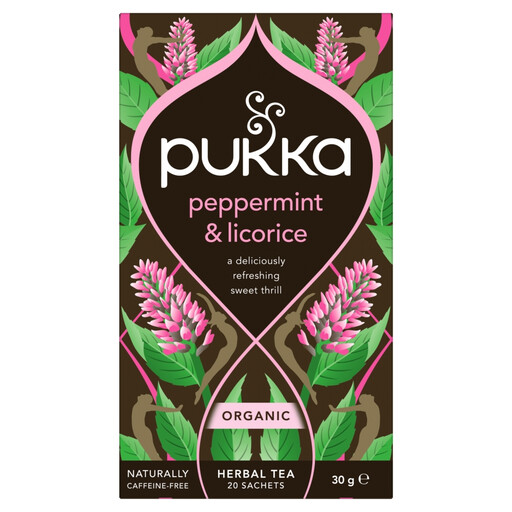 No image available
This 20-sachet mint-and-liquorice blend offers a smaller cupboard supply than a large assortment. Check the liquorice information on the pack before leaving it for guests; Pukka says its products are certified organic.
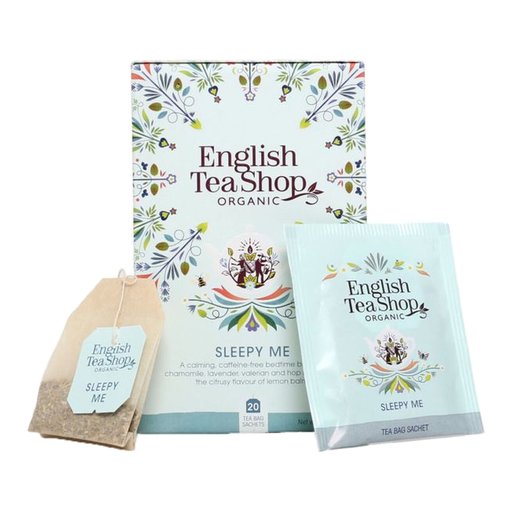 No image available
Twenty bags provide a modest quantity for intermittent stays. This is a botanical blend rather than a single-herb infusion, so check its full ingredients, caffeine wording and organic labelling on the exact pack.
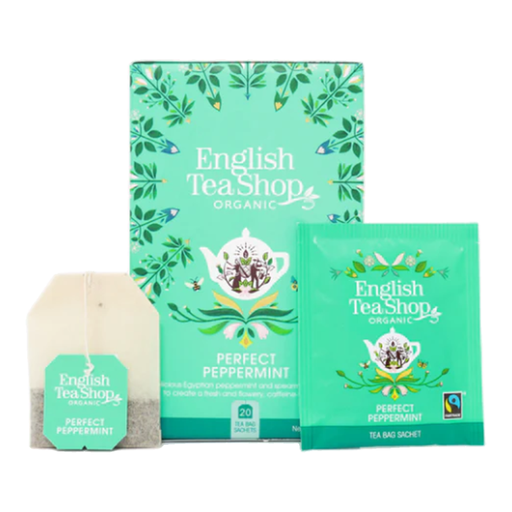 No image available
A mint option to consider if guests prefer that flavour. Check the pack’s organic labelling and bag count before deciding how many to stock; the 20g weight is not a bag count.
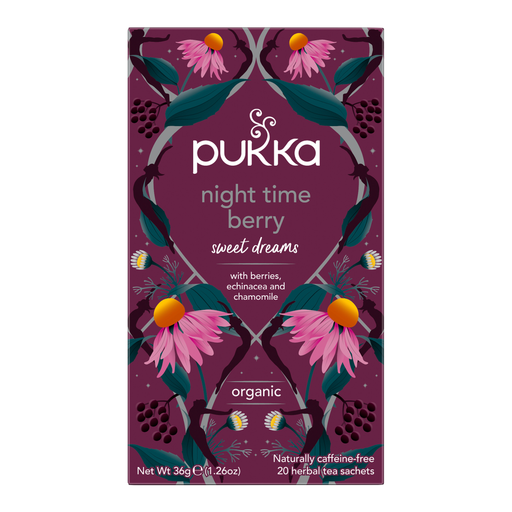 No image available
The 20-sachet pack is an alternative to stocking a large assortment. Check the full ingredients, including liquorice and valerian, with guests; if caffeine avoidance matters, confirm the status on the exact pack rather than relying on its name.
Check the organic claim and labelling on the exact product, rather than relying on words such as “natural”. The Department for Environment, Food & Rural Affairs says food labelled organic in the UK must meet organic-production rules and certification requirements.
No. Tesco lists green tea with matcha in Pukka’s Organic Herbal Collection, while Clipper describes its individual organic peppermint and chamomile infusions as naturally caffeine-free. Check each blend separately.
A modest box or collection is a sensible starting point when visits are infrequent; compare its bag count with likely use. Consider a larger pack when the home is occupied or hosts tea drinkers regularly.
A selection box offers flavour choice, but check every blend before leaving it for guests. Pukka’s 20-sachet collection and Clipper’s 45-serving organic selection both include green-tea-based options alongside herbal infusions.
Yes. Leave the pack or its ingredient information accessible so guests can check the particular botanicals and any relevant pack information for themselves, especially when you stock a mixed blend.