Organic-first shoppers
If organic status is the reason for buying, look for the claim and certification information on the particular pack. Words such as ‘natural’ or ‘herbal’ do not establish that a product meets UK organic-labelling rules.


For organic herbal tea at elevenses, check the organic claim on the individual product, then choose a flavour and ingredient list you would want for a regular mid-morning cup. A single-herb peppermint infusion makes ingredients straightforward to compare; a blend offers a different flavour profile but calls for a closer look at its caffeine statement and any ingredient warnings.
The useful starting point depends on whether organic labelling, caffeine status or the ingredients in a blend matter most to your elevenses choice.
If organic status is the reason for buying, look for the claim and certification information on the particular pack. Words such as ‘natural’ or ‘herbal’ do not establish that a product meets UK organic-labelling rules.
If you are changing from black or green tea for your mid-morning break, check the exact infusion’s ingredients and caffeine statement. A brand’s herbal range is not a substitute for checking the product you intend to drink.
A single-herb infusion makes the recipe easier to inspect. For a multi-herb blend, read the full ingredient list and any relevant allergen or botanical warnings, particularly if you take medicines or have a condition affected by an ingredient.
Settle the organic and caffeine questions on the exact product first. Then compare flavour formats and read any warnings that matter to your household.
| Priority | What to check | Your needs |
|---|---|---|
| Organic status | Check the individual pack’s organic claim and certification information. The Department for Environment, Food & Rural Affairs says UK organic food labelling requires compliance with organic production rules, at least 95% organic agricultural ingredients, and certification of the product and suppliers by an approved control body. | I want an organic infusion, not one that merely sounds botanical. |
| Caffeine | Read the exact blend’s ingredients for green or black tea and look for a product-specific caffeine statement. Twinings describes fruit and herbal infusions without Camellia sinensis as caffeine-free; its Organic Pure Peppermint is explicitly labelled naturally caffeine-free. | For my mid-morning break, I would rather choose a product whose caffeine status is clear than assume every herbal-style blend is alike. |
| Flavour and format | Compare a single named herb with the ingredient list of a mixed blend. If choosing a collection, inspect each variety separately; one box can contain substantially different flavours and ingredients. | A familiar mint cup suits a regular routine; if several people share the tea cupboard, I may prefer a choice of flavours. |
| Ingredients and warnings | Read the full ingredients, any ‘may contain’ statement and warnings for botanicals such as liquorice. Twinings warns people with hypertension against excessive consumption of its liquorice-containing Spiced Ginger blend; that warning concerns that named blend. | I need to check whether each variety fits the ingredient restrictions that matter in my household, rather than treating all herbal teas as interchangeable. |
Botanical wording does not establish that a tea meets the conditions for an organic claim in the UK.
Check the organic wording and certification information for the particular product, rather than relying on the appearance of the range.
A range name does not tell you whether every blend excludes green or black tea.
Read the individual ingredient list and caffeine statement if a caffeine-free elevenses drink is your aim.
More botanicals mean more ingredients to assess. Some blends carry specific warnings: for example, Twinings identifies liquorice and a hypertension warning for its Spiced Ginger variety.
Choose herbal tea as a drink, not as treatment. Check the pack and speak to a pharmacist or clinician where medicines, pregnancy or a relevant condition make an ingredient uncertain.
These brands illustrate different herbal-tea ranges and product-level checks; a brand name alone does not establish the ingredients or organic status of every infusion it sells.
Pukka offers mint, ginger, berry and camomile-led herbal blends and collections. Pukka says all its products are certified organic.
Clipper sells herbal infusions including Organic Peppermint, for which it lists peppermint as the sole ingredient and states that the product is naturally caffeine-free.
Twinings offers organic single-herb infusions alongside other herbal products. Its Organic Pure Peppermint lists 100% organic peppermint and is labelled naturally caffeine-free.
Yogi Tea presents organic multi-botanical blends. Its Bedtime tea lists certified-organic ingredients, including fennel, chamomile and valerian, and is labelled naturally caffeine-free.
teapigs shows herbal options including peppermint, liquorice and peppermint, rooibos, ginger and camomile.
Tesco is a grocery retailer rather than a single tea brand. Its organic fruit-and-herbal category has listed products from brands including Pukka and Clipper.
These Pukka options are blended herbal teas rather than single-herb peppermint infusions. Compare their named ingredients and intended flavour before deciding which belongs in your elevenses routine; a night-time blend calls for an especially deliberate choice.
 No image available
For a mint-led elevenses cup with more than one herb, this blend lists peppermint, spearmint and fieldmint and is described as naturally caffeine-free. Check the pack for preparation directions and any dietary information relevant to you.
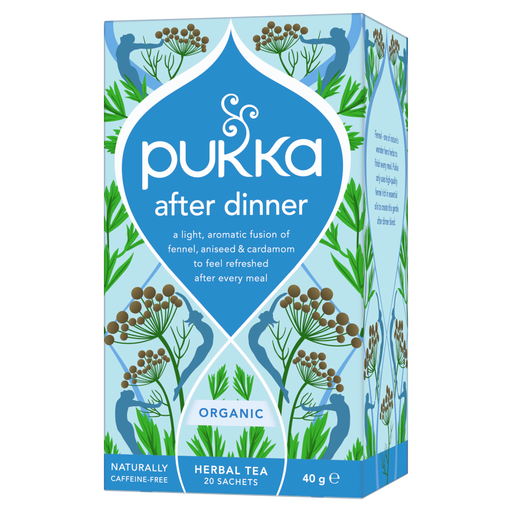 No image available
If you prefer a mixed herbal flavour to mint alone, the listed ingredients include lemongrass, ginger, peppermint and fennel; the product description says it is caffeine-free. The listing also reports trace celery from shared processing, so check the current pack if celery is an allergen for you.
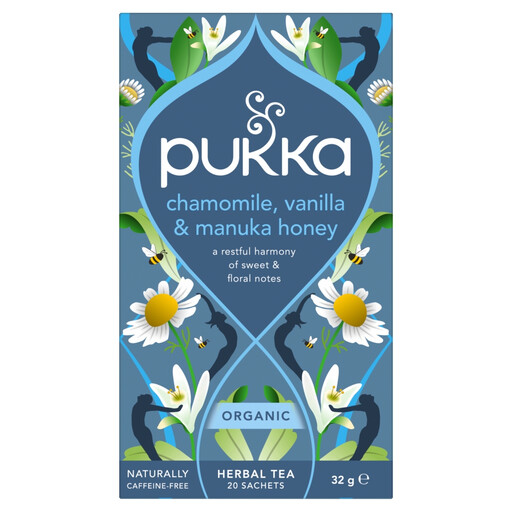 No image available
This caffeine-free, chamomile-led blend is an alternative to a mint-centred elevenses cup. Its listed ingredients also include fennel, liquorice, honey flavouring and vanilla. Check the pack if chamomile-family botanicals or other ingredients are a concern for you.
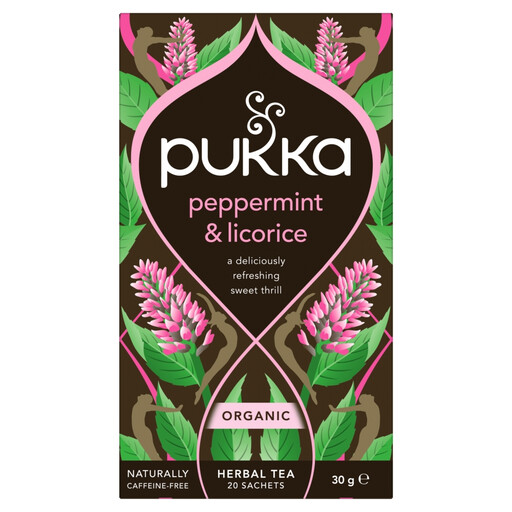 No image available
The title and ingredient listing identify a caffeine-free peppermint-and-liquorice blend, but another part of the product description refers to ginger tea. Confirm the identity and ingredients on the pack before buying. The listing warns people with high blood pressure against excessive consumption of liquorice and advises consultation during pregnancy.
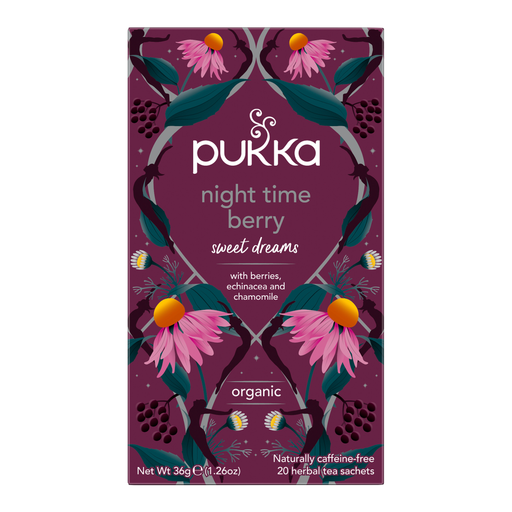 No image available
This berry-led herbal blend also lists botanicals including chamomile and ginger. It is presented for night-time use rather than elevenses; if you are choosing a mid-morning tea specifically to avoid caffeine, check the current pack’s caffeine statement and complete ingredient list before selecting it.
Under the Department for Environment, Food & Rural Affairs’ UK organic-labelling rules, a food labelled organic must meet organic production rules, contain at least 95% organic agricultural ingredients, and have its product and suppliers certified by an approved organic control body. Check the claim on the individual tea; ‘natural’ and ‘herbal’ do not mean the same thing.
No: check the particular product rather than relying on a range name. Twinings describes fruit and herbal infusions without Camellia sinensis as caffeine-free, and labels its Organic Pure Peppermint naturally caffeine-free; another blend may contain green or black tea.
Follow the directions for the tea you choose, as they can vary by blend. For Twinings Organic Pure Peppermint, Twinings specifies one teabag in 200 ml of freshly boiled water for 3 minutes.
Read the exact tea’s ingredients and warnings, and ask a pharmacist or clinician if an ingredient could be relevant to your circumstances. The NHS cautions that herbal medicines are not suitable for everybody, including some people who are pregnant, breastfeeding or taking medicines; herbal tea should not be chosen as a substitute for medical care.
Warnings can differ between blends. Twinings warns people with hypertension to avoid excessive consumption of its liquorice-containing Spiced Ginger blend. The Food Standards Agency explains that ‘may contain’ statements communicate possible unintended presence of regulated allergens, so check the statement on the particular pack if you have a relevant allergy.