Cream-tea hosts avoiding caffeine
For guests having scones, jam and clotted cream, camomile, peppermint and rooibos offer distinct caffeine-free flavour directions. A fuller rooibos cup will not taste the same as a floral camomile infusion.


For a light, caffeine-free drink alongside scones, jam and clotted cream, start with a simple organic camomile infusion; choose peppermint if guests prefer a cooler contrast, or rooibos if they want a fuller alternative to black tea. Flavour and organic status both depend on the exact product, so check its ingredients and organic wording rather than relying on the brand or the word ‘herbal’.
The useful starting point is whether guests want a different flavour from black tea, a product explicitly sold as organic, or a blend with particular ingredients avoided.
For guests having scones, jam and clotted cream, camomile, peppermint and rooibos offer distinct caffeine-free flavour directions. A fuller rooibos cup will not taste the same as a floral camomile infusion.
For anyone choosing organic tea, the claim on the exact product matters more than a brand’s general reputation. GOV.UK distinguishes regulated organic food labelling from descriptions such as ‘natural’ or ‘herbal’.
Blends need an ingredient check even when they are caffeine-free. The NHS advises avoiding herbal teas containing liquorice root during pregnancy and drinking no more than four cups of herbal tea a day.
Choose the flavour you want beside sweet food, then check the organic claim and ingredients on that particular tea. Brewing instructions matter too: they can differ between products.
| Priority | What to check | Your needs |
|---|---|---|
| Organic status | Look for ‘organic’ on the exact pack or product page. GOV.UK says UK food labelled organic must meet organic production rules and the applicable certification requirements for the product and suppliers. | I want an organic tea, not simply one described as natural or herbal. |
| Flavour beside sweet food | Consider a floral camomile infusion for a lighter cup or peppermint for a cool, distinct contrast. Twinings describes its rooibos range as a naturally caffeine-free alternative to black tea; check the exact rooibos product for an organic claim. | Will a gentle floral drink suit the cream tea, or would my guests rather have mint or a fuller rooibos cup? |
| Ingredients | Read the full ingredient list, particularly for a named blend. Twinings Organic Pure Camomile lists 100% organic camomile, while Clipper Organic Peppermint lists organically grown peppermint; other products may combine several herbs. | A simple infusion is easier to choose when I need to know exactly which herbs I am serving. |
| Pregnancy cautions | Check blends for liquorice root. The NHS advises pregnant people to avoid teas containing it and to drink no more than four cups of herbal tea a day. | If a guest is pregnant, caffeine-free and organic labels alone do not answer my ingredient questions. |
| Brewing | Follow the directions for the tea you buy rather than using one brewing time for every infusion. Check the pack if serving several blends. | I want each guest to know which tea is in their cup and how it was prepared. |
Camomile, peppermint and rooibos bring different flavours to a cream tea. A multi-herb blend can also taste different from a single-herb infusion even when both are caffeine-free.
Choose the flavour direction first, then read the ingredients of the exact tea before deciding what to serve.
GOV.UK says organic food labelling is subject to production and certification requirements. ‘Herbal’ describes the type of infusion; it does not establish an organic claim.
Check the exact pack or product page for organic wording and certification information rather than inferring status from the brand or category.
An organic, caffeine-free tea can still contain liquorice root. The NHS advises avoiding herbal teas containing liquorice root during pregnancy.
Read the complete ingredient list before offering a blend to pregnant guests, and make its contents clear so they can choose for themselves.
These references illustrate different herbal-tea ranges and places to browse; check the exact product rather than assuming every tea in a range has the same ingredients or organic status.
Pukka Herbs UK states that all its products are certified organic and lists herbal blends including Three Chamomile.
Twinings UK lists Organic Pure Camomile, made with 100% organic camomile and described as naturally caffeine-free. It also has a rooibos range.
Clipper lists organic herbal infusions, including Organic Peppermint, which it describes as naturally caffeine-free and made with organically grown peppermint.
The teapigs UK herbal-tea range includes camomile, peppermint and honeybush-and-rooibos options.
Tesco Groceries has an organic fruit-and-herbal-tea browsing category that includes products from brands such as Pukka and Clipper.
These Joybuy options cover camomile-led, mint and mixed-herb teas for a cream-tea table. Compare their ingredients as well as their organic wording: a blend is not interchangeable with a plain camomile infusion.
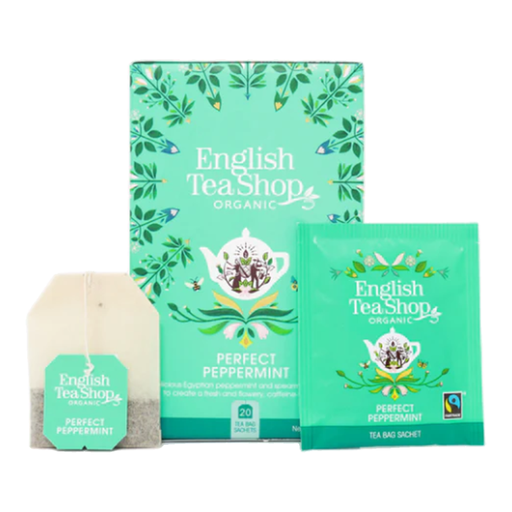 Image unavailable
For guests who prefer mint to floral camomile, the listing describes a caffeine-free blend of 70% organic peppermint and 30% organic spearmint. Check the pack’s organic information and brewing directions for this 20g product.
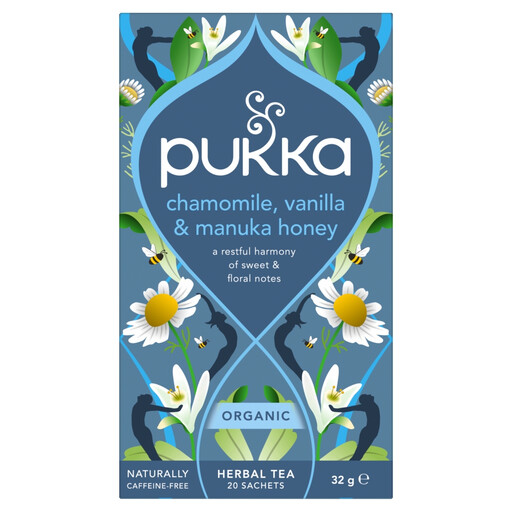 Image unavailable
This camomile-led option is a blend, not plain camomile: its listed ingredients include fennel, liquorice root, vanilla extract and Manuka honey flavouring. The NHS advises avoiding herbal teas containing liquorice root during pregnancy; check the full pack information before serving.
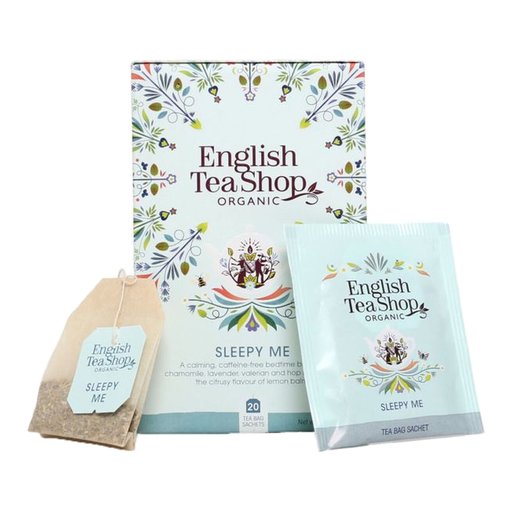 Image unavailable
The listing describes a caffeine-free, camomile-led tea containing lavender, hops, valerian and lemon balm as well as camomile. Choose it for guests who want a mixed-herb infusion, and check the full ingredient list and organic information on the pack.
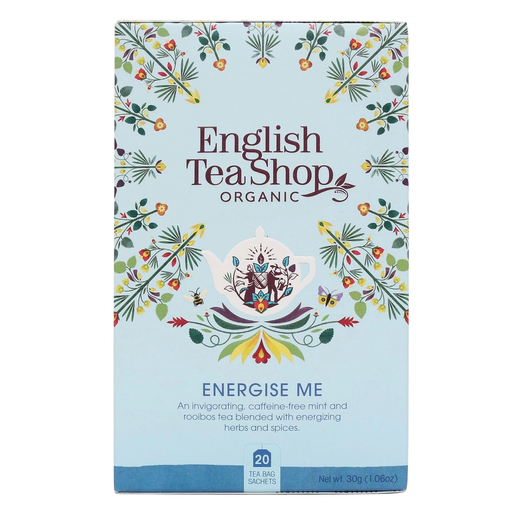 Image unavailable
For guests who want a mixed mint-and-spice infusion rather than simple camomile, the listed ingredients include spearmint, peppermint, rooibos, ginger and cinnamon among other herbs. Check the complete ingredient list and organic information for this 30g blend.
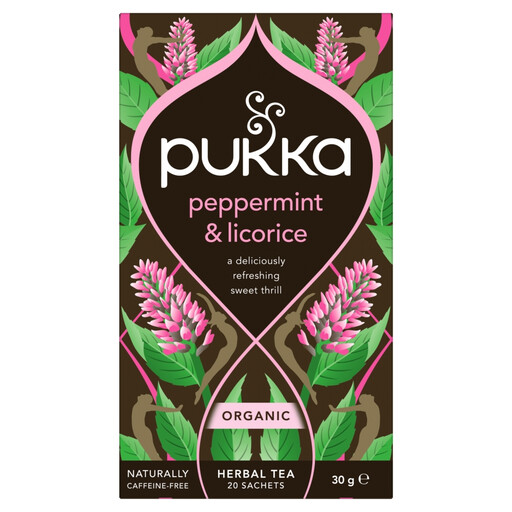 Image unavailable
This is a peppermint-and-liquorice blend, not a plain mint infusion; the listing gives 60% peppermint leaves and 40% liquorice root. The NHS advises avoiding herbal teas containing liquorice root during pregnancy. Check the pack’s ingredient and organic information before serving.
Check the organic claim and certification information for the exact product on its pack or product page. GOV.UK says food labelled organic in the UK must meet the applicable production rules and certification requirements; ‘natural’ and ‘herbal’ do not mean the same thing.
Try a simple organic camomile infusion if you want a light floral cup rather than a strong flavour contrast. Twinings Organic Pure Camomile lists 100% organic camomile and is described as naturally caffeine-free; it does not replicate the taste of black tea.
Choose peppermint for guests who prefer a cool mint flavour; Clipper Organic Peppermint is made with organically grown peppermint and is naturally caffeine-free. Twinings describes rooibos as a naturally caffeine-free alternative to black tea, but check the exact rooibos pack for an organic claim.
Check every blend’s ingredients, not just its caffeine-free or organic wording. The NHS advises avoiding herbal teas containing liquorice root during pregnancy and drinking no more than four cups of herbal tea a day.
No single brewing time applies to all these products. Follow the directions on each pack, particularly if you are serving both single-herb infusions and blends, and identify the teas clearly for guests.