Morning-break drinkers avoiding caffeine
If you want a hot drink without the caffeine in traditional tea, compare the exact infusion’s caffeine statement as well as its flavour.


For an organic morning tea break, check the exact pack’s organic label and caffeine statement, then choose a flavour and ingredient list that suit you. A simple chamomile infusion offers a floral option; mint or spiced blends offer different flavours but call for a closer look at their ingredients. Under UK organic-labelling rules published by the Department for Environment, Food & Rural Affairs, an organic claim concerns production and labelling conditions, not a promised health effect.
If you want a hot drink without the caffeine in traditional tea, compare the exact infusion’s caffeine statement as well as its flavour.
If organic status matters to your choice, look for the claim on the particular product rather than relying on words such as “natural” or “wellness”. UK organic food-labelling rules are published by the Department for Environment, Food & Rural Affairs.
If you are pregnant or breastfeeding, have kidney or liver problems, or take medicines, review the blend’s ingredients and ask a pharmacist or clinician about suitability where needed. NHS guidance cautions that herbal products are not suitable for everybody.
Start with organic status and caffeine, then narrow the choice by flavour and the number of ingredients you need to review.
| Priority | What to check | Your needs |
|---|---|---|
| Organic status | Check the claim on the exact pack or listing. Under Department for Environment, Food & Rural Affairs rules for UK organic food labelling, products sold as organic must meet production and certification requirements. | I want an organic-labelled infusion, not one whose botanical packaging merely suggests it is organic. |
| Caffeine | Look for an explicit caffeine-free statement for the particular infusion and read its ingredients; a broad tea category can include different blends. | For my morning break, I want to know whether this cup fits a caffeine-free routine. |
| Flavour and ingredients | Compare a straightforward chamomile infusion with mint, ginger, fruit or spiced blends. Check the full ingredient list rather than assuming that all chamomile products contain only chamomile. | A short floral recipe appeals if I want an easy-to-check cup; otherwise, I may prefer a more varied flavour. |
| Personal suitability | Review every botanical in the blend. If you are pregnant or breastfeeding, have kidney or liver problems, or take medicines, ask a pharmacist or clinician about ingredients that concern you; NHS guidance calls for caution with herbal products in these circumstances. | I would rather check a blend before making it a regular drink than rely on a wellness-style name. |
A herbal infusion can be plant-based without meeting the organic food-labelling conditions set out by the Department for Environment, Food & Rural Affairs.
Check the organic claim on the exact product, rather than inferring it from the brand, retailer or packaging design.
Choosing from a general tea range does not establish the caffeine status of an individual blend.
Read the product’s caffeine statement and ingredients, particularly if it may contain black or green tea.
A blend with several botanicals takes more checking than a single-ingredient infusion, especially when personal suitability matters.
Check each ingredient and, if medicines or a relevant health circumstance affect your choice, ask a pharmacist or clinician for advice.
A product name does not establish that an infusion treats a condition. For personal medical concerns, tea packaging is not a substitute for clinical advice.
Choose a drink for its stated organic status, caffeine information, ingredients and flavour; seek medical advice about symptoms or medicine interactions.
These ranges offer different starting points, but a brand’s wider range does not establish the organic or caffeine status of every individual infusion.
Pukka describes its products as certified organic and offers herbal blends with several flavour profiles.
Clipper’s Organic Chamomile Infusion is a clearly identified organic option for a floral cup.
Yogi Tea presents organic blends for shoppers interested in combinations of herbs and spices.
Twinings lists fruit and herbal infusions as well as a separate organic tea collection.
teapigs lists herbal and caffeine-free tea options alongside organic tea leaves.
Tesco lists own-label camomile and peppermint infusions among its fruit and herbal teas.
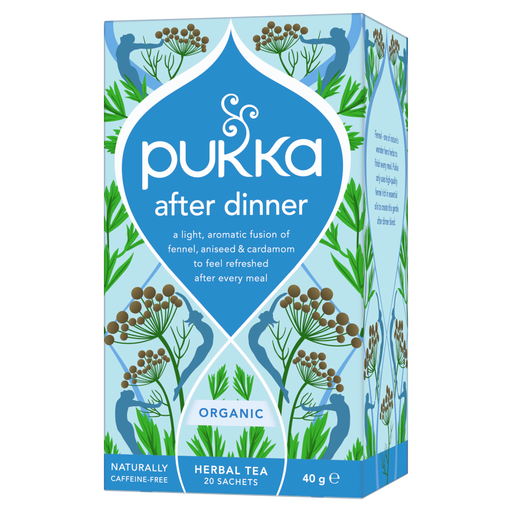
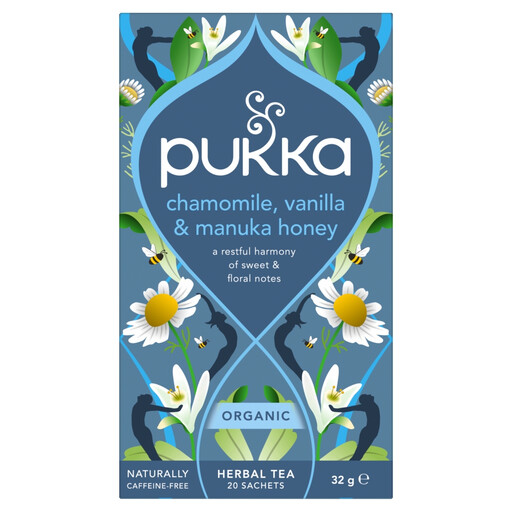
These two Pukka sachet options offer different flavour directions for an organic-labelled morning break. Pukka states that its products are certified organic; check the particular pack’s caffeine statement and ingredients before choosing.
 No image available
This multi-botanical option may appeal if you want a blended flavour rather than a straightforward chamomile infusion. Check the pack’s caffeine statement and full ingredient list; its product information flags possible traces of celery.
 No image available
This chamomile-led option has a different flavour profile from a plain chamomile infusion. Check its caffeine statement and full ingredients, including whether liquorice or other botanicals affect its suitability for you.
Check the organic claim on the exact pack or listing, rather than relying on “natural” or similar wording. Department for Environment, Food & Rural Affairs rules for UK organic food labelling require organic production conditions, at least 95% organic agricultural ingredients, permitted other ingredients and processing aids, and certification by an approved organic control body.
Do not assume so from its place in a tea category: check the individual product’s caffeine statement and ingredients. Pukka says many of its organic teas naturally contain no caffeine and specifically describes its Three Chamomile infusion as naturally caffeine-free.
No. A name or general wellness wording does not establish a therapeutic effect. The Department of Health and Social Care’s Great Britain nutrition and health claims register sets out authorised commercial health claims; seek clinical advice for a medical concern rather than relying on tea packaging.
Ask a pharmacist or clinician about the particular ingredients if you are pregnant or breastfeeding, have kidney or liver problems, or take medicines. NHS guidance identifies these as circumstances calling for care with herbal products; check the infusion’s ingredient list rather than assuming all blends have the same suitability.