Older adults who prefer a caffeine-free hot drink
A clearly labelled caffeine-free infusion can offer a flavour they enjoy. Choose it as a drink, not for its protein or energy content.


Choose an organic, caffeine-free herbal tea for an older adult who enjoys it as a drink, provided its ingredients suit their preferences and circumstances. Do not use a plain infusion in place of food or nutritional support: Twinings lists just 2 kcal and 0 g protein per 100 ml of its brewed Organic Pure Camomile, while the NHS advises energy- and protein-rich foods when appetite is poor. If the person takes regular medicines or has difficulty eating or swallowing, seek advice suited to them before relying on a particular blend or drink routine.
A clearly labelled caffeine-free infusion can offer a flavour they enjoy. Choose it as a drink, not for its protein or energy content.
Keep drinks and nutrition support distinct. The NHS advises energy- and protein-rich foods for poor appetite and notes that warm milky drinks can add nutrients and calories.
Check the exact herbs with a pharmacist or clinician, particularly if choosing a blend for a claimed health effect. The Health Research Authority identifies potential herb–drug interactions as a concern for older adults.
Start with the purpose of the drink, then check its organic claim, caffeine wording and full ingredient list against the person’s needs.
| Priority | What to check | Your needs |
|---|---|---|
| Organic claim | Check the individual pack’s organic labelling and certification details. GOV.UK’s organic-food guidance ties organic claims to production rules and certified suppliers. | I want an identifiable organic claim, rather than relying on a brand’s general description of its range. |
| Caffeine and ingredients | Look for explicit caffeine-free wording and read the current ingredient list. A short list makes individual herbs easier to identify but does not establish clinical suitability. | A caffeine-free drink appeals to me, and I need to recognise the ingredients before offering it to someone else. |
| Nutrition | Read the brewed-infusion nutrition panel for the specific product. Twinings lists 2 kcal and 0 g protein per 100 ml of brewed Organic Pure Camomile; the NHS advises energy- and protein-rich foods when appetite is poor. | If eating enough is difficult, I need a nutrition plan that does not depend on cups of plain herbal tea. |
| Medicines and allergies | Review every herb and any allergen information on the pack. Ask a pharmacist or clinician about the exact blend when regular medicines or a proposed health use make suitability uncertain. | Before choosing a multi-herb blend for someone taking medicines, I want its full ingredient list checked. |
| Timing of drinks | Consider when the drink is offered alongside meals. The NHS advises avoiding too many drinks just before meals when appetite is poor. | I want the person to enjoy a hot drink without it taking the place of a meal or a nourishing drink in their care plan. |
Organic labelling concerns how a product is produced, not its protein or energy content. Twinings lists 2 kcal and 0 g protein per 100 ml of brewed Organic Pure Camomile.
If appetite or intake is a concern, follow appropriate nutrition advice rather than using plain herbal tea as a substitute for food.
Multi-herb teas can contain ingredients that matter to someone with an allergy, a health condition or regular medicines. The Health Research Authority highlights potential herb–drug interactions in older adults.
Read the current pack and show the exact ingredient list to a pharmacist or clinician when individual suitability needs checking.
The NHS advises carers to avoid too many drinks just before meals when someone’s appetite is poor.
Offer tea at a time that fits the person’s meals and any individual care or dietetic advice.
Tesco Groceries advises reading the product label because food ingredients and allergen information can change.
Before serving, check the current pack for ingredients, allergens, caffeine wording, organic information and preparation directions.
Use these ranges to identify products worth checking; an organic claim or ingredient list should be confirmed for the individual tea.
Twinings Organic Pure Camomile is a single-herb example: Twinings lists 100% organic camomile and describes it as naturally caffeine-free.
Pukka says its products are certified organic. Individual blends have different herbs, so compare their current labels rather than treating the range as one recipe.
Clipper describes its organic herbal-infusion range as caffeine-free and lists choices including chamomile, peppermint and lemon and ginger.
The Teapigs UK herbal range includes chamomile, peppermint and lemon-and-ginger teas.
These Joybuy options are mint or chamomile-led herbal teas and blends to consider as drinks for an older adult. Check each current pack against the person’s ingredient, caffeine and organic-labelling requirements; none should replace needed nutrition support.
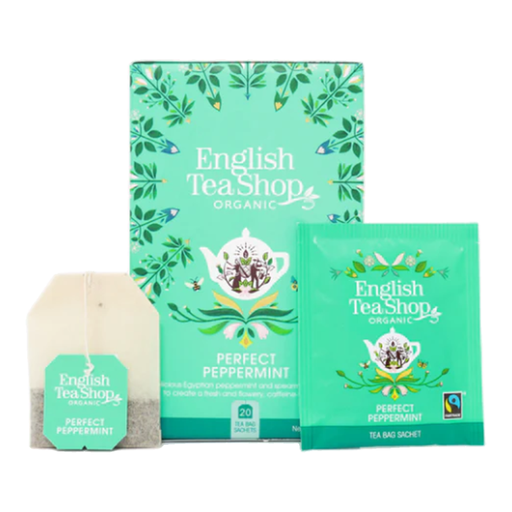 Image unavailable
A mint option for someone who enjoys peppermint-flavoured infusions. Check the current pack’s full ingredients, caffeine wording and organic certification details, and ask about individual suitability if the person takes regular medicines.
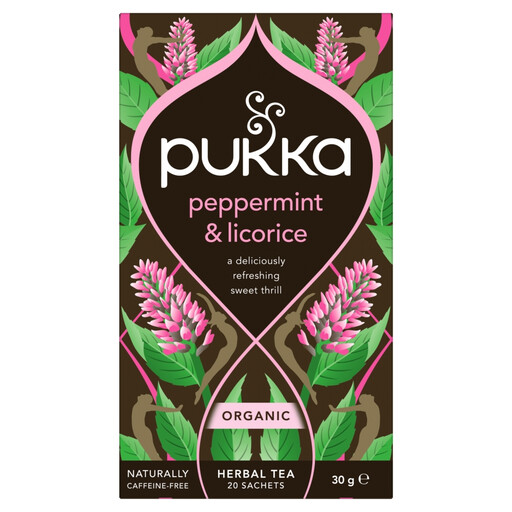 Image unavailable
A peppermint-and-liquorice blend rather than a plain peppermint tea. Its product information cautions people with high blood pressure against excessive consumption of liquorice; check the exact ingredients with a pharmacist or clinician where individual suitability is a concern.
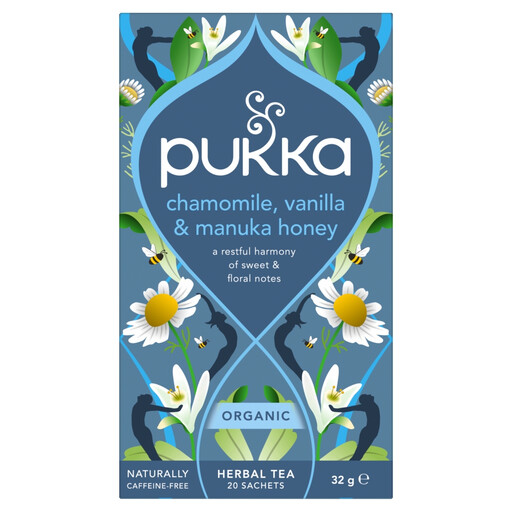 Image unavailable
A chamomile-led blend for someone who prefers a more complex flavour. Its product information advises caution for people allergic to plants in the chamomile family; review the full ingredient list and any medicine-related concerns before serving it.
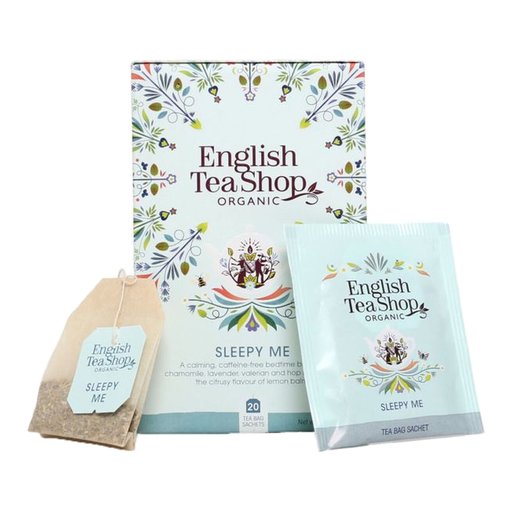 Image unavailable
A multi-herb infusion whose listed ingredients include chamomile, valerian and hops. Those ingredients warrant an individual check if the recipient takes regular medicines or has a relevant health condition; follow the product’s instruction to infuse for at least five minutes.
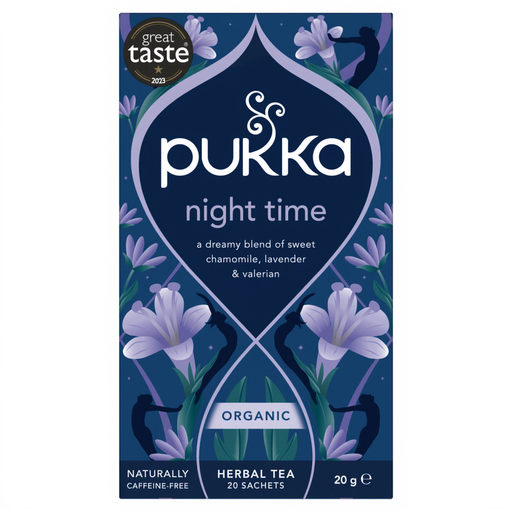 Image unavailable
A multi-herb blend that includes chamomile and valerian. Its product information identifies oats as an allergen, so read the current pack and check the blend with a pharmacist or clinician if regular medicines or relevant health conditions make suitability uncertain. The stated steeping time is 5–15 minutes.
It can be enjoyed as a drink, but a plain infusion should not replace nutrition support. Twinings lists 2 kcal and 0 g protein per 100 ml of brewed Organic Pure Camomile; the NHS instead advises energy- and protein-rich foods for poor appetite. Seek appropriate clinical advice for persistent poor intake, weight loss or difficulty chewing or swallowing.
Check the individual product’s current pack for its organic labelling and certification details, rather than relying on the brand name alone. GOV.UK’s organic-food guidance describes production rules and certified suppliers as the basis for organic labelling; an organic claim does not establish the drink’s nutritional contribution.
Not automatically, but the exact ingredients matter. The Health Research Authority identifies potential herb–drug interactions as a concern for older adults; ask a pharmacist or clinician to review a particular blend, especially if it is being chosen for a claimed health effect.
It does not establish that peppermint tea has the same interaction profile. The NHS advice concerns peppermint oil and recommends discussing other medicines and herbal products with a doctor or pharmacist; use the exact tea ingredients when seeking advice about an individual’s medicines.
It can be considered as a preferred drink where it fits the resident’s individual requirements, not as a replacement for assessed nutrition and hydration provision. Norfolk and Waveney Integrated Care System’s care-home guidance calls for residents’ nutritional needs to be assessed and reviewed, with relevant clinical requirements taken into account.