Buyers stocking everyday hot drinks
Choose sealed packs with clear organic labelling, accessible ingredients and allergen information that staff can pass on without making health claims.


For a retirement shop, start with organic single-herb infusions whose ingredients and caffeine status customers can check easily. Add mixed blends for flavour variety when the full ingredients and allergen information are available; neither an organic label nor a caffeine-free statement establishes that a tea is suitable for everyone taking medicines.
The useful starting range depends on whether customers want a familiar everyday drink, an evening caffeine-free option or several flavours to try.
Choose sealed packs with clear organic labelling, accessible ingredients and allergen information that staff can pass on without making health claims.
A plainly labelled single-herb infusion makes the ingredient list and caffeine statement easier to review. Customers asking whether a herb is suitable alongside their medicines need individual professional advice.
A small selection box offers several blends to try, provided customers can check the ingredients of each one before choosing.
Choose a straightforward core drink first, then assess mixed blends separately for variety and ingredient complexity.
Choose when: Customers want a short ingredient list and an explicitly caffeine-free everyday option, such as the camomile products described by Twinings UK and Clipper Teas.
Trade-off: One herb offers less flavour variety than a selection of blends and does not guarantee individual suitability.
Choose when: Customers want to try several flavours; Pukka describes its Herbal Collection as four organic blends.
Trade-off: Each blend has its own ingredients to review, so the box is less straightforward to explain than a single-herb pack.
| Priority | What to check | Your needs |
|---|---|---|
| Organic labelling | Check the organic claim on the exact pack and ask the supplier for its certification details. The Department for Environment, Food & Rural Affairs says food may be labelled organic only if it meets organic production rules. | I want to distinguish an organic product from one described only as natural or plant-based. |
| Caffeine and ingredients | Look for an explicit caffeine-free statement on the exact tea and read the ingredient list. A named single herb is simpler to review than a multi-herb blend. | For an evening drink, I want to know what is in the cup rather than assume every herbal tea is caffeine-free. |
| Botanical blends | Keep the full ingredient list available and avoid treatment claims. The NHS cautions that herbal products are not suitable for everybody. | If I take medicines, I need to be able to check a blend's ingredients and ask an appropriate professional about personal suitability. |
| Allergen information | Keep the exact pack information accessible and check how allergen information will be given if tea is served rather than sold sealed. UK Government guidance addresses allergen information for retail and catering food businesses. | I need clear information about the drink in the form the shop actually sells or serves it. |
Natural-sounding wording does not establish that a food meets organic production rules, as described by the Department for Environment, Food & Rural Affairs.
Check the organic claim on the exact pack and retain the supplier's relevant certification information.
A name suggesting a wellness effect does not establish that a blend is suitable alongside medicines. The NHS cautions that herbal products may not suit everybody.
Make the full botanical list available, avoid treatment claims and refer personal medicine questions to an appropriate healthcare professional.
The category name alone does not confirm the caffeine status of an exact product.
Check its own caffeine statement and ingredients before offering it as a caffeine-free choice.
Customers must check each flavour separately, whereas a single-herb pack has a shorter ingredient list to review.
Consider a mixed box for variety alongside a plainly labelled core infusion, and check the current pack contents before stocking it.
These brand examples illustrate different formats; check the ingredients and claims of the exact product rather than applying one product's details to an entire range.
Pukka offers herbal blends and says its products are certified organic.
Twinings UK lists an Organic Pure Camomile infusion with 100% organic camomile.
Clipper Teas lists organic infusions, including its Organic Chamomile Infusion.
The teapigs UK herbal range includes single-flavour teas and blends.
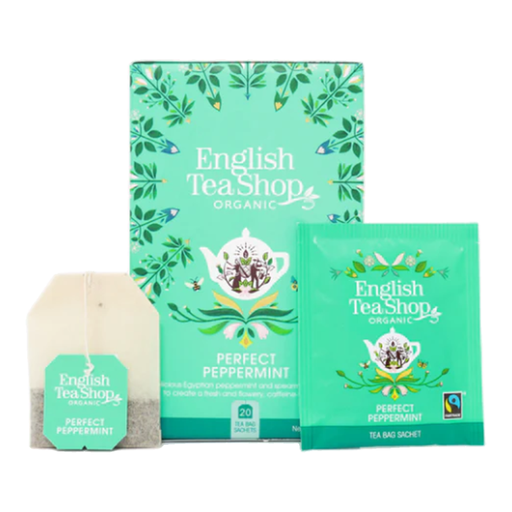
These packs include a peppermint blend and several multi-ingredient herbal teas. For retirement-shop stocking, compare their exact organic labelling, caffeine statements and ingredients rather than treating every blend as interchangeable.
 No image available
A peppermint-and-spearmint blend to consider where customers want a mint option. Check the exact pack's organic certification details, caffeine statement and brewing instructions before using it as an everyday shop choice.
 No image available
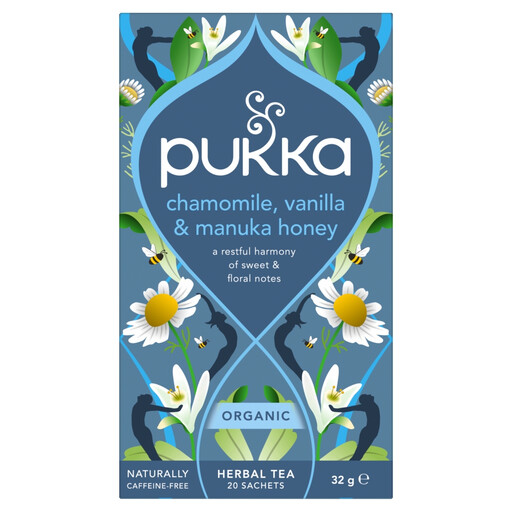
A camomile-led blend rather than a single-herb infusion. Check its full ingredients, including the additional botanicals, and the exact pack's organic and caffeine statements before offering it as an evening choice.
 No image available
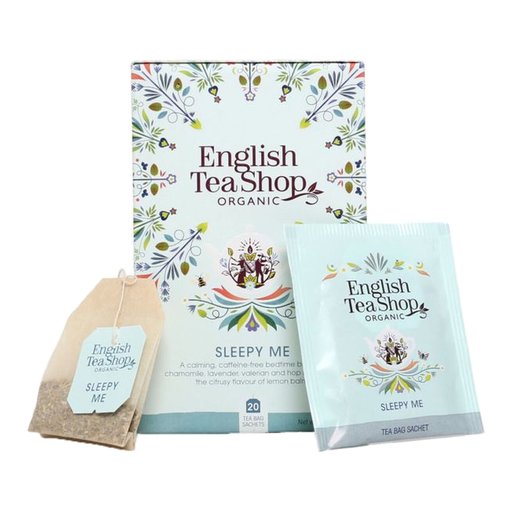
This multi-botanical blend calls for closer ingredient review than a plain infusion; its listed ingredients include valerian and hops. Do not interpret the product name as a sleep claim, and check the exact pack's organic documentation for UK sale.
 No image available
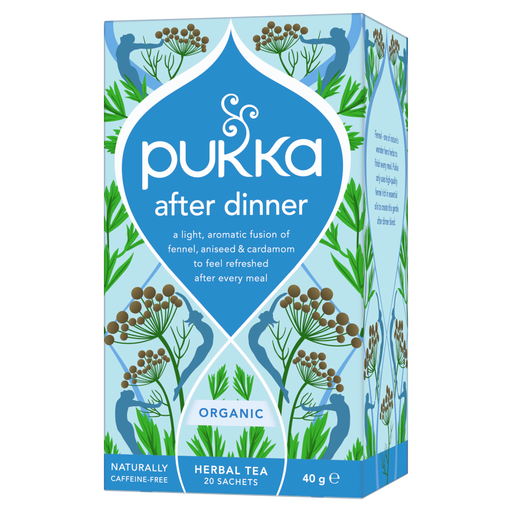
The 20-sachet format could suit portioned service, but this is a multi-herb blend, not a plain infusion. Keep the pack's trace-celery information accessible and check its complete ingredients and organic labelling.
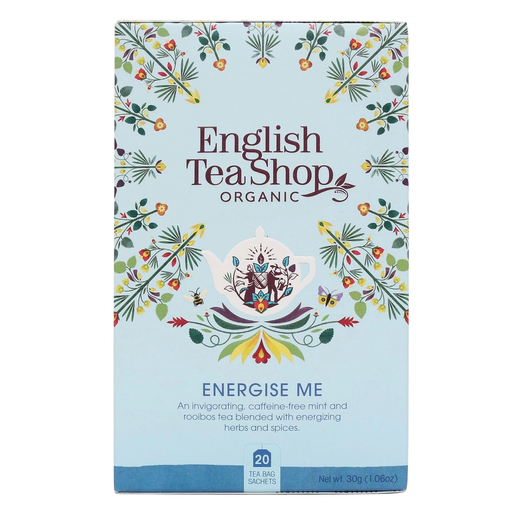 No image available
This 30g blend offers another flavour option, but its multiple botanicals, including ginseng, need a full ingredient review. Treat the product name as a name, not evidence of an effect or suitability alongside medicines.
Check the claim on the exact pack and request the relevant supplier certification details. The Department for Environment, Food & Rural Affairs says food can be labelled organic only when it meets organic production rules; wording such as 'natural' is not a substitute.
Do not present a tea as a treatment because it is herbal or organic. The NHS cautions that herbal products may not be suitable for everybody; refer questions about a customer's condition or medicines to an appropriate healthcare professional.
Make the information for the exact tea and the way it is sold or served accessible. UK Government guidance says retail and catering food businesses must provide allergen information; keep original pack details available and check the appropriate method if preparing drinks for customers.
Do not assume so from the word 'herbal'. Check the exact product's caffeine statement and ingredients; Clipper Teas describes its Organic Chamomile Infusion specifically as naturally caffeine-free.