Shoppers focused on organic certification
If organic production is your priority, check the claim and certification information for the exact tea. Choose its flavour separately rather than treating organic wording as a description of how it tastes.


Choose a certified-organic herbal infusion if organic production matters to you, then check the individual pack for its ingredients and caffeine statement. A single-herb infusion makes the ingredient list straightforward; a blend offers a different flavour choice, but an organic herbal collection can also contain green tea or matcha.
The right afternoon infusion depends on whether organic certification, caffeine avoidance or the ingredient list matters most to you.
If organic production is your priority, check the claim and certification information for the exact tea. Choose its flavour separately rather than treating organic wording as a description of how it tastes.
Look for a caffeine-free statement on the individual blend and read the ingredients, especially in selection packs. Organic status and a herbal collection name do not establish caffeine status.
A single-herb tea and a blend of herbs, fruit or spices offer different ingredient lists to review. Check the exact pack for ingredients relevant to your preferences or dietary needs.
Start with the organic claim, then assess caffeine and ingredients independently. Compare pack quantities once you have found teas that meet those requirements.
| Priority | What to check | Your needs |
|---|---|---|
| Organic claim | Check the exact product’s organic wording and certification information. Defra’s UK guidance ties organic food labelling to production rules, at least 95% organic agricultural ingredients and certification through an approved control body. | I want an organic claim with a defined production and certification basis, rather than general natural-product wording. |
| Caffeine | Look for a caffeine-free statement for the individual blend. Read each variety in an assortment: a Tesco listing for Pukka Organic Herbal Collection includes Supreme Matcha Green, made with green tea and matcha. | For an afternoon cup without caffeine, I need to check the tea I will actually drink, not just the collection name. |
| Ingredients | Compare the complete ingredient lists, including flavourings and other botanicals in blends. Clipper lists chamomile as 100% of the ingredients in its Organic Chamomile Infusion; that description applies to that product, not all chamomile teas. | A short ingredient list appeals to me, or I might prefer a layered flavour if I can review every ingredient. |
| Pack format | Check the number of sachets or tea bags and the pack weight. For a selection box, check the varieties individually as well as the total contents. | I want a quantity and mix of flavours that fit how often I make an afternoon cup. |
Organic labelling concerns production, not caffeine content. Tesco’s Pukka Organic Herbal Collection listing includes a green-tea-and-matcha variety alongside herbal infusions.
If you want to avoid caffeine, check the caffeine statement and ingredients for each blend or sachet.
A tea’s organic status or wellness wording does not establish that it treats a condition. The NHS notes that herbal medicines are not tested in the same way as standard medicines; that guidance is about herbal medicines, not a finding about the effects of an ordinary cup of tea.
Choose a tea for its ingredients and flavour. Ask a pharmacist or clinician before using a botanical product for a therapeutic purpose or alongside medicines.
A brand or retailer may list organic products alongside other teas. A category page cannot establish the certification of the particular box you choose.
Check the product name, tea type, ingredient list and organic information on that pack or its product page.
These ranges offer different starting points for an afternoon infusion; check the claims and ingredients of the individual product before choosing.
Pukka lists organic herbal blends and a separate caffeine-free selection.
Clipper describes its herbal-infusion range as organic and caffeine-free.
Yogi Tea presents organic herb-and-spice blends in its UK range.
Twinings has an organic-and-Fairtrade collection alongside its wider tea range.
Teapigs lists herbal flavours including peppermint, chamomile, lemon and ginger, and rooibos.
Tesco lists own-label herbal teas as well as branded organic herbal products.
These are herbal tea options for choosing an afternoon flavour, with several products labelled organic. Check the individual pack’s organic information, ingredients and caffeine statement against your priorities.
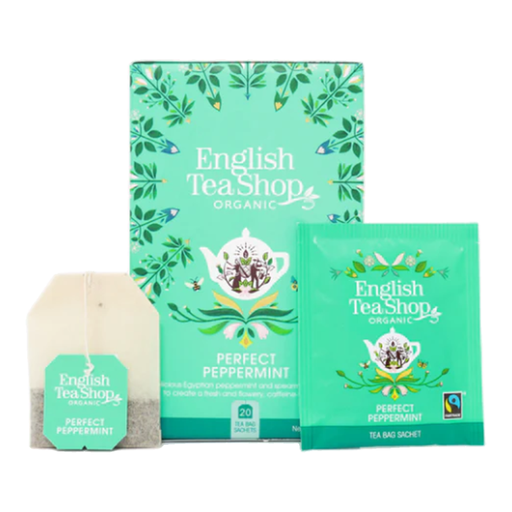 No image available
A peppermint option for a mint-flavoured afternoon break. The product name identifies a 20g pack and an organic claim; check the pack’s certification information and caffeine statement if those are deciding factors.
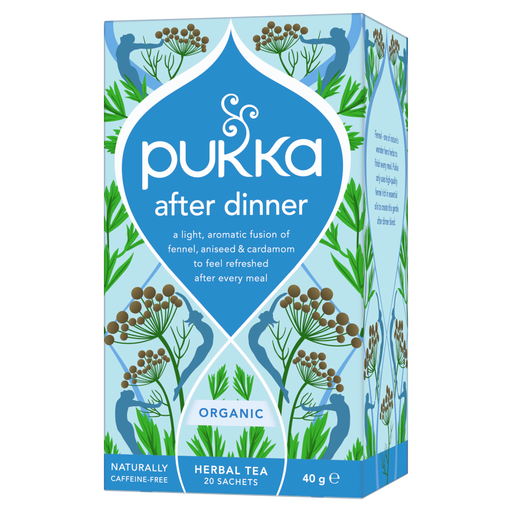 No image available
A blended option to consider for an afternoon cup if you prefer more than a single-herb flavour. The product name specifies 20 sachets and 40g; review the pack’s ingredients, caffeine statement and organic certification information.
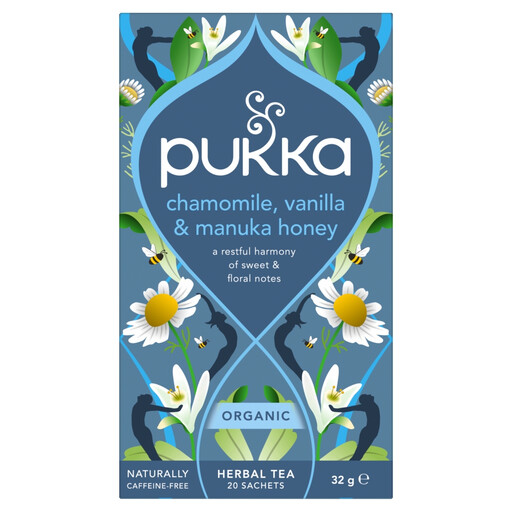 No image available
A chamomile-and-vanilla flavour choice for an afternoon infusion. The product name specifies 20 sachets and 32g; check the full ingredients and any organic or caffeine-free statements on the pack.
 No image available
A mint-labelled choice for an afternoon break, supplied as 20 sachets weighing 32g. Product descriptions disagree about whether the blend is mint- or ginger-based, so confirm the actual ingredients on the pack before choosing it; check its caffeine and organic information there too.
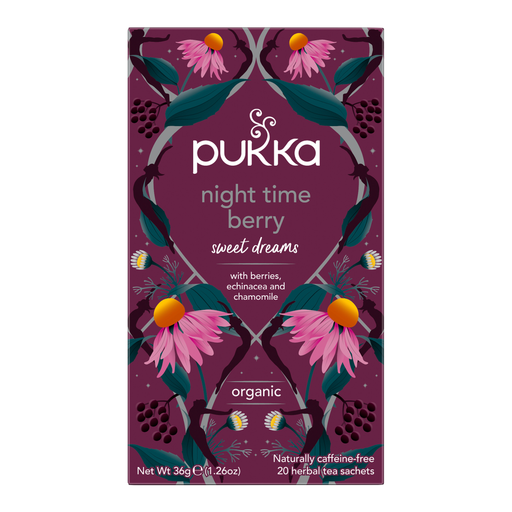 No image available
A berry-labelled herbal blend marketed for night-time rather than specifically for an afternoon break. The product name specifies 20 sachets and 36g; check its ingredients, caffeine statement and organic certification information if considering it for your afternoon cup.
Check the organic claim and certification information for the exact product. Defra’s UK organic food guidance ties organic labelling to production rules, at least 95% organic agricultural ingredients and certification of the product and suppliers through an approved control body. Organic status does not tell you the tea’s flavour or caffeine content.
No. A Tesco listing for Pukka Organic Herbal Collection includes Supreme Matcha Green, which contains green tea and matcha. If avoiding caffeine matters to you, choose an individual blend with a caffeine-free statement and check every variety in a selection pack.
It can make the ingredient check shorter if you enjoy chamomile. Clipper’s Organic Chamomile Infusion lists chamomile as 100% of its ingredients and is labelled naturally caffeine-free; check other chamomile products individually rather than assuming they have the same formulation.
No: a wellness description or organic claim does not establish a treatment effect. The NHS cautions that herbal medicines are not tested in the same way as standard medicines; its guidance concerns herbal medicines, not a demonstrated effect of ordinary tea. If you are considering a botanical product for a therapeutic purpose or alongside medicines, ask a pharmacist or clinician.