Home workers with a short lunch break
If you want an organic cocoa drink at lunch, the practical question is whether you can heat milk or need instructions that work with the equipment you have.


Choose an organic product whose milk and heating instructions fit your lunch break: Green & Black's uses hot semi-skimmed milk, while Booja-Booja and Cacao Brew offer products that can be prepared with dairy or plant-based milk. Check the exact pack if dairy or allergens matter to you, and check the milk separately if you want to use organic dairy.
If you want an organic cocoa drink at lunch, the practical question is whether you can heat milk or need instructions that work with the equipment you have.
Green & Black's gives directions using hot semi-skimmed milk, while Cacao Brew permits dairy milk. If the organic status of the added milk matters to you, check its carton separately.
Booja-Booja describes its hot chocolate as dairy-free and vegan, but warns against use by people with several named nut allergies. Green & Black's carries a “may contain milk” statement. Read the allergen information on the exact pack before choosing.
Start with the organic claim and allergen information, then match the preparation instructions to your milk and lunch-break setup.
| Priority | What to check | Your needs |
|---|---|---|
| Organic claim | Check the product's organic label and certification information. Under UK rules set out by the Department for Environment, Food & Rural Affairs, organic food labelling requires, among other conditions, at least 95% of agricultural ingredients to be organic and certification by an approved control body. | I want an organic hot-chocolate product, not just cocoa packaging that uses environmental language. If I add dairy milk, I'll check its organic label separately. |
| Preparation | Read the required liquid, quantity and heating steps. Ocado's Green & Black's listing specifies four teaspoons with 250 ml hot semi-skimmed milk; Cacao Brew specifies 15 g powder with 150–200 ml milk. | On a short lunch break, I need a method that works with my kettle, microwave or hob—not one that assumes I can heat milk when I cannot. |
| Product type | Distinguish cocoa powder from a hot-chocolate mix, and follow the exact product's preparation directions. Do not assume that instructions for a different mix apply to a cocoa powder. | I'd like to know what I need to add to the cocoa before deciding whether it fits my lunch routine. |
| Dairy and allergens | Check ingredients, precautionary statements and the milk you plan to add. Booja-Booja calls its product dairy-free but names five nut allergies for which it is unsuitable; Green & Black's says “may contain milk”. | If I must avoid milk or particular nuts, an organic or vegan label alone does not answer my allergen question. |
An organic claim on the powder does not establish the organic status of milk added at home.
If you want to use organic dairy, check both the powder's claim and the milk carton.
Booja-Booja's dairy-free hot chocolate has a named nut-allergy warning, while Green & Black's carries a milk-trace statement. These labels address different risks.
Read the current ingredients and allergen statement on the exact pack, particularly if you manage an allergy.
Green & Black's directions call for hot milk, and Cacao Brew's method also uses milk. Having a kettle alone does not establish that either product can be made as directed.
Match the written preparation steps to the equipment and milk available during your lunch break.
These examples show different organic hot-chocolate formulations; they are not a list of products in the Joybuy selection below.
Ocado lists its Organic Hot Chocolate with directions for a dairy-milk drink.
Booja-Booja describes its organic hot chocolate as dairy-free and vegan and says it can be used with any type of milk.
Cacao Brew's Organic Hot Chocolate 81% . PERU gives instructions using 15 g powder and 150–200 ml dairy or plant-based milk.
This option is cocoa powder for making hot chocolate at home, rather than a ready-formulated hot-chocolate mix. Check its preparation directions against the milk and equipment you intend to use at lunch.
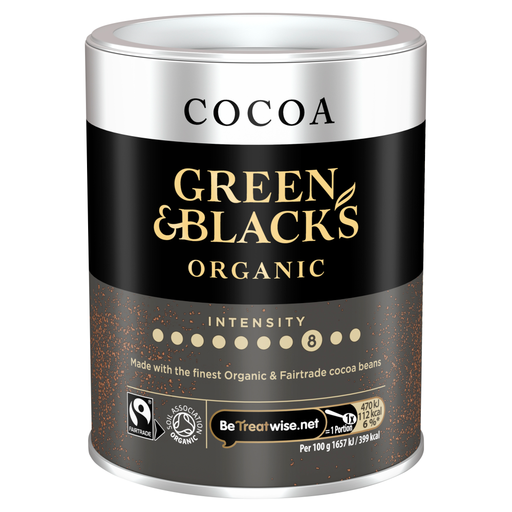 Image unavailable
A cocoa-powder option if you want to make hot chocolate during a home lunch. Its product description states 98% organic cocoa powder and says it may contain milk. Check the current pack's organic information, allergen statement and preparation directions before choosing how to make it.
Look for the organic claim and certification information on the product's current pack or listing. The Department for Environment, Food & Rural Affairs says UK organic food labelling requires, among other conditions, at least 95% of agricultural ingredients to be organic and the product and suppliers to be certified by an approved control body.
No. The powder's organic status does not establish the status of milk you add. If you want to prepare it with organic dairy, check the milk carton separately.
Yes, if the product's instructions allow it: Booja-Booja says its dairy-free organic hot chocolate can be used with any type of milk, and Cacao Brew permits dairy or plant-based milk. Once you add dairy milk, the prepared drink is no longer dairy-free.
It is a precautionary allergen statement about possible unintended presence, not an instruction to add milk. The Food Standards Agency explains this use of “may contain” labelling, and Ocado's listing for Green & Black's Organic Hot Chocolate carries that statement; if you manage a milk allergy, do not rely on the ingredient list alone.
Check the exact product's directions before relying on a kettle alone. Green & Black's specifies hot milk and Cacao Brew's method uses milk; a water-prepared instant product has different instructions and should not be assumed to meet your organic requirement.