Parents making an after-school hot drink
Compare what goes into the mug, not just the organic wording on the pack. The powder, portion and milk or plant drink used for preparation all matter.


For an after-school hot chocolate, check the organic declaration, the full allergen statement and the nutrition of the drink as prepared: an organic label alone does not establish its sugar content or allergy suitability. If avoiding dairy, check both the powder and the drink used to mix it; if using cow’s milk, include that in the allergen and serving assessment. England’s school-food standards concern food and drink provided in state-funded schools, according to the Department for Education, rather than a drink made at home after school.
Compare what goes into the mug, not just the organic wording on the pack. The powder, portion and milk or plant drink used for preparation all matter.
A dairy-free powder can suit a dairy-free preparation, but its other allergen warnings and the drink mixed with it still need checking.
The Department for Education’s school-food standards apply to food and drink provided in state-funded schools in England. A drink made at home after school is a different setting.
Start with the organic claim and allergen statement, then assess the drink you intend to prepare rather than comparing powder labels alone.
| Priority | What to check | Your needs |
|---|---|---|
| Organic claim | Check the pack’s organic declaration and certification information. Defra’s guidance for Great Britain requires products and suppliers using the organic label to meet the applicable certification rules. | I want an organic product, but I will use its ingredients and nutrition panel to judge what is actually in the drink. |
| Allergens and preparation | Read the complete ingredient and allergen statements, including any ‘may contain’ warning. Check the milk or plant drink added during preparation as well. | If my household avoids dairy or needs to account for an allergy, the powder and everything mixed with it must fit those requirements. |
| Sugars and serving | Compare sugars on the same basis where possible: powder per 100 g, or a prepared serving with its stated quantities. Include ingredients added to the mug. | I want to know what one after-school serving contains, rather than assuming the organic label describes its nutrition. |
| Where it is served | For a school-provided drink in England, check the school’s menu requirements. The Department for Education says school-food standards apply to state-funded schools; the 2014 Regulations exclude hot chocolate from their definition of confectionery, which is not a general exemption from school-food standards. | When I make the drink at home after school, I need to assess the product and preparation, not treat school catering rules as a home-snack restriction. |
Organic labelling addresses production and certification requirements, according to Defra; it does not describe the sugars in a prepared mug.
Read the nutrition panel and preparation instructions, accounting for the amount of powder and the milk or plant drink used.
Cadbury Gifts Direct’s Green & Black’s Organic Hot Chocolate listing says ‘MAY CONTAIN MILK’. Mixing a powder with cow’s milk also adds milk to the finished drink.
Where milk allergy matters, check the current pack and every ingredient used to prepare the drink.
Booja-Booja describes its hot chocolate as dairy-free but says it is unsuitable for people with certain tree-nut allergies.
Read the product’s full allergen and suitability wording, then check the drink used to mix it.
England’s school-food requirements concern food and drink provided to pupils in state-funded schools. The 2014 Regulations also exclude hot chocolate from the definition of confectionery; that distinction does not, by itself, settle every school menu decision.
If a school will provide the drink, ask the school or caterer about its menu. For a drink made at home, focus on the product label and preparation.
Cadbury Gifts Direct lists Green & Black’s Organic Hot Chocolate 230g as a powder prepared with hot milk.
Booja-Booja describes its 200 g organic hot chocolate as dairy-free and suitable for mixing with a milk or plant drink chosen separately.
Cacao Brew describes its range as organic chocolate drinks centred on cacao.
These are cocoa and cacao powders for making an after-school chocolate drink with ingredients you choose. Check each pack’s preparation directions and allergen statement; a plain powder is not the same as a ready-mixed hot chocolate.
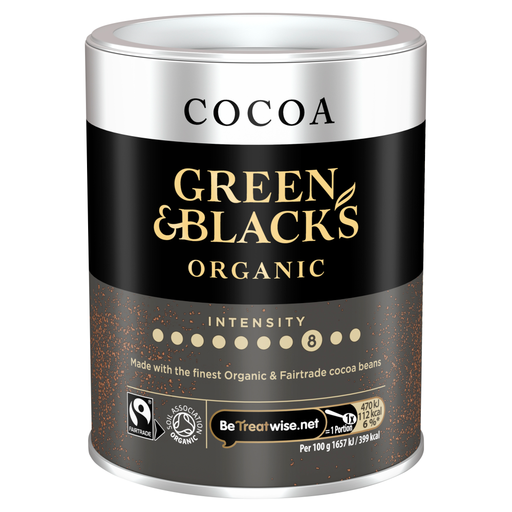 No image available
An organic cocoa powder for making a hot chocolate with your choice of additions. Check the current pack’s ‘may contain milk’ warning if allergy suitability matters, and use its nutrition panel when assessing a prepared serving.
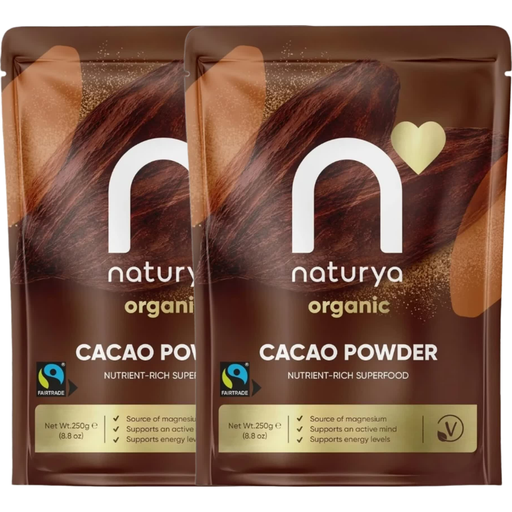 No image available
Organic cacao powder offered as a two-pack for preparing a cacao drink. The listing flags possible handling of nuts and seeds at its facility; check the current pack’s allergen statement, directions and total sugars when deciding how to serve it.
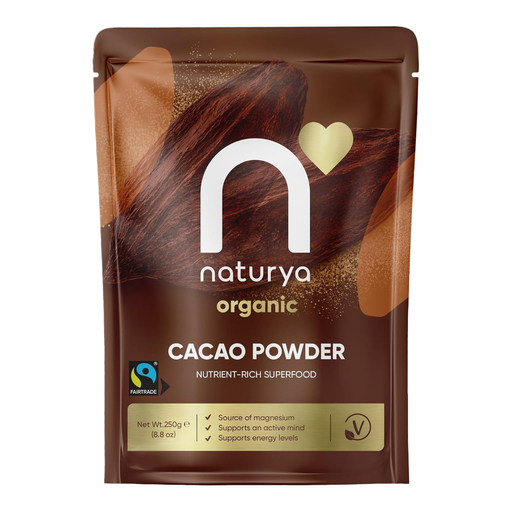 No image available
Organic cacao powder in a 250g pack for preparing a cacao drink. Check the current pack’s directions and total sugars for the serving you plan to make; the listing flags possible handling of nuts and seeds at its facility.
An organic label does not establish a lower sugar content. Defra’s guidance for Great Britain concerns organic production and certification, so compare the exact products’ nutrition panels on the same basis and account for what you add to the mug.
No. Booja-Booja describes its powder as dairy-free but says it is unsuitable for people with almond, hazelnut, pecan, cashew or pistachio allergy. Check the current pack and the milk or plant drink used to prepare it.
No: the Cadbury Gifts Direct listing for Green & Black’s Organic Hot Chocolate 230g says ‘MAY CONTAIN MILK’. Check the physical pack before serving it where milk allergy matters.
No. The Department for Education says the school-food standards apply to food and drink provided in state-funded schools in England, not a drink made at home. The 2014 Regulations exclude hot chocolate from their definition of confectionery, but a school-provided drink still needs to meet the applicable school requirements and menu policy.