Prioritise an explicitly labelled organic hot chocolate when organic procurement is an office requirement: UK organic food labelling is governed by production and certification rules, according to the Department for Environment, Food & Rural Affairs. Otherwise, choose around the kitchen's milk or hot-water facilities, then check allergens and nutrition for the drink as prepared. An organic label does not settle those other questions.
Who is buying for the office?
Buyers with an organic requirement
If the office specifies organic food, check the claim on the particular finished product. Fairtrade or responsibly sourced cocoa is a different claim; UK organic labelling has production and certification requirements set out by the Department for Environment, Food & Rural Affairs.
Shared-kitchen managers
Choose preparation directions that fit the kitchen. The product information from Ocado for Green & Black's and from Tesco for Cadbury specifies hot milk, while Tesco's Galaxy listing and Twinings' Options directions use hot water.
Workplaces checking ingredients
Keep the current pack available for ingredient and allergen checks. Milk ingredients, soya and precautionary milk statements differ across the products considered here, so neither cocoa nor organic wording establishes suitability for every member of staff.
What should you check first?
Decide whether organic certification is a requirement, then compare products using the office's actual preparation method and the resulting drink.
| Priority |
What to check |
Your needs |
| Organic claim |
Check the organic wording on the finished product and its certification details. The Department for Environment, Food & Rural Affairs says UK food labelled organic must meet organic-production rules, including the requirement that at least 95% of agricultural ingredients are organic. |
Our purchasing requirements specify organic hot chocolate, rather than a broader cocoa-sourcing claim. |
| Preparation |
Read the directions for hot milk or hot water and note the stated powder and liquid amounts. Ocado's Green & Black's directions and Tesco's Cadbury directions use milk; Tesco's Galaxy and Twinings' Options directions use water. |
There is only a kettle in our kitchenette, or we already provide milk for drinks. |
| Prepared-drink nutrition |
Compare values for stated prepared servings, including their size and liquid base, rather than treating powder values as mug values. Tesco lists 16 g sugars for Galaxy's 25 g powder plus 200 ml hot-water serving; Twinings lists 5.7 g for the stated Options serving made with water. |
I want to know what is in the drink we will actually serve, especially if we change the powder amount or add milk. |
| Ingredients and allergens |
Read each current ingredient list and allergy statement, including precautionary wording. Tesco lists milk and soya for Galaxy, Twinings lists milk and aspartame for Options, and Ocado gives a 'may contain milk' statement for Green & Black's. |
Staff need clear information about the particular product in our shared kitchen; a water-prepared drink is not necessarily free from milk ingredients. |
What is easy to overlook?
-
Assuming organic means less sugar
Organic describes production and labelling, not a sugar threshold. Ocado lists 23 g sugars for the stated milk-prepared serving of Green & Black's Organic Hot Chocolate.
Check the organic claim and prepared-serving nutrition separately, using the recipe your office will follow.
-
Comparing powder values with prepared drinks
A powder figure and a drink made with milk or water do not describe the same serving. Stated powder amounts and liquid bases also differ between products.
Record the office recipe, then compare nutrition values on the same prepared-serving basis where the labels allow it.
-
Assuming communal cocoa drinks suit everyone
A drink mixed with water can still contain milk ingredients; other products carry soya or precautionary milk information. The Food Standards Agency's guidance also addresses allergen information and management for food businesses.
Keep the current packaging accessible and check the exact product and any liquid added before making dietary or allergen claims.
-
Using an office choice as school-food clearance
Office refreshments and school food are different settings. England's Requirements for School Food Regulations 2014 exclude hot chocolate from their definition of confectionery, but that definition alone does not establish whether a particular drink meets all applicable school-food requirements.
For a school contract, assess the rules for the relevant UK nation and the full serving arrangement rather than relying on an office purchasing decision.
Which brand and retailer references help?
These examples illustrate label and preparation differences; a retailer's range is not itself an organic claim for every product it lists.
Green & Black's
Ocado describes its Organic Hot Chocolate as an organic finished drink mix and identifies marked ingredients as certified organic.
- A relevant finished-product example when checking an organic procurement requirement.
- Its stated preparation uses hot semi-skimmed milk; the listing says it may contain milk and gives 23 g sugars per stated prepared serving.
Cadbury
Tesco's Cadbury Drinking Chocolate listing describes a 500 g product prepared with hot milk.
- The directions specify three teaspoons mixed into hot milk.
- The listing carries a 'may contain milk' statement and gives 23 g sugars per stated prepared serving; it does not present this product as organic.
Galaxy
Tesco describes Galaxy Instant Hot Chocolate as a water-prepared drink.
- The listed serving uses 25 g powder with 200 ml hot water.
- The product contains milk and soya, lists 16 g sugars for that serving and is not presented as organic.
Options
Twinings' directions for Options Belgian Choc use hot water with 11 g powder.
- The product information gives preparation directions and nutrition for its stated serving.
- It contains milk and aspartame, declares a source of phenylalanine and is not presented as organic.
Tesco
Tesco's hot-chocolate and cocoa listing includes conventional drink mixes alongside an organic cocoa product.
- Its listings give examples of both milk-prepared and water-prepared products.
- An organic cocoa listing does not make other listed drink mixes organic, or turn cocoa powder into a finished mix.
Sainsbury's
Sainsbury's category listing includes instant hot chocolate, Fairtrade-labelled products and organic cocoa powder.
- The listed formats provide useful distinctions to check when choosing between a drink mix and cocoa powder.
- A Fairtrade claim or an organic cocoa listing does not establish an organic claim for another finished hot chocolate.
M&S
M&S describes instant and traditional drinking-chocolate formats in its range.
- Its instant product information provides an ingredient list for checking a specific pack.
- The listed instant product contains milk ingredients; Fairtrade cocoa is not the same claim as organic certification.
Joybuy products to consider
These options include drinking-chocolate mixes for milk or hot-water preparation and a cocoa powder for making a drink from separate ingredients. If organic certification is required, check the specific pack rather than treating every option here as certified organic.
 No image available
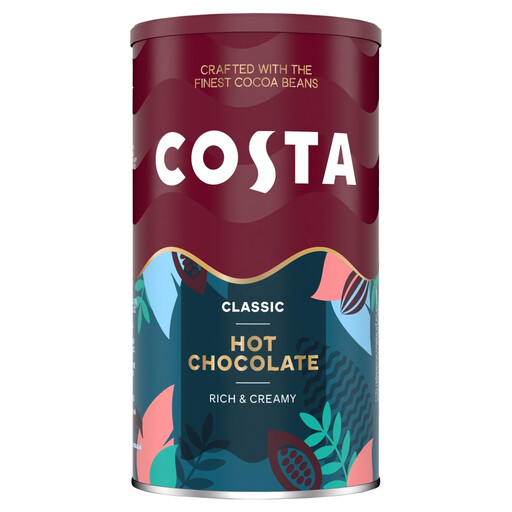
Costa Hot Chocolate 300g
For an office using milk or a plant-based alternative, check the pack's mixing directions and calculate the drink's nutrition with the liquid actually used. Check the finished product's organic labelling if certification is a purchasing requirement.
View on Joybuy
 No image available
Cadbury Drinking Chocolate 500g
A milk-prepared option for a kitchen that provides hot milk. Tesco's product information specifies three teaspoons mixed with hot milk, gives 23 g sugars per stated 224 g prepared serving and carries a 'may contain milk' statement. Check the current pack for an organic claim if required.
View on Joybuy
 No image available
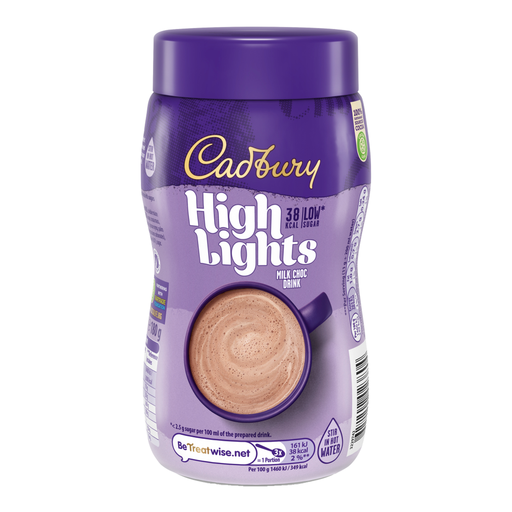
Cadbury Highlights Milk Chocolate Drink 180g
Consider this hot-water preparation option for a kettle-led kitchen, while checking the current directions and ingredients before serving: using water does not establish that a drink is free from milk. Compare nutrition only after confirming the recipe and serving basis on the pack.
View on Joybuy
 No image available
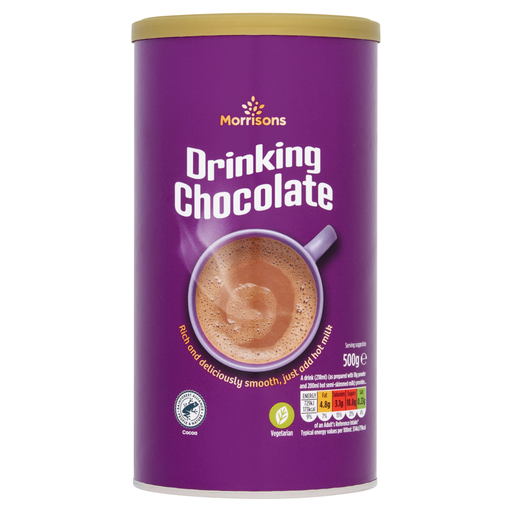
Morrisons Drinking Chocolate 500g
A drinking-chocolate option for an office that can provide hot milk. Check the pack's powder amount and preparation directions before using any serving figure to compare finished drinks; the added milk also matters for ingredient checks.
View on Joybuy
 No image available
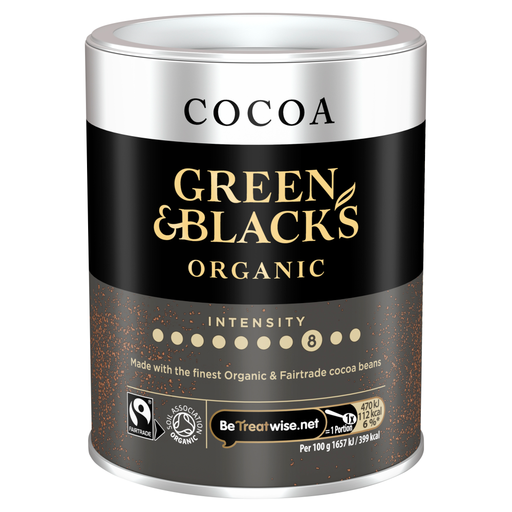
g&B Organic Cocoa 125g
This is cocoa powder, not a finished hot-chocolate mix. It suits an office willing to choose and prepare the other drink ingredients separately; check the current pack's organic certification and allergen statement, and assess the completed recipe rather than powder nutrition alone.
View on Joybuy
Office hot-chocolate questions
What does organic mean on a UK hot-chocolate label?
It is a regulated production and labelling claim, not a nutrition claim. The Department for Environment, Food & Rural Affairs says food labelled organic must meet organic-production rules, have at least 95% organic agricultural ingredients and be certified through an approved organic control body. Check the claim on the particular product you intend to buy.
Can organic hot chocolate be assumed to be dairy-free?
No. Ocado's listing for Green & Black's Organic Hot Chocolate says it may contain milk. Check the current pack and every ingredient added during preparation before describing an office drink as dairy-free.
Should an office compare nutrition per 100 g of powder or per mug?
Start with the stated prepared serving, noting its powder quantity, liquid and serving size. Tesco's Cadbury directions use hot milk, while its Galaxy directions use hot water; changing the liquid or recipe changes what is in the mug. Powder values alone cannot describe the completed drink.
Do school-food rules decide what an office can serve?
No; office refreshments are a separate setting. England's Requirements for School Food Regulations 2014 exclude hot chocolate from the definition of confectionery, but that exclusion alone neither permits nor prohibits a particular drink under the full school-food requirements. Department for Education guidance dated September 2026 describes updated England standards intended for September 2027 as subject to Parliamentary approval. A school supplier must assess the applicable nation's rules and serving context separately.


