Organic-first shoppers
If organic status is essential, check the actual cocoa or drinking chocolate you intend to buy. Natural-sounding names and other product claims are not substitutes for organic labelling and certification information.


Choose organic cocoa powder if you want to decide how sweet to make a late-night drink and which milk or plant drink to use; the finished drink’s sugar content will depend on what you add. A sweetened organic drinking chocolate is simpler to prepare, but check its sugars per prepared serving and its allergen statement. Hot chocolate can contain caffeine, so organic labelling alone does not establish whether a particular drink suits your bedtime routine.
For a midnight hot chocolate, the useful distinction is between the product’s organic status, what goes into the finished mug and any ingredient restrictions that matter to you.
If organic status is essential, check the actual cocoa or drinking chocolate you intend to buy. Natural-sounding names and other product claims are not substitutes for organic labelling and certification information.
Plain organic cocoa powder lets you choose whether to add sweetener. Compare the powder’s nutrition with the ingredients you will put in the mug, rather than treating its per 100g figure as the value for a prepared drink.
Check the current pack’s ingredients and precautionary allergen statement. A dairy-free or vegan description does not answer every allergy question: the cited cocoa powders carry may-contain-milk information, while Booja-Booja excludes consumers with certain nut allergies.
Start with the format—cocoa powder or sweetened drinking chocolate—then check the label for the particular organic, sugar and allergen conditions that affect your choice.
| Priority | What to check | Your needs |
|---|---|---|
| Organic status | Check that the particular product is labelled organic and look for its control-body information. The Department for Environment, Food & Rural Affairs’ UK guidance, dated 20 August 2025, requires certification of the product and suppliers and at least 95% organic agricultural ingredients for food described as organic. | I want the cocoa or drinking chocolate itself to meet organic labelling rules, rather than relying on words such as “natural”. |
| Sweetness | Compare sugars on the same basis: per 100g of powder or per stated prepared serving. Sainsbury’s lists 0.8g sugars per 100g for Green & Black’s Organic Cocoa; Ocado lists 23g per prepared 275g serving for Green & Black’s Organic Hot Chocolate. Milk, plant drink and added sweetener change the finished mug. | For a late-night drink, I would rather decide how much sweetener to add—or know how much sugar is in the prepared drink I plan to make. |
| Allergens | Read the current ingredients and any may-contain statement for the allergen concerned. Booja-Booja describes its hot chocolate as dairy-free but says it is not suitable for consumers with almond, hazelnut, pecan, cashew or pistachio-nut allergy. | If I need to avoid milk or particular nuts, a vegan or dairy-free description on its own is not enough to settle my choice. |
| Bedtime timing | Do not assume hot chocolate is caffeine-free. A sleep leaflet hosted by Royal United Hospitals Bath NHS Foundation Trust notes that caffeine can be found in hot chocolate. | I am sensitive to caffeine, so I want to consider the particular drink and when I plan to have it. |
Organic labelling concerns how a product is produced and certified, not its sugar content. A sweetened drinking chocolate and a plain cocoa powder also state nutrition on different preparation bases.
Compare the label’s per 100g and per-serving figures carefully, then account for the milk, plant drink or sweetener you will add.
A product formulated without dairy can still carry a warning about other allergens. Conversely, a cocoa powder may carry a precautionary milk statement even when milk is not an ingredient.
For the allergen you need to avoid, read the current pack’s ingredients and precautionary statement rather than relying on a vegan or dairy-free description.
The pack you buy is the relevant place to check formulation details, particularly when organic identification, sugars or allergen information determines your choice.
Check the label at purchase and again before preparing the drink.
These examples show how different organic cocoa and drinking-chocolate formats answer different needs; a brand name alone does not establish the attributes of every product it sells.
The cited Organic Cocoa is a powder for preparing your own drink; the cited Organic Hot Chocolate is sweetened drinking chocolate.
Its cited organic cocoa powder suits someone who wants to choose the other ingredients in their hot chocolate.
The manufacturer describes its organic drinking chocolate as dairy-free and vegan.
Ocado describes the cited organic cacao blend as containing coconut milk, lucuma and banana, with no added sugar.
Clipper describes hot chocolate on its brand page as Fairtrade organic, while a cited Sainsbury’s Clipper Fairtrade Instant Hot Chocolate listing identifies Fairtrade status without an organic designation.
These cocoa and cacao powders are options for preparing hot chocolate with your choice of milk or plant drink and any sweetener. Check each pack for the organic, nutrition and allergen details that matter to you.
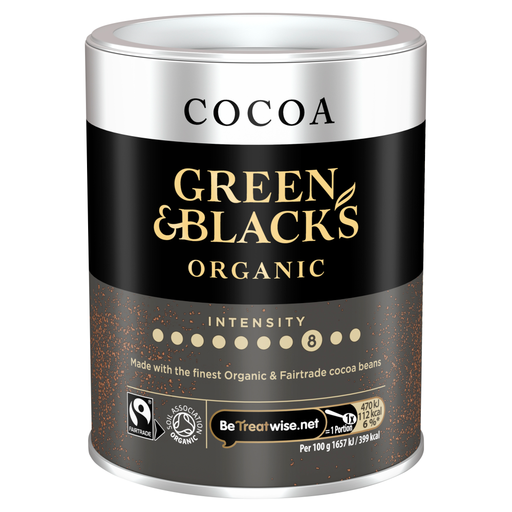 Image unavailable
Use this cocoa powder when you want to choose the milk or plant drink and whether to add sweetener. Sainsbury’s lists 98% organic cocoa powder and 0.8g sugars per 100g for the matching product; those figures describe the powder, not your finished drink. It carries a may-contain-milk statement, and hot chocolate can contain caffeine.
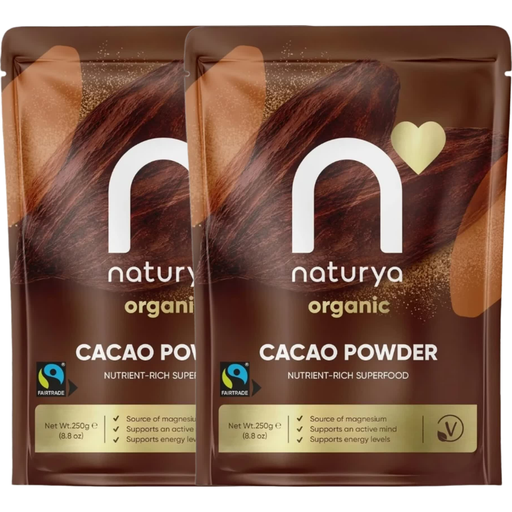 Image unavailable
The product description calls this 100% organic cacao powder with no added sugars and suggests using it in hot chocolate. If organic certification or total sugars determines your choice, check those details on the current pack; “no added sugars” does not state the total. Check its allergen information if nuts or seeds are a concern, and consider caffeine if you are sensitive to it.
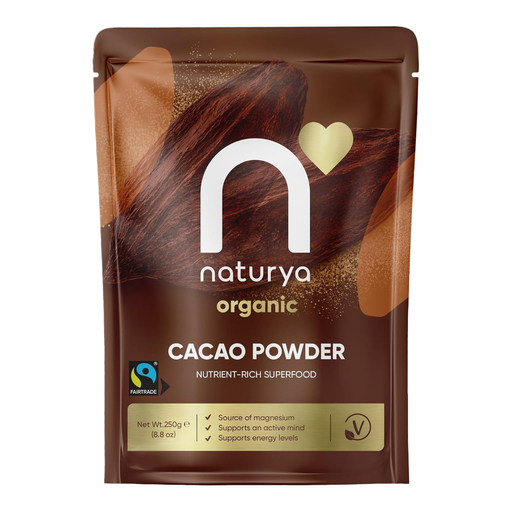 Image unavailable
This 250g cacao powder is described for hot-chocolate use, so you can choose what to add to the mug. The product description calls it 100% organic cacao with no added sugars; check the current pack’s certification and total-sugars information if either is decisive. Read its allergen statement if nuts or seeds are a concern, and consider caffeine if you are sensitive to it.
Check the organic wording and control-body information for the particular product. The Department for Environment, Food & Rural Affairs’ UK guidance, dated 20 August 2025, says food described as organic must meet organic production rules, have at least 95% organic agricultural ingredients and have the product and suppliers certified by an approved control body.
Organic status does not set a sugar limit. Ocado lists 23g sugars per prepared 275g serving for Green & Black’s Organic Hot Chocolate, whereas its Food Thoughts Organic Cocoa listing gives 0.3g per 100g of powder. These are different measurement bases: milk and any sweetener will affect a drink made from cocoa powder.
Not on the strength of a dairy-free claim alone. Booja-Booja describes its organic hot chocolate as dairy-free but says it is not suitable for consumers with almond, hazelnut, pecan, cashew or pistachio-nut allergy. Check the current pack for the specific allergen you need to avoid.
Do not assume it is caffeine-free. A sleep leaflet hosted by Royal United Hospitals Bath NHS Foundation Trust notes that hot chocolate can contain caffeine. If caffeine affects your bedtime routine, consider the product and timing rather than relying on its organic status.