Buyers wanting organic dairy
If the milk in your revision drink needs to be organic, check the cocoa product and the milk separately. An organic claim on a dry mix does not establish the status of milk added later.


For a revision-break hot chocolate with organic dairy, check the organic claims on both the cocoa product and the milk you add; the powder’s claim alone does not cover the milk. The Department for Environment, Food & Rural Affairs says food marketed as organic in the UK must be certified by an approved UK organic control body. If a school in England is providing the drink, assess the prepared recipe under school-food rules rather than treating a retail HFSS label as a school-menu decision.
The right check depends on whether you are preparing a drink at home, avoiding dairy or supplying drinks at a school.
If the milk in your revision drink needs to be organic, check the cocoa product and the milk separately. An organic claim on a dry mix does not establish the status of milk added later.
A dairy-free organic mix lets you choose the drink base separately. Check the mix’s current allergen declaration and the label on any milk or plant drink you add.
A drink provided to pupils needs a different assessment from a snack prepared at home. The Department for Education’s school-food guidance applies to food and drink provided in state-funded schools in England; the setting and finished recipe matter.
Start with the organic claim on the product you intend to buy, then check every ingredient you will add to the mug. School provision also calls for a separate check of the applicable rules and prepared drink.
| Priority | What to check | Your needs |
|---|---|---|
| Organic claim | Check that the exact pack is labelled organic and carries its certification information. The Department for Environment, Food & Rural Affairs says UK food marketed as organic requires certification by an approved UK organic control body. | I want the organic claim to apply to the product I buy, rather than assuming a brand’s other products have the same status. |
| Added milk | Read the preparation directions to see whether milk or a plant drink is added. If organic dairy matters, check the milk’s own organic labelling. | For a mug made with dairy milk, I want to choose that ingredient separately instead of relying on the powder’s label. |
| Allergens | Read the current ingredient and allergen statements for both the mix and the drink base. Check any precautionary wording on the pack, including milk warnings. | If I need to avoid an ingredient, an organic or dairy-free description alone is not enough to settle whether the finished drink suits me. |
| School provision | Establish the UK nation, school setting and finished recipe. England’s school-food regulations distinguish hot chocolate from confectionery; Department for Education school-food guidance concerns drinks provided in covered English schools. | If I am arranging drinks for pupils, I need a decision about the prepared drink under the rules for that school, not a blanket HFSS assumption. |
The cocoa product’s claim does not extend to milk poured into the mug at home.
If organic dairy is part of your requirement, check the organic labelling on both purchases before preparing the drink.
England’s retail HFSS-promotion rules and its school-food standards address different settings. The Requirements for School Food Regulations 2014 also distinguish hot chocolate from confectionery; that distinction alone does not establish whether a particular prepared drink may be served.
For school provision, ask the relevant school or catering authority to assess the exact recipe under the current rules for its nation and setting.
Ingredients and allergen information can change, as Tesco cautions on its food listings. A previous listing does not settle what is on the pack you receive.
Check the current pack’s ingredients, allergens and preparation directions, and confirm availability before buying.
These examples show different preparation formats; an organic product from a brand does not make every product in its range organic.
Tesco has listed a 300g Green & Black’s Organic Hot Chocolate, while Ocado describes preparing the product with hot milk.
Booja-Booja describes its organic hot chocolate as dairy-free and vegan, with a drink base chosen separately.
UK retailer Kingdom Coffee describes a Monbana organic Fairtrade chocolate powder that is prepared by adding milk.
Tesco has listed Naturya Organic Hot Chocolate products in 250g and 300g formats.
These Joybuy options are cocoa or cacao powders described for hot-chocolate use. They suit a home-preparation route in which you choose the milk or plant drink separately; each product’s organic claim should be checked on its current pack.
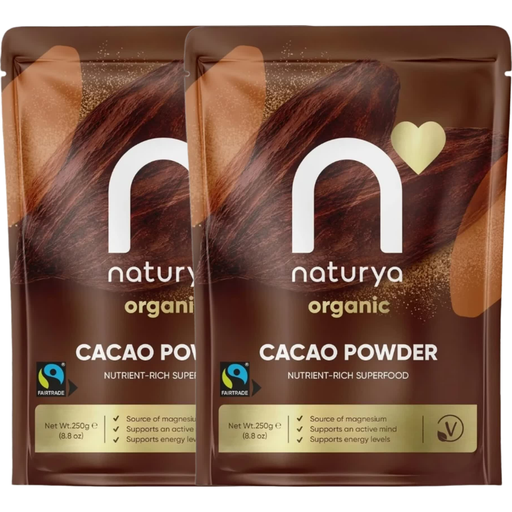 No image available
The listing describes this cacao powder for hot chocolate, so you can choose the milk or plant drink for a revision break separately. Check the current pack’s organic certification details; the listing also says it is packed in a facility that may handle nuts and seeds.
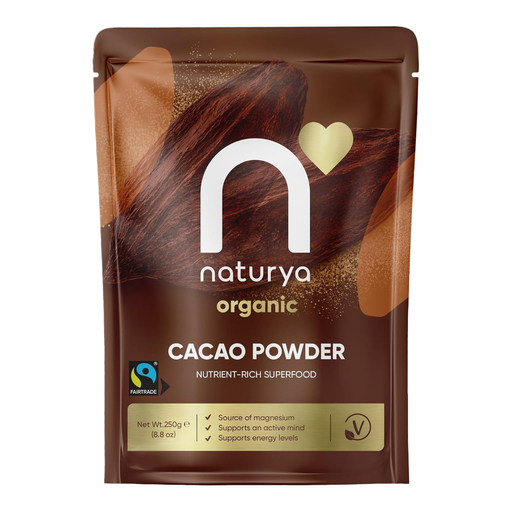 No image available
This single 250g pack is described for making hot chocolate with a drink base you select. Check the current pack’s organic certification and allergen information, particularly if you need to avoid an ingredient.
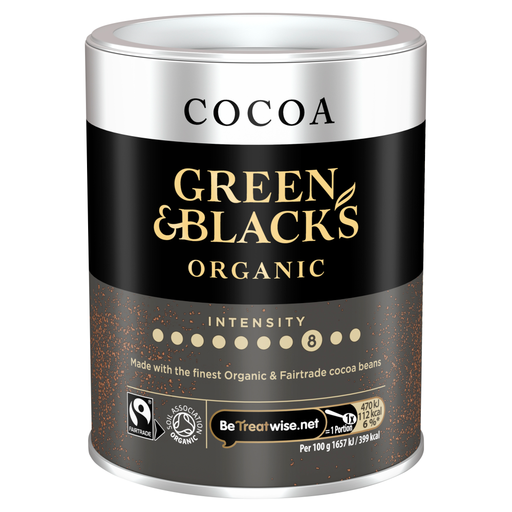 No image available
The product description identifies hot chocolate as a use for this cocoa powder, leaving the choice of milk or plant drink to you. Check the current pack’s organic certification details and its ‘may contain milk’ warning if milk avoidance matters.
Look for the organic claim and certification information on the exact product. The Department for Environment, Food & Rural Affairs says businesses marketing food as organic in the UK must be certified by an approved UK organic control body; words such as “natural” or “Fairtrade” do not establish organic status.
No: an organic claim on the cocoa does not apply to milk added separately. If organic dairy is your requirement, check the organic labelling on both the cocoa product and the milk you plan to use.
The word “organic” alone does not decide whether a prepared drink meets England’s school-food requirements. The Requirements for School Food Regulations 2014 distinguish hot chocolate from confectionery, while Department for Education guidance addresses food and drink provided in state-funded schools in England. Ask the school or catering provider to assess its setting and exact recipe under the current rules.
No. Department of Health & Social Care HFSS guidance addresses restrictions on promotions of in-scope products in retail settings; England’s school-food requirements address food and drink provided in covered schools. A retail-promotion classification does not, by itself, decide a school-menu question.
Read the current allergen declaration and any precautionary wording on the cocoa product, then check the milk or plant drink you add. A dairy-free description of the mix does not replace checking the full pack information, particularly when a retailer’s ingredient information may change.