For a baby under 12 months, do not replace a main night feed with supermarket organic lactose-free cow’s milk: NHS guidance says to continue breast milk or first infant formula until at least age one. If lactose restriction is being considered for a baby, seek clinical advice about an appropriate infant formula. For an older child or adult choosing cow’s-milk dairy, check the milk type and allergen statement separately from the organic and lactose-free labels; Arla identifies its organic semi-skimmed milk drink as containing milk and less than 0.03% lactose.
Who is choosing the milk?
Parents feeding a baby under 12 months
The first decision is whether the product is infant formula or an ordinary milk drink. NHS guidance says breast milk or first infant formula should remain a baby’s main milk until at least age one; a retail lactose-free cow’s-milk drink is not a substitute.
Parents of a child over 12 months
NHS guidance allows cow’s milk as a main drink from 12 months. If lactose-related symptoms are a concern, distinguish them from a possible cow’s-milk allergy before choosing dairy, and check which milk type suits the child’s age.
Adults looking for organic lactose-free dairy
An organic lactose-free cow’s-milk drink may meet a preference for both certified organic production and a stated lactose level. It still contains milk, so the allergen declaration matters independently of either label.
What should you check first?
Start with the age of the person being fed and whether milk protein is an issue. Only then compare lactose claims, milk type and organic labelling.
| Priority |
What to check |
Your needs |
| Age and feed type |
Check whether the product is infant formula or a cow’s-milk drink. NHS guidance says breast milk or first infant formula should continue until at least age one; cow’s milk can become a main drink from 12 months. |
For a baby under one, I need an infant feeding option, not a supermarket milk drink with a lactose-free label. |
| Milk allergy |
Read the milk allergen declaration. Cambridge University Hospitals distinguishes a reaction to cow’s-milk proteins from difficulty digesting lactose; lactose-free dairy still contains milk. |
If milk allergy is suspected, I need clinical advice rather than choosing lactose-free cow’s milk on the strength of its label. |
| Lactose and milk type |
Check the lactose statement, whether the product is whole or semi-skimmed, and the intended age or use. Arla states that its Organic Semi Skimmed Milk Drink contains less than 0.03% lactose. |
I want the lactose claim and type of milk to match the person who will drink it, rather than assuming every lactose-free product serves the same purpose. |
| Organic claim |
Look for an explicit organic claim on the exact product. Under UK rules described by the Department for Environment, Food & Rural Affairs, organic labelling requires compliance with organic production rules and certification by an approved control body. |
If organic production matters to me, I need to check that the particular lactose-free product—not just its brand or retailer—is labelled organic. |
Mistakes to avoid
-
Confusing lactose-free cow’s milk with infant formula
A lactose-free retail milk drink remains cow’s milk. NHS guidance does not place it on the same feeding route as breast milk or first infant formula for a baby under 12 months.
For a baby under one, continue an age-appropriate infant feed. If lactose intolerance is suspected, ask a healthcare professional whether a lactose-free infant formula is appropriate.
-
Reading “lactose-free” as “milk-free”
Arla’s organic lactose-free drink contains milk. Lactose and cow’s-milk proteins are different parts of milk, so the lactose-free claim does not resolve a milk-allergy concern.
Check the allergen statement and seek clinical advice if cow’s-milk allergy is suspected; do not choose lactose-free dairy as a milk-free substitute.
-
Letting the organic label decide the feed
Organic certification concerns production and labelling. It does not establish whether a milk drink is infant formula, lactose-free or suitable for someone with a milk allergy.
Choose the appropriate feed type first, then check the exact product’s lactose statement, milk type and organic label.
Relevant brands and retailers
These references help distinguish an explicitly organic lactose-free milk drink from other lactose-free dairy ranges; they are not a list of infant-feeding substitutes.
Arla LactoFREE
Arla identifies its Organic Semi Skimmed Milk Drink 1L as an organic lactose-free cow’s-milk product.
- Arla lists semi-skimmed milk and lactase enzyme as ingredients and states that the drink contains less than 0.03% lactose.
- It contains milk, is semi-skimmed rather than whole milk, and is not infant formula.
Tesco
Tesco lists Arla LactoFREE Organic Semi Skimmed Milk Drink 1L and separate Tesco-branded lactose-free dairy drinks.
- Its Arla product listing identifies the organic, lactose-free semi-skimmed drink.
- Check each Tesco-branded drink’s own label if organic production is a requirement.
Sainsbury’s
Sainsbury’s lists the Arla organic lactose-free semi-skimmed drink alongside its own Everyday Lactose Free dairy drinks.
- Its Arla listing identifies a chilled, organic lactose-free milk drink.
- The Everyday Lactose Free range should be checked product by product for an organic claim.
M&S Food
M&S Food describes a Made Without lactose-free cow’s-milk range with semi-skimmed and whole varieties.
- The stated whole and semi-skimmed choices allow shoppers to compare milk types.
- Check the exact pack for an organic claim if that is part of the buying decision.
Waitrose
Waitrose lists an Arla LactoFREE lactose-free semi-skimmed filtered milk drink.
- The product listing identifies it as a lactose-free dairy drink.
- This listing warns that the drink is unsuitable for people with a milk allergy; check the exact product label for any organic claim.
A Joybuy formula option
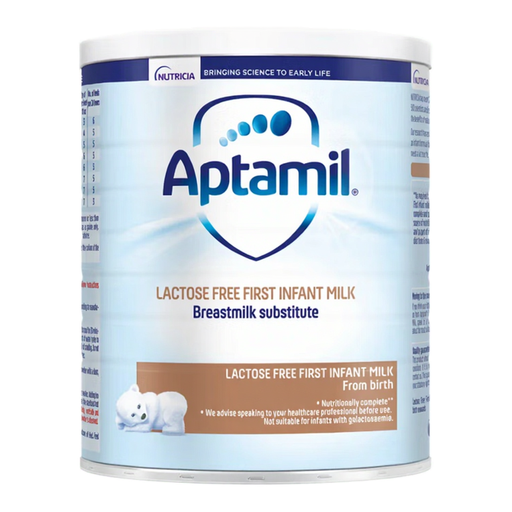
This product is an infant formula option for a baby who may need a lactose-free feed under medical supervision. It is not the organic cow’s-milk drink discussed for older children and adults.
 No image available
Aptamil Lactose Free Baby Milk Formula Powder From Birth 400g
This lactose-free infant formula is a different product type from retail lactose-free cow’s milk. The named product is a 400g powder labelled for use from birth; its product information says to use it only under medical supervision. Check the full allergen information, including its milk-derived ingredient and fish oil, and follow the pack’s sterilising, preparation and storage instructions.
View on Joybuy
Questions about night feeds and labels
Can organic lactose-free cow’s milk be a baby’s main night feed before 12 months?
No. NHS guidance says to continue breast milk or first infant formula until at least age one; cow’s milk can be introduced as a main drink from 12 months. If lactose restriction is being considered for a baby, ask a healthcare professional about an appropriate infant formula rather than substituting a supermarket milk drink.
Is lactose-free milk suitable for someone with a cow’s-milk allergy?
No: lactose-free cow’s-milk drinks still contain milk proteins. Cambridge University Hospitals distinguishes cow’s-milk allergy, which concerns those proteins, from lactose intolerance, which concerns digestion of milk sugar. Seek clinical advice about a milk-free route if allergy is suspected.
What does “organic” tell me about lactose-free milk in the UK?
Organic is a production and labelling claim, not an infant-feeding or allergy claim. The Department for Environment, Food & Rural Affairs says an organic food must meet organic production rules and certification requirements; for food products, at least 95% of agricultural ingredients must be organic. Check lactose and milk-allergen information separately on the exact product.


